

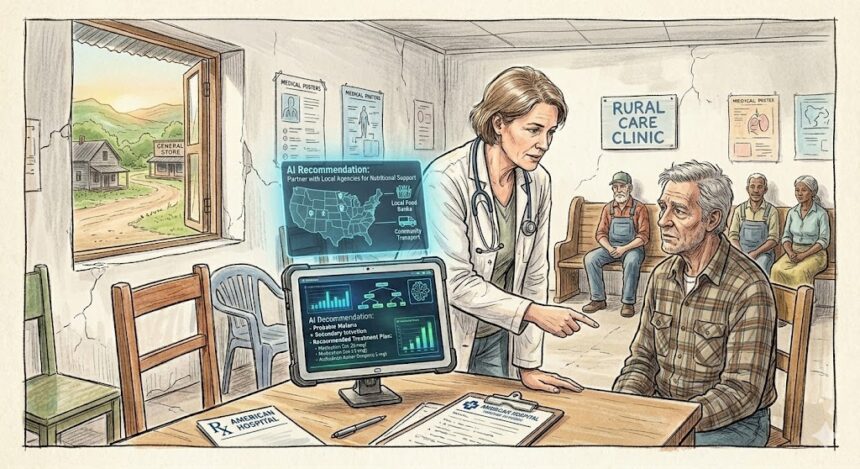
How AI Bridges Gaps in Rural Healthcare
Rural healthcare systems face severe strains from high cost populations, low reimbursements, and looming Medicaid cuts of up to $1 trillion. Yet these facilities possess unique strengths that urban hospitals often lack, including deep community trust, streamlined workflows, and a natural emphasis on primary care over volume based encounters. In a recent interview, healthcare leaders discussed how artificial intelligence and technology can help rural organizations succeed with value based care models. They noted that 60% of healthcare payments now include value based modifiers, which have already helped curb national spending from an expected $6 trillion to $5 trillion.
A key insight is that 50% to 65% of patient costs in rural settings occur outside the primary care facility. This makes clean, integrated data and better coordination essential. The most effective strategies act as extensions of the care team while keeping the provider relationship central. AI generated prioritization lists allow care teams to focus on the right patients without disrupting the patient provider dynamic.
Impact and Strategic Opportunities
What works in urban markets often fails in rural communities due to access, affordability, and transportation barriers. However, implementing new workflows can be easier at small facilities where coordination is simpler and staff trust leadership. The $50 billion Rural Health Transformation Program offers a critical funding opportunity. Experts recommend using these funds to modernize infrastructure, virtualize care delivery, automate workflows with AI, and train the workforce for long term sustainability.
AI is increasingly vital for contract compliance in rural settings. Tools like the BlazeLink Contract Compliance Agent can consume contracts in about 0.25 seconds and analyze them against millions of records to identify revenue opportunities. Given that rural facilities operate on narrow margins, recovering even a fraction of the typical 3% to 6% in compromised revenue can materially impact sustainability. Both experts emphasize that AI is a necessity, not a replacement for providers, reducing operational burdens around contract compliance, reimbursement, and patient prioritization.