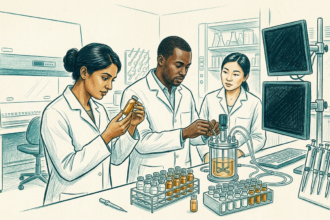


OpenAI has introduced GPT-Rosalind, a frontier reasoning model built specifically for life sciences research. Named after Rosalind Franklin, whose work revealed DNA’s structure, the model is optimized for workflows across drug discovery, protein engineering, genomics, and translational medicine.
GPT-Rosalind is the first release in OpenAI’s Life Sciences model series. It delivers improved performance on tasks requiring reasoning over molecules, proteins, genes, pathways, and disease-relevant biology. The model excels at multi-step scientific workflows including literature review, sequence-to-function interpretation, experimental planning, and data analysis.
The release includes a Life Sciences research plugin for Codex that connects researchers to over 50 scientific tools and data sources. Early customers include Amgen, Moderna, the Allen Institute, and Thermo Fisher Scientific. “The life sciences field demands precision at every step,” said Sean Bruich, Amgen’s SVP of AI and Data. “Our collaboration with OpenAI enables us to apply their most advanced capabilities with the potential to accelerate how we deliver medicines.”
GPT-Rosalind is available as a research preview in ChatGPT, Codex, and the API through OpenAI’s trusted access program. The model represents a significant step toward AI systems that can help scientists explore more possibilities and arrive at better hypotheses sooner, potentially shortening the typical 10-to-15-year drug development timeline.