
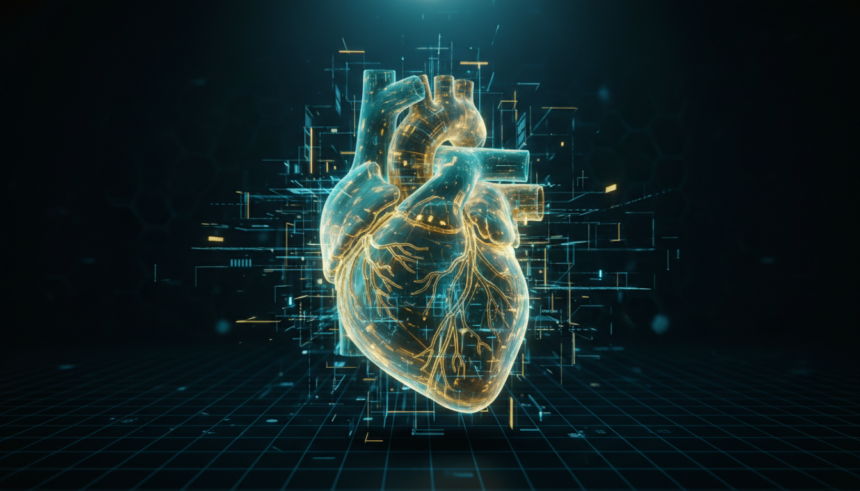
The National Heart Centre Singapore has developed CARDIA-GM, an AI platform that reduces the time needed to assess heart muscle damage after a heart attack from an hour to under 60 seconds.
The machine learning model automatically analyzes cardiac MRI scans to detect and measure scarred heart muscle tissue and microvascular obstruction, two critical markers of post-heart-attack damage. It produces 3D visualizations and measurements within 30 to 60 seconds.
CARDIA-GM was trained on 2,500 cardiac MRI scans from 350 patients at NHCS and the National University Heart Centre Singapore. It was validated on more than 900 scans from collaborators in China, including patients followed clinically for up to 10 years.
In a study published in the Journal of Cardiovascular Magnetic Resonance, the model demonstrated consistent accuracy across hospitals, scanner types, and patient populations. A/Prof Tan Ru San, senior consultant at NHCS, said the AI could help identify higher-risk patients who need more intensive monitoring.
Patients with scarring in more than 20% of the heart muscle face about three times the risk of a future cardiac event, while those with significant microvascular obstruction face up to six times the risk. The team plans to validate the model in a cohort of 1,000 patients and seek regulatory approval as a software-as-medical-device.