


By using this site, you agree to the Privacy Policy and Terms of Use.
Accept
MedsparkMedsparkMedspark
  • Home
  • News & Alerts
    News & AlertsShow More
    Insilico and SK Biopharm ink $2.5 billion AI drug discovery deal
    By
    msadmin
    July 17, 2026
    Insilico and Bora Pharma bring generative AI to drug manufacturing
    By
    msadmin
    July 17, 2026
    Senators Blumenthal and Hawley probe Medicare Advantage insurers over AI denials
    By
    msadmin
    July 17, 2026
    Singapore heart centre AI cuts cardiac damage reading to one minute
    By
    msadmin
    July 17, 2026
    First Canadian ALS patient receives Neuralink brain implant
    By
    msadmin
    July 17, 2026
  • Spotlight
    SpotlightShow More
    OpenAI launches GPT-Rosalind for life sciences research
    By
    msadmin
    July 17, 2026
    ARPA-H Awards $160 Million for AI-Enabled Personalized Gene Editing to Tackle Rare Diseases
    By
    msadmin
    July 12, 2026
    Strategic healthcare AI governance framework abstract illustration
    Building a Resilient Healthcare AI Strategy: Insights from Industry Leaders
    By
    msadmin
    May 15, 2026
    Pharma AI Alliance Expands: Owkin and AstraZeneca Deploy New Drug Discovery Models
    By
    msadmin
    May 14, 2026
    7 Must-Attend MedTech Events in South Africa for 2025
    By
    Jostel Owusu
    August 9, 2025
  • Articles
    ArticlesShow More
    Drug metabolism AI contest shows data matters more than model size
    By
    msadmin
    July 17, 2026
    Bigger AI models don’t always win in drug metabolism prediction
    By
    msadmin
    July 17, 2026
    AI model predicts immunotherapy response across cancer types
    By
    msadmin
    July 17, 2026
    Healthcare AI faces new risk from cognitive spoofing and fake expertise
    By
    msadmin
    July 17, 2026
    Mayo Clinic shares how it vets over 100 clinical AI tools for safety
    By
    msadmin
    July 17, 2026
  • Events
    EventsShow More
    Stanford Health AI Week Highlights AI’s Growing Role in Medical Education, Patient Empowerment, and Life Sciences
    By
    msadmin
    June 19, 2026
    HIMSS APAC 2026: Re-engineering APAC Health Systems in the AI Era
    By
    msadmin
    June 9, 2026
    AIMed 2026: Bridging the Gap Between AI Promise and Clinical Reality in Kraków
    By
    msadmin
    April 30, 2026
    7 Must-Attend MedTech Events in South Africa for 2025
    By
    Jostel Owusu
    August 9, 2025
    Cleveland Clinic’s First AI Summit Signals Bold Future for Healthcare
    By
    msadmin
    July 19, 2025
  • About
    • Mission
    • Services
    • Contact
Font ResizerAa
MedsparkMedspark
Font ResizerAa
  • Home
  • News & Alerts
  • Spotlight
  • Articles
  • Events
  • About
  • Quick Links
    • Home
    • News & Alerts
    • Spotlight
    • Articles
    • Events
  • About MedSpark
    • Our Purpose & Vision
    • Services
    • Contact
Follow US
News & Alerts

First Canadian ALS patient receives Neuralink brain implant

Vancouver police sergeant Lee Marten can control his phone and laptop with his thoughts after Neuralink surgery in Toronto.

MSAdmin
By
msadmin
MSAdmin
Bymsadmin
MedTech AI & Cybersecurity News
Follow:
Published: July 17, 2026
Share
1 Min Read
SHARE

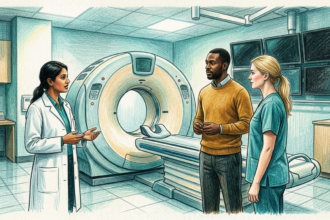
A Vancouver police sergeant with ALS has become the first Canadian to receive a Neuralink brain-computer implant, gaining the ability to control digital devices with his thoughts.

Sergeant Lee Marten underwent surgery at Toronto Western Hospital in May as part of the CAN-PRIME clinical trial approved by Health Canada. He is the 26th person worldwide to receive a Neuralink implant and the first to have the procedure performed using the company’s next-generation surgical robot, which inserts electrode threads directly through the brain’s outer protective layer.

Neuralink’s N1 implant sits in the region of the brain responsible for planning movements. It uses thin, flexible electrodes that decode neural activity, allowing users to control computers and smartphones simply by intending to move.

Marten, who retained enough hand function to operate his electric wheelchair, can now control his phone and laptop using thoughts alone after the implant. Two other Canadians, both quadriplegic, have also received the device.

The four-year CAN-PRIME trial is evaluating the N1 implant and R1 surgical robot in patients with cervical spinal cord injury or ALS who have a life expectancy of at least 12 months. The trial is a milestone for Neuralink’s expanding global clinical program.

TAGGED:ALSBCIbrain-computer interfaceclinical trialneural implantNeuralinkneurosurgery
SOURCES:MobiHealthNews
Share This Article
Facebook Copy Link Print
MSAdmin
Bymsadmin
Follow:
MedTech AI & Cybersecurity News
Leave a Comment Leave a Comment

Leave a Reply Cancel reply

Your email address will not be published. Required fields are marked *

banner-medspark-horiz

You Might Also Like

News & Alerts

Corner Health raises $32.5 million for AI nurse practitioner platform

By
msadmin
July 17, 2026
News & Alerts

AAMI Adopts National Academy of Medicine’s AI Code of Conduct to Guide Ethical Use in Medical Devices

By
Yu Chi Huang
July 3, 2025
News & Alerts

AI Adoption Surges in French Healthcare, but Outdated IT Systems Slow Digital Transformation

By
Yu Chi Huang
June 18, 2025
News & Alerts

CHAI and The Joint Commission Partner to Launch AI Governance Playbooks for U.S. Healthcare Providers

By
Yu Chi Huang
June 16, 2025
Facebook Twitter Youtube Linkedin
Quick Links
  • News & Alerts
  • Articles
  • Spotlight
  • Events
About Medspark
  • Mission
  • Services
  • Contact

© Copyright 2026 MedSpark. All rights reserved.

Privacy Policy | Legal