

Robinhood Ventures Fund II began trading on the New York Stock Exchange today under the ticker RVII, listing at $25.00 per share as a business development company managed by Robinhood Ventures. The fund holds roughly 79 startup positions, nearly all written as $250K SAFEs, with one $1M bet as its largest holding, and it invests primarily in Y Combinator alumni. Healthcare accounts for about 6.7% of assets, and while that corner is small, the companies inside it trace a surprisingly coherent view of where medicine is headed.
Watch the RVII roadshow.
The healthcare names in the fund
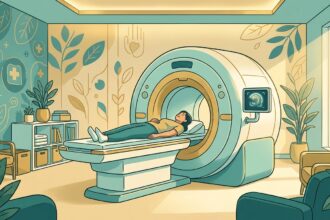
Adialante is building accessible MRI-based cancer screening designed to fit into routine care rather than specialized imaging centers, aiming to catch disease earlier at a fraction of the usual cost. CellType applies agentic AI to drug discovery, running experiments on simulated human biology before compounds ever touch a lab bench. Opalite Health uses AI translation to close the gap between clinicians and patients, turning dense clinical language into plain, actionable guidance that fits how care is actually delivered.
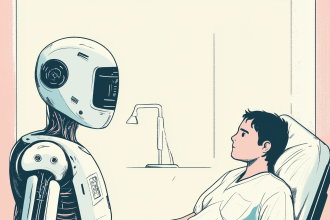
On the imaging side, Lumius Imaging is developing fast, accessible 3D ultrasound that could push high-quality scanning into exam rooms and urgent care settings without a radiologist bottleneck. On the patient-facing side, SharedGenes is building an AI health assistant for people living with chronic illness, helping them track symptoms and manage care between appointments, while Prana AI is working on AI primary care that puts a capable first line of medical guidance in front of patients at consumer scale.
The remaining bets sit squarely in clinic operations. Plena is building an AI operating system for specialty medicine practices, automating the administrative and clinical workflows that slow specialty care down. Ruma provides an operations stack for biologic infusion clinics, handling scheduling, patient intake, and reimbursement logistics for a treatment class that is growing quickly. BioStack Platforms builds real-world training environments for healthcare AI, giving models a place to practice on realistic clinical scenarios instead of static datasets.
Imaging, drug discovery, and clinic ops at the earliest stage
What unites this group is less a specific disease target and more the layer of medicine each company touches: patient-facing AI, imaging, drug discovery, and clinic operations. Every position is a pre-product-market-fit bet, funded at the point where most healthcare AI startups are still proving whether their approach works in the real world. The $250K SAFE size signals seed-stage conviction rather than scaled commercial traction, and the SAFE structure means the fund converts alongside the same priced rounds that specialist healthcare VCs lead later.
The Y Combinator sourcing is central to the strategy. The accelerator cycles through hundreds of companies a year, which gives the fund a broad, early look at founders working across diagnostics, care delivery, and biotech. For a retail-facing vehicle, that pipeline matters: it is how a fund with no accredited-investor test can assemble a healthcare portfolio that would normally be locked inside private allocations.
Retail capital meets pre-Series A medicine
The structure matters as much as the names. A BDC carries no accredited-investor test, no lockups, and no capital call obligations, so anyone with a brokerage account can hold a slice of private healthcare AI for the first time. That is a meaningful widening of the funnel: SEC data suggests only about 12.6% of US individuals qualify as accredited investors, the group that previously had exclusive access to this asset class.
For medicine, the practical effect is more shots on goal. Healthcare AI has historically depended on specialized venture funds and strategic backers, and early-stage failures were quietly absorbed by the same small pool of institutions. A liquid retail vehicle changes the incentive math, giving a broader investor base a direct stake in whether accessible imaging, simulated biology, and AI-run clinics actually work. The healthcare corner of RVII is small today, but it is a visible sign that the earliest stage of medical AI now has a retail audience behind it.