A deep learning model built at Asan Medical Center in Seoul narrowed the accuracy gap between trainee doctors and ear specialists to a few percentage points, according to results published in JMIR Medical Informatics.
The system analyzes ear endoscopy images to separate chronic otitis media from otitis media with effusion or from neither, and also flags eardrum retraction, inflammation, fungal infection and ventilation tubes. It uses an EfficientNet-B4 architecture trained on 7,335 images collected at the hospital between 2018 and 2020.
How the trial was run
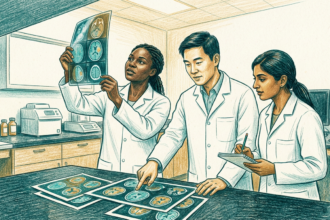
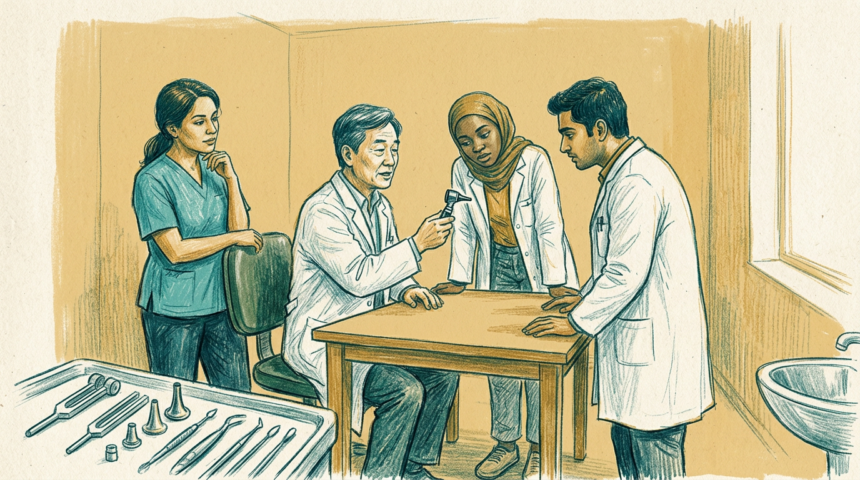
Thirteen doctors took part: three ear disease specialists, five senior residents and five junior residents. Each read 100 endoscopic images unaided. Three months later they read the same images in a different order, this time with the model’s predictions available.
Junior residents improved from 54.4% to 86.6% accuracy. Senior residents went from 65% to 93.8%, and specialists from 78.7% to 89.7%. The gap between the least and most experienced readers collapsed from 24.3 percentage points to 3.1.
The model scored 94.8% in cross-validation on its development data and 95% on the separate 100-image set.
The caution buried in the numbers
Across 1,300 assessments, doctors corrected 384 initially wrong diagnoses with AI help, but also turned 46 correct ones into wrong ones. When their first read disagreed with the model, they deferred to it in nearly eight of ten cases, senior residents most of all.
Lead researcher Joong Ho Ahn said the results show AI is most useful for less experienced staff. The team called for validation across other hospitals, patient groups and imaging devices.