
By using this site, you agree to the Privacy Policy and Terms of Use.
Accept
MedsparkMedsparkMedspark
  • Home
  • News & Alerts
    News & AlertsShow More
    Alibaba hands hospitals a free AI that reads 146 conditions
    By
    msadmin
    September 20, 2026
    Angle Health banks $600M to sell AI-native plans to small businesses
    By
    msadmin
    September 20, 2026
    Medtronic wins FDA nod to bring LigaSure onto the Hugo robot
    By
    msadmin
    September 20, 2026
    St. Luke’s hands 400,000 patient calls a month to AI agents
    By
    msadmin
    September 20, 2026
    Qure.ai wins Europe’s toughest CE class for a primary care AI
    By
    msadmin
    September 20, 2026
  • Spotlight
    SpotlightShow More
    Robinhood Ventures Fund II brings retail capital to healthcare AI
    By
    msadmin
    August 13, 2026
    Adialante brings accessible MRI-based cancer screening
    By
    msadmin
    August 11, 2026
    CellType models biology so AI can discover drugs
    By
    msadmin
    August 11, 2026
    Healthcare AI startups in Robinhood Ventures Fund II
    By
    msadmin
    August 11, 2026
    OpenAI launches GPT-Rosalind for life sciences research
    By
    msadmin
    July 17, 2026
  • Articles
    ArticlesShow More
    Proteomics model picks breast cancer drugs from biopsies
    By
    msadmin
    September 10, 2026
    CRISP model reads frozen sections to steer cancer surgery
    By
    msadmin
    September 10, 2026
    Consumer chatbots are building a medical system outside hospitals
    By
    msadmin
    August 21, 2026
    Reasoning gaps hold back AI agents in scientific discovery
    By
    msadmin
    August 11, 2026
    Benchmark scores can’t track real clinical LLM use, Stanford says
    By
    msadmin
    August 11, 2026
  • About
    • Mission
    • Services
    • Contact
  • Shop
    • All Items
    • By Category
    • Cart
  • Newsletter
Font ResizerAa
MedsparkMedspark
Font ResizerAa
  • Home
  • News & Alerts
  • Spotlight
  • Articles
  • About
  • Shop
  • Newsletter
  • Home
  • News & Alerts
  • Spotlight
  • Articles
  • About
    • Mission
    • Services
    • Contact
  • Shop
    • All Items
    • By Category
    • Cart
  • Newsletter
Follow US
Articles

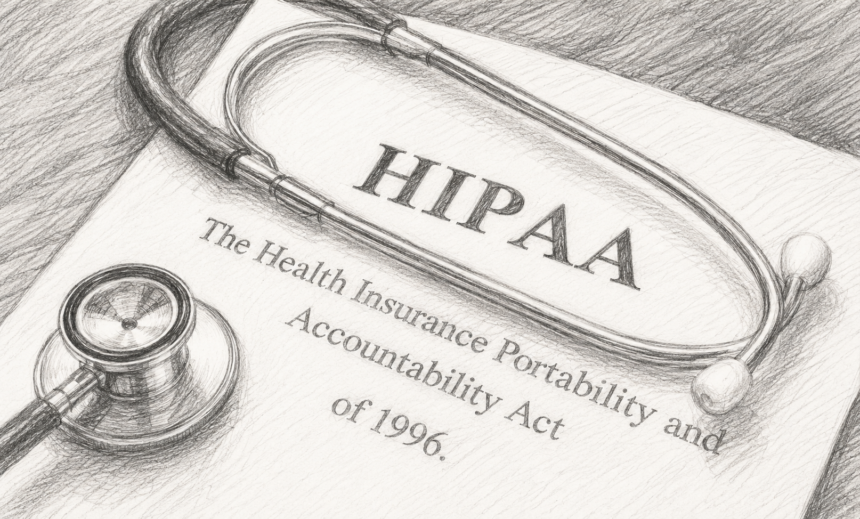
Bridging the Gap Between AI Adoption and HIPAA Compliance

MedSpark Staff
By
msadmin
MedSpark Staff
Bymsadmin
Medical, Healthcare, & Biotech/Pharma AI News
Follow:
Published: May 6, 2026
Share
2 Min Read
SHARE

Why AI Introduces New Compliance Risks

Artificial intelligence tools are increasingly used in healthcare for documentation, transcription, scheduling, triage, and risk scoring. While these systems can improve efficiency, they also introduce significant privacy and security risks under HIPAA. Many AI platforms require access to real patient data to function, including protected health information (PHI). Even when staff believe data has been deidentified, modern AI systems can often reidentify individuals by cross matching demographic details, time stamps, and care patterns. This capability raises the bar for safe data handling.

Contents
Why AI Introduces New Compliance RisksHow Targeted Training Mitigates the Risks

Unapproved AI tools present an even greater danger. Employees may enter PHI into general purpose platforms that lack required business associate agreements and security safeguards, triggering impermissible disclosures. Even with approved tools, staff must follow the Minimum Necessary Standard. AI generated drafts, summaries, or letters can contain more PHI than needed, causing sensitive information to reach unintended recipients. Additionally, AI can introduce factual errors that compromise the integrity of PHI and mislead clinical decision making.

How Targeted Training Mitigates the Risks

Effective HIPAA training addresses these challenges by giving employees practical guidance for real world scenarios. Training should clarify that only approved AI platforms with proper safeguards are permissible. Staff need to understand what deidentification truly requires in an AI context, going beyond removing direct identifiers. They must learn to craft prompts that limit inputs to the minimum necessary information and to validate outputs for both factual accuracy and inappropriate disclosures.

Training should also cover consent requirements, disclosure rules, and state specific regulations that apply to AI assisted communications. Employees should be taught to log significant interactions with AI tools, escalate anomalies to technical teams, and route complex privacy questions to compliance officers rather than relying on AI for legal interpretation. This combination of clear policies, practical skills, and escalation pathways allows organizations to benefit from AI while keeping workflows within HIPAA compliant boundaries.

Source: Hipaajournal

TAGGED:AICompliance TrainingData PrivacyHealthcareHIPAAProtected Health Information
Share This Article
Facebook Copy Link Print
MedSpark Staff
Bymsadmin
Follow:
Medical, Healthcare, & Biotech/Pharma AI News

You Might Also Like

Articles

Doudna Lab uses AI to design novel gene-editing enzymes from scratch

By
msadmin
July 18, 2026
ArticlesNews & Alerts

Bipartisan senators probe Medicare Advantage AI care denials

By
msadmin
July 17, 2026
Articles

Bigger AI models don’t always win in drug metabolism prediction

By
msadmin
July 17, 2026
Articles

HKUST Pioneers Micro-Robotics and AI Tools to Reshape Global Healthcare

By
Yu Chi Huang
July 2, 2025

AI news, analysis, and insights for healthcare, biotech, and pharma.

Facebook Twitter Youtube Linkedin
Quick Links
  • News & Alerts
  • Articles
  • Spotlight
  • Events
About Medspark
  • Mission
  • Services
  • Contact

© Copyright 2026 MedSpark. All rights reserved.

Privacy Policy | Legal