
Deep brain stimulation is the newest addition to Omniscient’s connectomics platform. Its Quicktome Deep Brain module won 510(k) clearance from the US Food and Drug Administration this month.
It is the company’s third clearance and its first entry into deep brain stimulation, the neuromodulation therapy used for Parkinson’s disease, essential tremor and dystonia.
Roughly 10,000 new DBS procedures are performed in the US each year, a figure that is growing as indications broaden. Outcomes depend heavily on lead placement, and anatomy varies enough between patients that a generalized atlas can mislead.
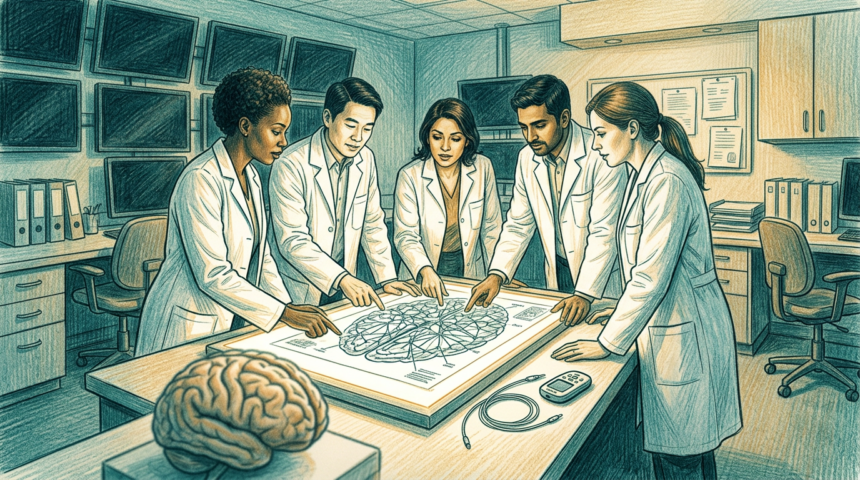
Quicktome Deep Brain instead works from the patient’s own imaging. It localizes implanted leads, segments deep brain structures and maps the white matter tracts that connect them across wider brain networks, giving surgeons and neurologists a shared view from implantation through follow-up programming.
“DBS outcomes depend not only on where a lead is placed, but on how it connects to the rest of a patient’s brain network,” said Dr. Mitesh Lotia, medical director of the movement disorders program at the AdventHealth Neuroscience Institute. He noted that Abbott DBS systems are supported as well.
Chief executive Stephen Scheeler said the clearance advances a single strategy: making the connectomic platform the standard across neuroscience care. The module joins Quicktome’s structural and functional connectome applications on one cloud platform, running inside a HIPAA-compliant process.
The bet is that personalizing therapy to each patient’s wiring, rather than to a textbook brain, will make DBS results more consistent across hospitals.