

By using this site, you agree to the Privacy Policy and Terms of Use.
Accept
MedsparkMedsparkMedspark
  • Home
  • News & Alerts
    News & AlertsShow More
    Google’s TabFM Makes Accurate Predictions Without Fine-Tuning Per Dataset
    By
    msadmin
    July 12, 2026
    ARPA-H Awards $160 Million for AI-Enabled Personalized Gene Editing to Tackle Rare Diseases
    By
    msadmin
    July 12, 2026
    Linux Foundation opens health stack with AI commons backed by Google and Microsoft
    By
    msadmin
    July 12, 2026
    Michigan Medicine neuroimaging model outperforms GPT in brain scan analysis
    By
    msadmin
    July 12, 2026
    Machine Learning Links Children’s Screen Time to Distinct Metabolic Fingerprint and Heart Risk
    By
    msadmin
    July 7, 2026
  • Spotlight
    SpotlightShow More
    ARPA-H Awards $160 Million for AI-Enabled Personalized Gene Editing to Tackle Rare Diseases
    By
    msadmin
    July 12, 2026
    Strategic healthcare AI governance framework abstract illustration
    Building a Resilient Healthcare AI Strategy: Insights from Industry Leaders
    By
    msadmin
    May 15, 2026
    Pharma AI Alliance Expands: Owkin and AstraZeneca Deploy New Drug Discovery Models
    By
    msadmin
    May 14, 2026
    7 Must-Attend MedTech Events in South Africa for 2025
    By
    Jostel Owusu
    August 9, 2025
    EY Expert Urges Healthcare Leaders to Double Down on AI Amid Economic Uncertainty
    By
    Yu Chi Huang
    July 11, 2025
  • Articles
    ArticlesShow More
    Google’s TabFM Makes Accurate Predictions Without Fine-Tuning Per Dataset
    By
    msadmin
    July 12, 2026
    A doctor using an AI scribe system with a holographic transcription interface on a tablet in a modern clinic, showing ambient speech recognition and automated clinical documentation
    AI Scribe Adoption in Healthcare, From Ambient Listening to Autonomous Documentation
    By
    msadmin
    July 12, 2026
    A physician using a tablet with a glowing AI assistant hologram nearby, representing cognitive offloading in modern medicine with teal and gold futuristic lighting
    Understanding Cognitive Offloading in Modern Medicine
    By
    msadmin
    July 12, 2026
    AI-powered drug discovery concept showing a holographic molecular structure analyzed by neural networks in a sleek pharmaceutical laboratory with teal and gold lighting
    How Machine Learning Is Reshaping Pharmaceutical R&D
    By
    msadmin
    July 12, 2026
    Michigan Medicine neuroimaging model outperforms GPT in brain scan analysis
    By
    msadmin
    July 12, 2026
  • Events
    EventsShow More
    Stanford Health AI Week Highlights AI’s Growing Role in Medical Education, Patient Empowerment, and Life Sciences
    By
    msadmin
    June 19, 2026
    HIMSS APAC 2026: Re-engineering APAC Health Systems in the AI Era
    By
    msadmin
    June 9, 2026
    AIMed 2026: Bridging the Gap Between AI Promise and Clinical Reality in Kraków
    By
    msadmin
    April 30, 2026
    7 Must-Attend MedTech Events in South Africa for 2025
    By
    Jostel Owusu
    August 9, 2025
    Cleveland Clinic’s First AI Summit Signals Bold Future for Healthcare
    By
    msadmin
    July 19, 2025
  • About
    • Mission
    • Services
    • Contact
Font ResizerAa
MedsparkMedspark
Font ResizerAa
  • Home
  • News & Alerts
  • Spotlight
  • Articles
  • Events
  • About
  • Quick Links
    • Home
    • News & Alerts
    • Spotlight
    • Articles
    • Events
  • About MedSpark
    • Our Purpose & Vision
    • Services
    • Contact
Follow US
News & Alerts

AI Drives Innovation in Women’s Health, From Early Diagnoses to Personalized Care

AI is transforming women’s health by enabling earlier diagnoses, more tailored treatments, and increased attention to conditions that have long been overlooked.

Yu Chi Huang
By
Yu Chi Huang
Yu Chi Huang
ByYu Chi Huang
Yu Chi is a senior regulatory affairs specialist and medical researcher focusing on medical devices.
Published: June 17, 2025
Share
3 Min Read
SHARE

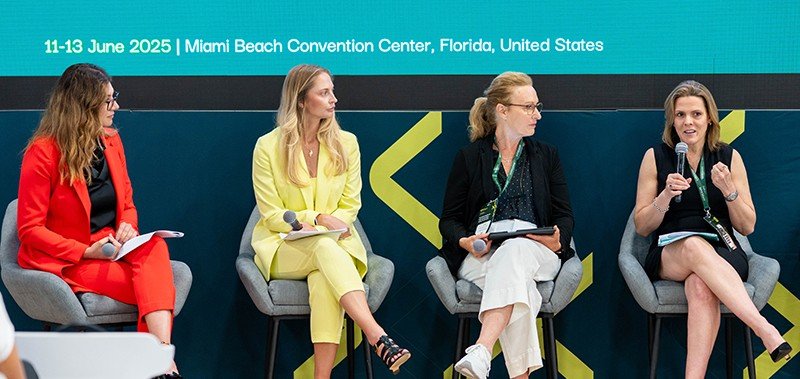
As first reported by Medical Xpress, AI is advancing women’s healthcare in groundbreaking ways—from smart sanitary napkins that detect ovarian cancer biomarkers to machine learning models that diagnose endometriosis years earlier than traditional methods. At the recent World Health Expo in Miami, experts described how AI is ushering in a long-overdue transformation in how female-specific conditions are understood and treated. These technologies are already offering more proactive, precise, and personalized care.
Contents
Closing diagnostic gaps with dataPersonalization, access, and inclusion challengesFemtech rises—alongside skepticism

Source: worldhealthexpo.com.

Closing diagnostic gaps with data

Historically, women have faced delayed diagnoses for conditions like endometriosis and PCOS, often enduring years of pain or infertility. AI tools are helping change that by analyzing vast datasets—ranging from patient histories to wearables and imaging—to identify risk patterns more quickly and accurately. AI is also making strides in predicting complications in pregnancy, refining IVF treatments, and enhancing breast and cervical cancer screening. A recent study even found that AI could flag high-risk pregnancies weeks before doctors could.

Personalization, access, and inclusion challenges

Smart wearables like the Oura ring and Ava Bracelet are empowering women to track mood changes, fertility, and menopause symptoms, feeding algorithms that offer personalized guidance. However, experts caution that these innovations are only as good as the data they’re built on.

Source: avawomen.com.

AI models trained on limited or biased datasets risk missing signs in underrepresented populations. Dr. Irman Forghani of Mount Sinai Medical Center emphasized the need for more diverse data and greater participation from women in developing these tools to ensure equitable outcomes.

Femtech rises—alongside skepticism

While femtech investment is on the rise, funding remains limited and disproportionately favors male-led ventures. Public opinion also reflects cautious optimism: A Florida survey showed that while 54% of residents are comfortable with AI assisting in diagnoses, fewer support AI-led treatment or medication recommendations. Concerns around algorithmic bias and misinterpretation persist. Experts like Demi Radeva argue that human oversight is still essential to avoid mislabeling or diagnostic errors that machines alone may not catch.

AI is revolutionizing women’s healthcare by accelerating diagnostics, personalizing treatments, and spotlighting long-neglected conditions. However, its promise hinges on inclusive data, diverse leadership, and thoughtful integration with human expertise. As innovation continues, the focus must remain on ensuring these technologies serve all women equitably—delivering smarter, fairer, and more compassionate care.

VIA:MedicalXpress
Share This Article
Facebook Copy Link Print
Yu Chi Huang
ByYu Chi Huang
Yu Chi is a senior regulatory affairs specialist and medical researcher focusing on medical devices.
banner-medspark-horiz

You Might Also Like

News & Alerts

Armenia Launches First AI System to Analyze Lab Data, Ushering in a New Era of Preventive Healthcare

By
Yu Chi Huang
June 4, 2025
News & Alerts

Deep learning pipeline pinpoints anatomical source of snoring from audio alone

By
msadmin
July 5, 2026
ArticlesNews & Alerts

Michigan Medicine neuroimaging model outperforms GPT in brain scan analysis

By
msadmin
July 12, 2026
News & Alerts

Wireless Retinal Implant Restores Reading Ability in Macular Degeneration Patients

By
msadmin
June 17, 2026
Facebook Twitter Youtube Linkedin
Quick Links
  • News & Alerts
  • Articles
  • Spotlight
  • Events
About Medspark
  • Mission
  • Services
  • Contact

© Copyright 2026 MedSpark. All rights reserved.

Privacy Policy | Legal