


By using this site, you agree to the Privacy Policy and Terms of Use.
Accept
MedsparkMedsparkMedspark
  • Home
  • News & Alerts
    News & AlertsShow More
    Google’s TabFM Makes Accurate Predictions Without Fine-Tuning Per Dataset
    By
    msadmin
    July 12, 2026
    ARPA-H Awards $160 Million for AI-Enabled Personalized Gene Editing to Tackle Rare Diseases
    By
    msadmin
    July 12, 2026
    Linux Foundation opens health stack with AI commons backed by Google and Microsoft
    By
    msadmin
    July 12, 2026
    Michigan Medicine neuroimaging model outperforms GPT in brain scan analysis
    By
    msadmin
    July 12, 2026
    Machine Learning Links Children’s Screen Time to Distinct Metabolic Fingerprint and Heart Risk
    By
    msadmin
    July 7, 2026
  • Spotlight
    SpotlightShow More
    ARPA-H Awards $160 Million for AI-Enabled Personalized Gene Editing to Tackle Rare Diseases
    By
    msadmin
    July 12, 2026
    Strategic healthcare AI governance framework abstract illustration
    Building a Resilient Healthcare AI Strategy: Insights from Industry Leaders
    By
    msadmin
    May 15, 2026
    Pharma AI Alliance Expands: Owkin and AstraZeneca Deploy New Drug Discovery Models
    By
    msadmin
    May 14, 2026
    7 Must-Attend MedTech Events in South Africa for 2025
    By
    Jostel Owusu
    August 9, 2025
    EY Expert Urges Healthcare Leaders to Double Down on AI Amid Economic Uncertainty
    By
    Yu Chi Huang
    July 11, 2025
  • Articles
    ArticlesShow More
    Google’s TabFM Makes Accurate Predictions Without Fine-Tuning Per Dataset
    By
    msadmin
    July 12, 2026
    A doctor using an AI scribe system with a holographic transcription interface on a tablet in a modern clinic, showing ambient speech recognition and automated clinical documentation
    AI Scribe Adoption in Healthcare, From Ambient Listening to Autonomous Documentation
    By
    msadmin
    July 12, 2026
    A physician using a tablet with a glowing AI assistant hologram nearby, representing cognitive offloading in modern medicine with teal and gold futuristic lighting
    Understanding Cognitive Offloading in Modern Medicine
    By
    msadmin
    July 12, 2026
    AI-powered drug discovery concept showing a holographic molecular structure analyzed by neural networks in a sleek pharmaceutical laboratory with teal and gold lighting
    How Machine Learning Is Reshaping Pharmaceutical R&D
    By
    msadmin
    July 12, 2026
    Michigan Medicine neuroimaging model outperforms GPT in brain scan analysis
    By
    msadmin
    July 12, 2026
  • Events
    EventsShow More
    Stanford Health AI Week Highlights AI’s Growing Role in Medical Education, Patient Empowerment, and Life Sciences
    By
    msadmin
    June 19, 2026
    HIMSS APAC 2026: Re-engineering APAC Health Systems in the AI Era
    By
    msadmin
    June 9, 2026
    AIMed 2026: Bridging the Gap Between AI Promise and Clinical Reality in Kraków
    By
    msadmin
    April 30, 2026
    7 Must-Attend MedTech Events in South Africa for 2025
    By
    Jostel Owusu
    August 9, 2025
    Cleveland Clinic’s First AI Summit Signals Bold Future for Healthcare
    By
    msadmin
    July 19, 2025
  • About
    • Mission
    • Services
    • Contact
Font ResizerAa
MedsparkMedspark
Font ResizerAa
  • Home
  • News & Alerts
  • Spotlight
  • Articles
  • Events
  • About
  • Quick Links
    • Home
    • News & Alerts
    • Spotlight
    • Articles
    • Events
  • About MedSpark
    • Our Purpose & Vision
    • Services
    • Contact
Follow US
News & Alerts

AI Adoption Surges in French Healthcare, but Outdated IT Systems Slow Digital Transformation

A new report reveals that while AI use in French healthcare is expanding rapidly, reliance on obsolete IT infrastructure is creating serious security and operational challenges.

Yu Chi Huang
By
Yu Chi Huang
Yu Chi Huang
ByYu Chi Huang
Yu Chi is a senior regulatory affairs specialist and medical researcher focusing on medical devices.
Published: June 18, 2025
Share
3 Min Read
SHARE

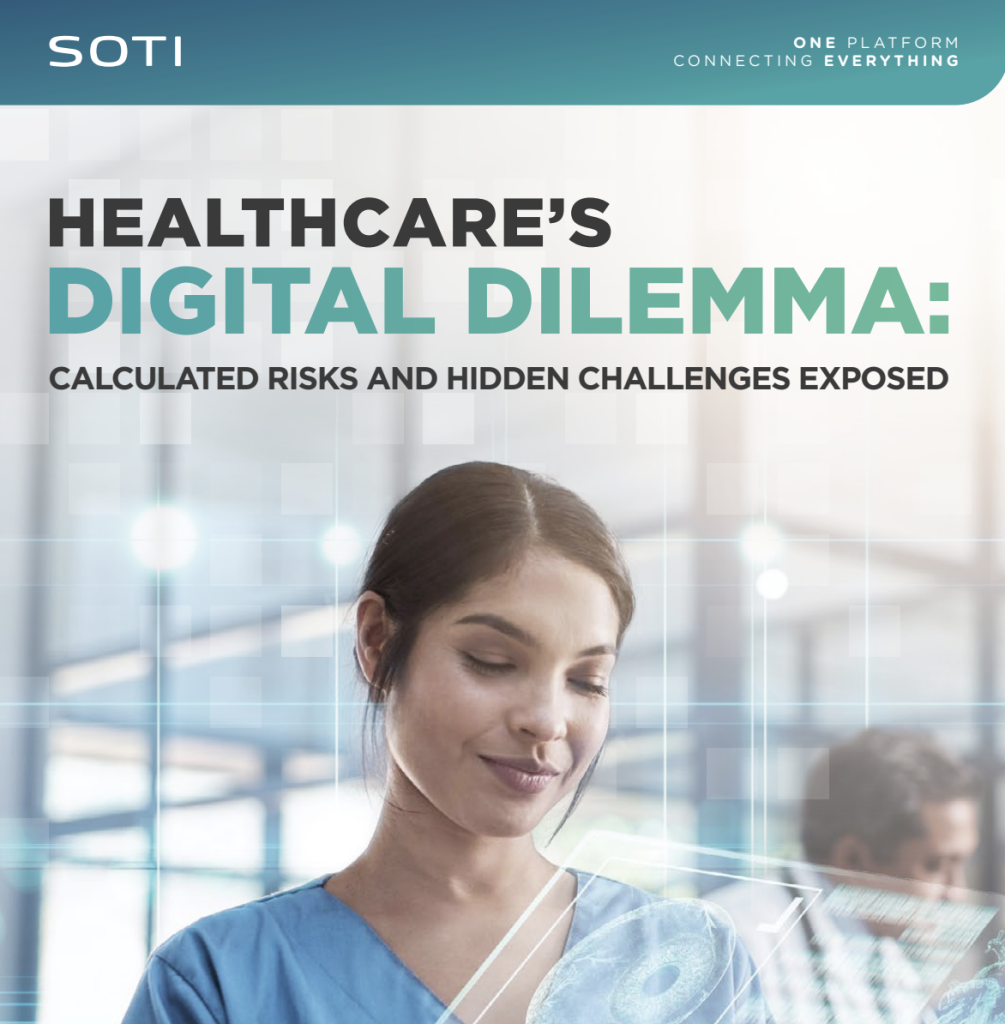
As first reported by ActulA, French healthcare institutions are rapidly incorporating artificial intelligence into their daily operations, yet the momentum is being slowed by outdated IT systems that limit efficiency and elevate security risks. According to SOTI’s new report, “Digital Dilemma and Healthcare: Deciphering Emerging Risks and Challenges,” AI adoption in France is on a steep rise — with 81% of facilities expected to deploy AI by 2025, compared to just 45% in 2024.
Contents
Rising security incidents signal urgent infrastructure needsModern solutions for a digital future

Source: soti.net.

The most common AI applications include updating patient records (60%), medical data analysis (55%), treatment planning (54%), diagnostic support (42%), and personalized care (37%). These gains are being funded through a shift in IT budgets towards emerging technologies. However, 97% of facilities still operate on aging infrastructure, which often lacks the security, interoperability, and performance required for effective integration.

Rising security incidents signal urgent infrastructure needs

Security is an increasing concern: 77% of French healthcare organizations experienced one or more security breaches over the past year. In response, the number of IT leaders prioritizing cybersecurity has doubled, with many citing data protection and securing shared devices as top priorities. The use of connected medical devices and telehealth — now present in 99% of surveyed facilities — adds complexity, especially when 60% of these tools are based on non-integrated or obsolete systems.

The consequences of this outdated technology are far-reaching. IT teams report being overwhelmed by maintenance tasks, with 65% spending excessive time resolving technical problems. Nearly half (46%) say they lack the time to focus on strategic initiatives, while others struggle to deploy new devices or provide adequate remote support. These challenges hinder the healthcare sector’s ability to keep pace with technological innovation and meet growing patient care demands.

Modern solutions for a digital future

To overcome these limitations, SOTI experts recommend investing in modern platforms like Enterprise Mobility Management (EMM) systems. These tools enable centralized, secure control of all medical devices — from tablets to scanners to connected monitors. Faki Saadi, Sales Director for France, the UK, and Ireland at SOTI, emphasized the importance of such solutions, stating they are crucial for safeguarding patient data, improving efficiency, and ensuring institutions are prepared for the evolving healthcare landscape.

While French healthcare is embracing the potential of AI at an accelerating pace, the path to a fully digital system is blocked by aging infrastructure and mounting cybersecurity threats. To truly capitalize on the benefits of digital transformation, institutions must urgently modernize their IT systems — turning innovation into sustained, secure, and patient-centered care.


SOURCES:Soti.net
VIA:ActuIA
Share This Article
Facebook Copy Link Print
Yu Chi Huang
ByYu Chi Huang
Yu Chi is a senior regulatory affairs specialist and medical researcher focusing on medical devices.
banner-medspark-horiz

You Might Also Like

News & Alerts

Global MedTech Momentum: UK’s £29B NHS Investment Leads Wave of Innovation Across AI, Women’s Health, and Decentralized Research

By
Yu Chi Huang
June 17, 2025
News & Alerts

CHAI and The Joint Commission Partner to Launch AI Governance Playbooks for U.S. Healthcare Providers

By
Yu Chi Huang
June 16, 2025
News & AlertsSpotlight

ARPA-H Awards $160 Million for AI-Enabled Personalized Gene Editing to Tackle Rare Diseases

By
msadmin
July 12, 2026
News & AlertsSpotlight

Pharma AI Alliance Expands: Owkin and AstraZeneca Deploy New Drug Discovery Models

By
msadmin
May 14, 2026
Facebook Twitter Youtube Linkedin
Quick Links
  • News & Alerts
  • Articles
  • Spotlight
  • Events
About Medspark
  • Mission
  • Services
  • Contact

© Copyright 2026 MedSpark. All rights reserved.

Privacy Policy | Legal