

By using this site, you agree to the Privacy Policy and Terms of Use.
Accept
MedsparkMedsparkMedspark
  • Home
  • News & Alerts
    News & AlertsShow More
    Google’s TabFM Makes Accurate Predictions Without Fine-Tuning Per Dataset
    By
    msadmin
    July 12, 2026
    ARPA-H Awards $160 Million for AI-Enabled Personalized Gene Editing to Tackle Rare Diseases
    By
    msadmin
    July 12, 2026
    Linux Foundation opens health stack with AI commons backed by Google and Microsoft
    By
    msadmin
    July 12, 2026
    Michigan Medicine neuroimaging model outperforms GPT in brain scan analysis
    By
    msadmin
    July 12, 2026
    Machine Learning Links Children’s Screen Time to Distinct Metabolic Fingerprint and Heart Risk
    By
    msadmin
    July 7, 2026
  • Spotlight
    SpotlightShow More
    ARPA-H Awards $160 Million for AI-Enabled Personalized Gene Editing to Tackle Rare Diseases
    By
    msadmin
    July 12, 2026
    Strategic healthcare AI governance framework abstract illustration
    Building a Resilient Healthcare AI Strategy: Insights from Industry Leaders
    By
    msadmin
    May 15, 2026
    Pharma AI Alliance Expands: Owkin and AstraZeneca Deploy New Drug Discovery Models
    By
    msadmin
    May 14, 2026
    7 Must-Attend MedTech Events in South Africa for 2025
    By
    Jostel Owusu
    August 9, 2025
    EY Expert Urges Healthcare Leaders to Double Down on AI Amid Economic Uncertainty
    By
    Yu Chi Huang
    July 11, 2025
  • Articles
    ArticlesShow More
    Google’s TabFM Makes Accurate Predictions Without Fine-Tuning Per Dataset
    By
    msadmin
    July 12, 2026
    A doctor using an AI scribe system with a holographic transcription interface on a tablet in a modern clinic, showing ambient speech recognition and automated clinical documentation
    AI Scribe Adoption in Healthcare, From Ambient Listening to Autonomous Documentation
    By
    msadmin
    July 12, 2026
    A physician using a tablet with a glowing AI assistant hologram nearby, representing cognitive offloading in modern medicine with teal and gold futuristic lighting
    Understanding Cognitive Offloading in Modern Medicine
    By
    msadmin
    July 12, 2026
    AI-powered drug discovery concept showing a holographic molecular structure analyzed by neural networks in a sleek pharmaceutical laboratory with teal and gold lighting
    How Machine Learning Is Reshaping Pharmaceutical R&D
    By
    msadmin
    July 12, 2026
    Michigan Medicine neuroimaging model outperforms GPT in brain scan analysis
    By
    msadmin
    July 12, 2026
  • Events
    EventsShow More
    Stanford Health AI Week Highlights AI’s Growing Role in Medical Education, Patient Empowerment, and Life Sciences
    By
    msadmin
    June 19, 2026
    HIMSS APAC 2026: Re-engineering APAC Health Systems in the AI Era
    By
    msadmin
    June 9, 2026
    AIMed 2026: Bridging the Gap Between AI Promise and Clinical Reality in Kraków
    By
    msadmin
    April 30, 2026
    7 Must-Attend MedTech Events in South Africa for 2025
    By
    Jostel Owusu
    August 9, 2025
    Cleveland Clinic’s First AI Summit Signals Bold Future for Healthcare
    By
    msadmin
    July 19, 2025
  • About
    • Mission
    • Services
    • Contact
Font ResizerAa
MedsparkMedspark
Font ResizerAa
  • Home
  • News & Alerts
  • Spotlight
  • Articles
  • Events
  • About
  • Quick Links
    • Home
    • News & Alerts
    • Spotlight
    • Articles
    • Events
  • About MedSpark
    • Our Purpose & Vision
    • Services
    • Contact
Follow US
Articles

Taipei Veterans General Hospital Uses AI to Boost Preventive Care and Reduce ‘Unhealthy Years’ in Aging Populations

The hospital is integrating AI-driven preventive medicine and point-of-care technologies to enhance quality of life and reduce disease burden among Taiwan’s elderly, while also advancing sustainability and international medical services.

Yu Chi Huang
By
Yu Chi Huang
Yu Chi Huang
ByYu Chi Huang
Yu Chi is a senior regulatory affairs specialist and medical researcher focusing on medical devices.
Published: June 18, 2025
Share
3 Min Read
SHARE

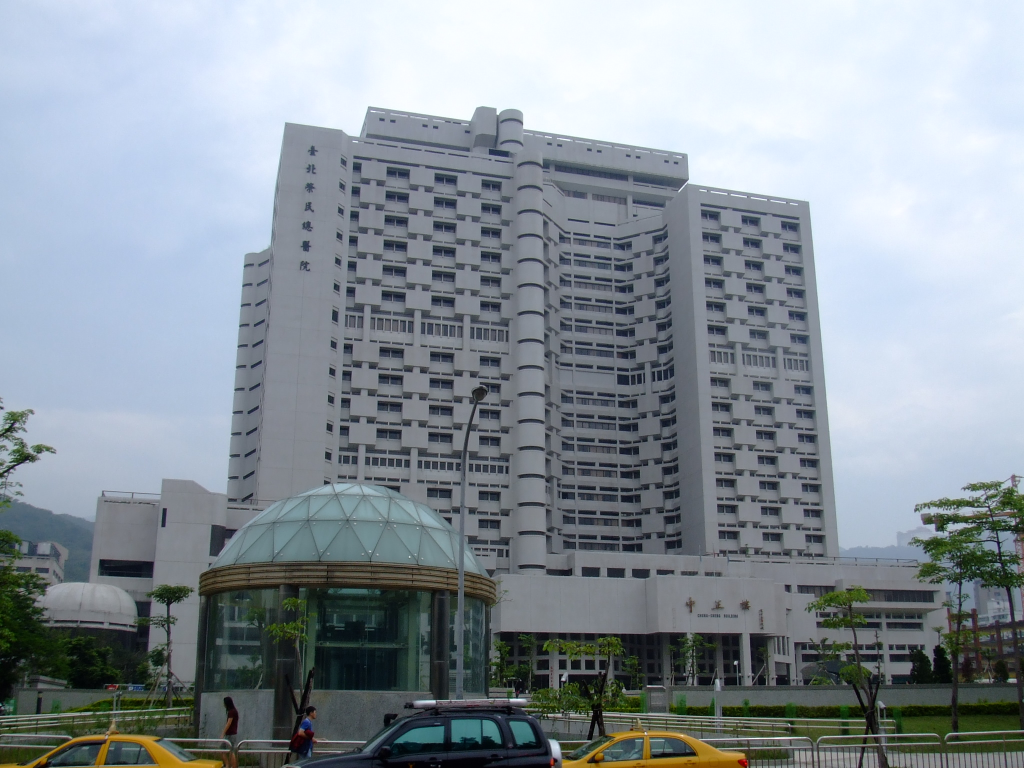
As first reported by Healthcare Asia Magazine, Taipei Veterans General Hospital is adopting artificial intelligence to reshape how Taiwan addresses aging-related health challenges. With a national focus on reducing “unhealthy years”—the period of life marked by disease and disability—the hospital aims to detect illnesses earlier and identify risks before symptoms arise.
Contents
Remote monitoring and point-of-care innovationsSustainable healthcare infrastructure in focusInternational patients seek specialized care

Source: wikipedia.org.

“We can apply AI in preventive medicine… to detect the disease in the early time,” said Dr. Albert Yang, Deputy Director of the Medical AI Development Centre. “Hopefully we can also detect the risk… when they are not having the illness yet.”

Remote monitoring and point-of-care innovations

The hospital is also deploying point-of-care technologies to monitor patients remotely, helping track progression of diseases like cancer, cardiovascular conditions, and neurodegenerative disorders even when patients are at home. This approach aims to bridge the gap between hospital care and daily living, allowing for more personalized, continuous preventive care. “We want to develop technology to track the progress of the patient when they are at home,” Dr. Yang added.

Sustainable healthcare infrastructure in focus

In addition to digital health advancements, the hospital has implemented several eco-conscious measures. “We have been replacing all the lighting with LEDs,” said Dr. Cheng-Ying Shiau, Head of Health and Safety Administration. Elevators now regenerate power, and lake water is recycled for air conditioning—steps that contribute to reducing the facility’s overall environmental footprint.

International patients seek specialized care

Taipei Veterans General Hospital is also growing as a hub for international medical tourism. “Last year, we received around 6,000 international patients,” noted Dr. Yi-Jen Wang of the International Medical Service Centre. These patients, hailing from China, Hong Kong, South Asia, the U.S., and Europe, often seek specialized services such as orthopedic surgeries and advanced cancer treatments not widely available elsewhere.

Taipei Veterans General Hospital’s integration of AI, remote care tools, and sustainability initiatives illustrates how modern hospitals can simultaneously advance public health and environmental goals. By prioritizing early detection and quality of life in aging populations, the hospital is emerging as a model for future-ready healthcare across Asia and beyond.


VIA:Healthcare Asia Magazine
Share This Article
Facebook Copy Link Print
Yu Chi Huang
ByYu Chi Huang
Yu Chi is a senior regulatory affairs specialist and medical researcher focusing on medical devices.
banner-medspark-horiz

You Might Also Like

A physician using a tablet with a glowing AI assistant hologram nearby, representing cognitive offloading in modern medicine with teal and gold futuristic lighting
Articles

Understanding Cognitive Offloading in Modern Medicine

By
msadmin
July 12, 2026
ArticlesNews & Alerts

Michigan Medicine neuroimaging model outperforms GPT in brain scan analysis

By
msadmin
July 12, 2026
Articles

AI in Surgical Research: How Large Language Models Are Accelerating Medical Discovery at the Medical College of Wisconsin

By
msadmin
June 30, 2026
Articles

ChatGPT Aids Rare Diagnosis as Tech Giants Accelerate AI Revolution in Healthcare

By
Yu Chi Huang
July 7, 2025
Facebook Twitter Youtube Linkedin
Quick Links
  • News & Alerts
  • Articles
  • Spotlight
  • Events
About Medspark
  • Mission
  • Services
  • Contact

© Copyright 2026 MedSpark. All rights reserved.

Privacy Policy | Legal