


By using this site, you agree to the Privacy Policy and Terms of Use.
Accept
MedsparkMedsparkMedspark
  • Home
  • News & Alerts
    News & AlertsShow More
    Google’s TabFM Makes Accurate Predictions Without Fine-Tuning Per Dataset
    By
    msadmin
    July 12, 2026
    ARPA-H Awards $160 Million for AI-Enabled Personalized Gene Editing to Tackle Rare Diseases
    By
    msadmin
    July 12, 2026
    Linux Foundation opens health stack with AI commons backed by Google and Microsoft
    By
    msadmin
    July 12, 2026
    Michigan Medicine neuroimaging model outperforms GPT in brain scan analysis
    By
    msadmin
    July 12, 2026
    Machine Learning Links Children’s Screen Time to Distinct Metabolic Fingerprint and Heart Risk
    By
    msadmin
    July 7, 2026
  • Spotlight
    SpotlightShow More
    ARPA-H Awards $160 Million for AI-Enabled Personalized Gene Editing to Tackle Rare Diseases
    By
    msadmin
    July 12, 2026
    Strategic healthcare AI governance framework abstract illustration
    Building a Resilient Healthcare AI Strategy: Insights from Industry Leaders
    By
    msadmin
    May 15, 2026
    Pharma AI Alliance Expands: Owkin and AstraZeneca Deploy New Drug Discovery Models
    By
    msadmin
    May 14, 2026
    7 Must-Attend MedTech Events in South Africa for 2025
    By
    Jostel Owusu
    August 9, 2025
    EY Expert Urges Healthcare Leaders to Double Down on AI Amid Economic Uncertainty
    By
    Yu Chi Huang
    July 11, 2025
  • Articles
    ArticlesShow More
    Google’s TabFM Makes Accurate Predictions Without Fine-Tuning Per Dataset
    By
    msadmin
    July 12, 2026
    A doctor using an AI scribe system with a holographic transcription interface on a tablet in a modern clinic, showing ambient speech recognition and automated clinical documentation
    AI Scribe Adoption in Healthcare, From Ambient Listening to Autonomous Documentation
    By
    msadmin
    July 12, 2026
    A physician using a tablet with a glowing AI assistant hologram nearby, representing cognitive offloading in modern medicine with teal and gold futuristic lighting
    Understanding Cognitive Offloading in Modern Medicine
    By
    msadmin
    July 12, 2026
    AI-powered drug discovery concept showing a holographic molecular structure analyzed by neural networks in a sleek pharmaceutical laboratory with teal and gold lighting
    How Machine Learning Is Reshaping Pharmaceutical R&D
    By
    msadmin
    July 12, 2026
    Michigan Medicine neuroimaging model outperforms GPT in brain scan analysis
    By
    msadmin
    July 12, 2026
  • Events
    EventsShow More
    Stanford Health AI Week Highlights AI’s Growing Role in Medical Education, Patient Empowerment, and Life Sciences
    By
    msadmin
    June 19, 2026
    HIMSS APAC 2026: Re-engineering APAC Health Systems in the AI Era
    By
    msadmin
    June 9, 2026
    AIMed 2026: Bridging the Gap Between AI Promise and Clinical Reality in Kraków
    By
    msadmin
    April 30, 2026
    7 Must-Attend MedTech Events in South Africa for 2025
    By
    Jostel Owusu
    August 9, 2025
    Cleveland Clinic’s First AI Summit Signals Bold Future for Healthcare
    By
    msadmin
    July 19, 2025
  • About
    • Mission
    • Services
    • Contact
Font ResizerAa
MedsparkMedspark
Font ResizerAa
  • Home
  • News & Alerts
  • Spotlight
  • Articles
  • Events
  • About
  • Quick Links
    • Home
    • News & Alerts
    • Spotlight
    • Articles
    • Events
  • About MedSpark
    • Our Purpose & Vision
    • Services
    • Contact
Follow US
Events

Experts Urge Cautious Adoption of Agentic AI in Healthcare Workflows at HIMSS AI Forum

Yu Chi Huang
By
Yu Chi Huang
Yu Chi Huang
ByYu Chi Huang
Yu Chi is a senior regulatory affairs specialist and medical researcher focusing on medical devices.
Published: July 11, 2025
Share
3 Min Read
SHARE

As first reported by Mobi Health News, healthcare leaders gathered at the HIMSS AI Forum to discuss how agentic AI—autonomous artificial intelligence that can make decisions and act with minimal human input—is beginning to reshape clinical workflows. During the session titled “The Future of Healthcare with Agentic AI,” panelists highlighted both the transformative potential and the risks of integrating these intelligent agents into healthcare systems.
Contents
Starting small and staying accountableMoving forward with transparency and partnerships

Source: himssconference.com.

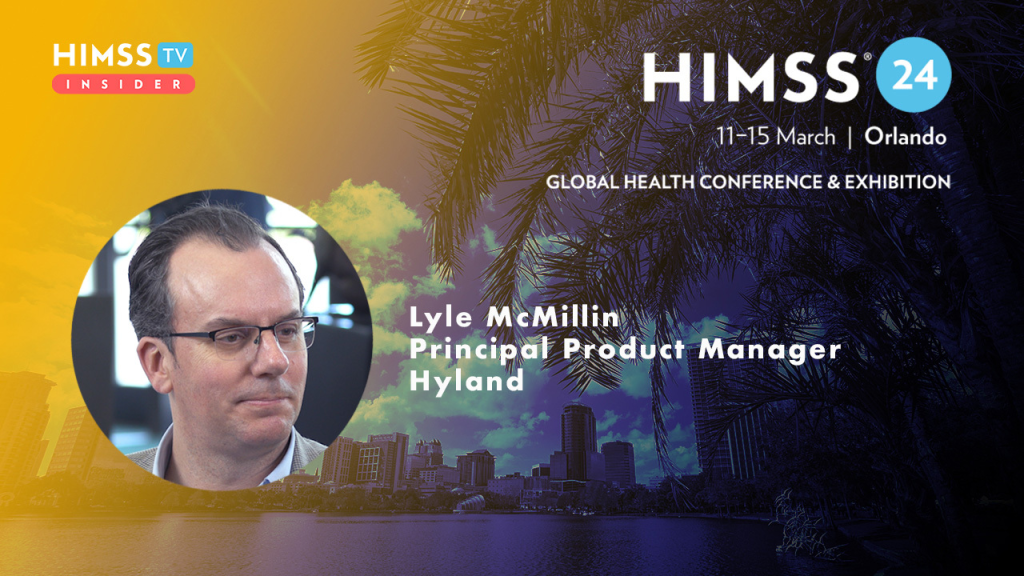
Lyle McMillin, AVP of product management at Hyland, explained that agentic AI is increasingly being embedded across departments, acting not as standalone tools but as part of broader organizational workflows. He noted that a key challenge will be managing unstructured data, which now makes up the majority of information in healthcare systems and is more difficult to operationalize than structured data.
Source: brightcovegallery.com.

Starting small and staying accountable

Panelists stressed that healthcare organizations should not rush into agentic AI adoption. Jason Smith, venture fellow at Matter, advised institutions to first clarify why they want to shift from traditional AI to agentic AI. He recommended starting with tasks that involve minimal workflow variability—such as documentation summarization—to gradually build understanding of large language models (LLMs) and their limitations.

Physicians on the panel voiced caution about using agentic AI in diagnostics. Dr. Jonah Feldman from NYU Langone emphasized that clinicians bear heavy responsibility for patient decisions, and while AI can support, it should never displace that weight. Dr. Lukasz Kowalczyk, who moderated the panel, echoed this concern and raised legal and ethical questions around liability and centralized decision-making in health systems.

Jonah Feldman, MD. Source: nyulangone.org.

Moving forward with transparency and partnerships

Panelists agreed that success with agentic AI depends on strong partnerships between healthcare organizations and AI vendors. McMillin stressed the importance of understanding how these agents make decisions, while Kowalczyk warned against the illusion of readiness in such rapidly evolving technology.

The HIMSS panel revealed a cautious optimism about agentic AI’s future in healthcare. While its potential is undeniable, panelists emphasized a need for transparency, thoughtful integration, and ongoing partnerships to ensure these tools enhance care without compromising safety or accountability.


VIA:mobihealthnews
Share This Article
Facebook Copy Link Print
Yu Chi Huang
ByYu Chi Huang
Yu Chi is a senior regulatory affairs specialist and medical researcher focusing on medical devices.
banner-medspark-horiz

You Might Also Like

Events

UK’s Brightest AI4Health Researchers Shine at National Doctoral Conference in York

By
msadmin
June 11, 2025
Events

HIMSS APAC 2026: Re-engineering APAC Health Systems in the AI Era

By
msadmin
June 9, 2026
Events

Stanford Health AI Week Highlights AI’s Growing Role in Medical Education, Patient Empowerment, and Life Sciences

By
msadmin
June 19, 2026
Events

Cleveland Clinic’s First AI Summit Signals Bold Future for Healthcare

By
msadmin
July 19, 2025
Facebook Twitter Youtube Linkedin
Quick Links
  • News & Alerts
  • Articles
  • Spotlight
  • Events
About Medspark
  • Mission
  • Services
  • Contact

© Copyright 2026 MedSpark. All rights reserved.

Privacy Policy | Legal