

By using this site, you agree to the Privacy Policy and Terms of Use.
Accept
MedsparkMedsparkMedspark
  • Home
  • News & Alerts
    News & AlertsShow More
    Samsung spinoff wins FDA clearance for AI ECG analysis software
    By
    msadmin
    October 11, 2026
    FDA clears software that builds 3D bone from a routine spine MRI
    By
    msadmin
    October 11, 2026
    Vitalize raises $31M to run hospitals like air traffic control
    By
    msadmin
    October 11, 2026
    Healthleap nets $38M to catch what hospital charts hide
    By
    msadmin
    October 11, 2026
    A robotics upstart banks $75M to build drugs without hands
    By
    msadmin
    October 11, 2026
  • Spotlight
    SpotlightShow More
    Robinhood Ventures Fund II brings retail capital to healthcare AI
    By
    msadmin
    August 13, 2026
    Adialante brings accessible MRI-based cancer screening
    By
    msadmin
    August 11, 2026
    CellType models biology so AI can discover drugs
    By
    msadmin
    August 11, 2026
    Healthcare AI startups in Robinhood Ventures Fund II
    By
    msadmin
    August 11, 2026
    OpenAI launches GPT-Rosalind for life sciences research
    By
    msadmin
    July 17, 2026
  • Articles
    ArticlesShow More
    Proteomics model picks breast cancer drugs from biopsies
    By
    msadmin
    September 10, 2026
    CRISP model reads frozen sections to steer cancer surgery
    By
    msadmin
    September 10, 2026
    Consumer chatbots are building a medical system outside hospitals
    By
    msadmin
    August 21, 2026
    Reasoning gaps hold back AI agents in scientific discovery
    By
    msadmin
    August 11, 2026
    Benchmark scores can’t track real clinical LLM use, Stanford says
    By
    msadmin
    August 11, 2026
  • About
    • Mission
    • Services
    • Contact
  • Shop
    • All Items
    • By Category
    • Cart
  • Newsletter
Font ResizerAa
MedsparkMedspark
Font ResizerAa
  • Home
  • News & Alerts
  • Spotlight
  • Articles
  • About
  • Shop
  • Newsletter
  • Home
  • News & Alerts
  • Spotlight
  • Articles
  • About
    • Mission
    • Services
    • Contact
  • Shop
    • All Items
    • By Category
    • Cart
  • Newsletter
Follow US
EventsNews & Alerts

Aidoc and Nvidia Launch BRIDGE to Streamline and Scale Safe Clinical AI Adoption

The new open-source framework aims to guide healthcare leaders through the safe and standardized integration of artificial intelligence into clinical workflows.

Yu Chi Huang
By
Yu Chi Huang
Yu Chi Huang
ByYu Chi Huang
Yu Chi is a senior regulatory affairs specialist and medical researcher focusing on medical devices.
Published: June 18, 2025
Share
2 Min Read
SHARE

As first reported by Healthcare IT News, Aidoc and NVIDIA have joined forces to create BRIDGE—an open-source framework developed to help health systems navigate the complexities of deploying artificial intelligence at scale. BRIDGE, short for Blueprint for Resilient Integration and Deployment of Guided Excellence, is designed to address the common issues that arise in fragmented AI adoption, including vendor disparities, inconsistent validation methods, and misaligned IT strategies.
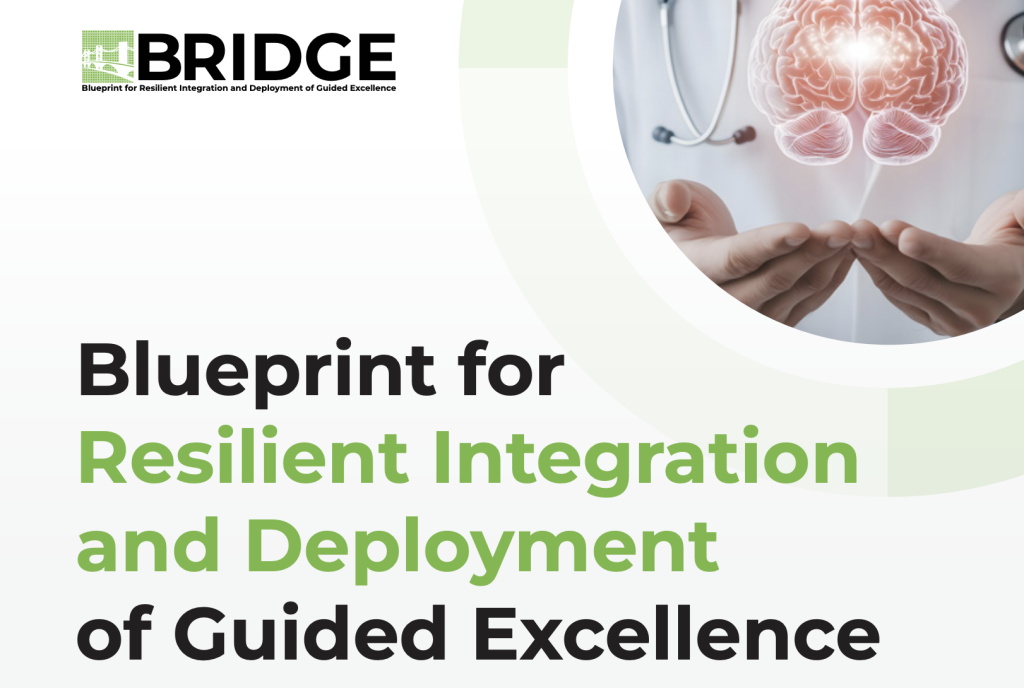
Source: aidoc.com.

BRIDGE establishes a shared foundation for hospitals and vendors by outlining key technical, regulatory, and operational criteria for AI tools to be considered healthcare-ready. It also incorporates trust-building measures to ensure that AI integration doesn’t just perform technically but earns the confidence of clinicians and decision-makers. Contributors to the framework include leading experts from University Hospitals, Ochsner Health, and the University of Washington.

From pilot to production: the need for structure

According to Dr. Efstathia Andrikopoulou of Harborview Medical Center, deploying AI responsibly involves more than evaluating an algorithm’s performance—it demands transparency, trust, and a scalable infrastructure. BRIDGE helps healthcare systems distinguish between AI models, set up minimum viable environments for deployment, and implement best practices for ongoing evaluation and scaling. In this way, the framework supports AI’s shift from experimental use to full integration in clinical settings.

Aidoc, known for embedding real-time AI insights into clinical workflows, and NVIDIA, a leader in AI infrastructure and microservices, built BRIDGE to accelerate adoption while maintaining safety and regulatory compliance. The initiative aligns with a larger trend: moving healthcare AI out of isolated pilots and into broad, impactful application across care settings like imaging, genomics, and patient monitoring.

BRIDGE represents a timely and practical advancement in the healthcare AI landscape, offering CIOs and governance leaders a clear, consensus-driven path to safe and scalable deployment. By defining what healthcare-ready AI looks like, Aidoc and NVIDIA aim to transform AI adoption from a fragmented process into a structured, trustworthy, and collaborative journey.


SOURCES:BRIDGE Framework on Aidocs
VIA:Healthcare IT News
Share This Article
Facebook Copy Link Print
Yu Chi Huang
ByYu Chi Huang
Yu Chi is a senior regulatory affairs specialist and medical researcher focusing on medical devices.

You Might Also Like

News & Alerts

Mayo Clinic Florida Taps Ambient Clinical Intelligence to Transform Care Delivery

By
Yu Chi Huang
June 11, 2025
News & Alerts

Generative AI stretches tiny datasets to spot dyslexia early

By
msadmin
October 10, 2026
News & Alerts

KAIST’s K-Fold model predicts drug-protein binding 25x faster

By
msadmin
August 28, 2026
News & Alerts

AI-Discovered Drug for Fatal Lung Disease Enters Phase 2a, Setting Global Milestone

By
Yu Chi Huang
June 4, 2025

AI news, analysis, and insights for healthcare, biotech, and pharma.

Facebook Twitter Youtube Linkedin
Quick Links
  • News & Alerts
  • Articles
  • Spotlight
  • Events
About Medspark
  • Mission
  • Services
  • Contact

© Copyright 2026 MedSpark. All rights reserved.

Privacy Policy | Legal