


The Rise of AI Driven Threats in Cloud Environments
Cloud platforms are facing increasingly sophisticated attacks, with the window between initial compromise and data exfiltration shrinking rapidly. Software supply chain incidents, including malicious packages in open source repositories and backdoors in widely used libraries, are on the rise. These attacks impact not only IT and security teams but also the broader business and its customers. Meanwhile, the rapid adoption of AI tools, large language models, and semi autonomous agents has introduced new layers of complexity and unpredictability into already stretched environments.
Credential Attacks and Non Human Identity Risks
Credential based breaches continue to dominate the threat landscape, with AI accelerating both phishing and exploitation tactics. Organizations now grapple with a growing population of non human identities such as service accounts, bots, RPA tools, and AI agents. These often outnumber human users by 45 to 1, yet a significant percentage lack proper governance. Delinea CEO Art Gilliland warns that relaxed oversight and invisible AI agents are creating serious enterprise risk. As Goldman Sachs estimates agentic AI could represent 60% of the software market, the need for real time credential security strategies becomes urgent.
Securing Cloud Configurations and Shared Responsibility
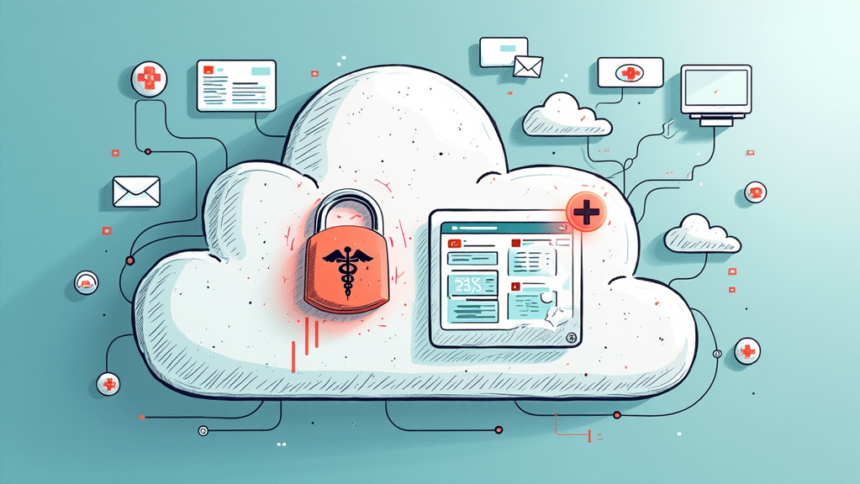
Post migration cloud security remains a persistent challenge due to misconfigurations, unclear shared responsibility boundaries, and configuration drift. The Center for Internet Security emphasizes that maintaining secure configurations after deployment is critical. Palo Alto Networks’ State of Cloud Security Report 2025 highlights that AI tools are reshaping cloud environments faster than organizations can secure them. Healthcare organizations, in particular, must strengthen HIPAA compliance under the shared model. For more information on specific vulnerabilities, refer to the latest CVEs documented at cve.org.
Source: Healthcareinfosecurity