


The Shifting Phishing Landscape
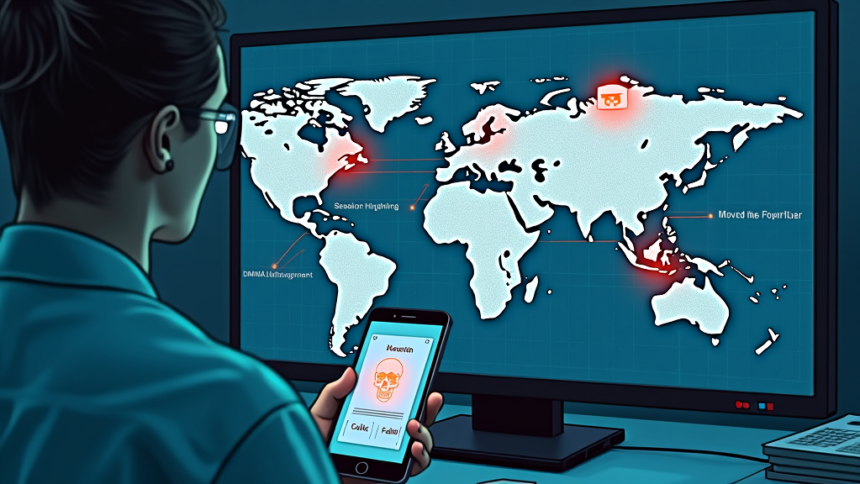
Phishing attacks have grown far more sophisticated, leveraging artificial intelligence to craft highly personalized emails that evade traditional security filters. Attackers now exploit human psychology at scale, blending social engineering with technical tricks to create a hybrid threat. The rise of tools like the Astaroth phishing kit, which bypasses two factor authentication through session hijacking and real time credential interception, shows how rapidly attack methods are evolving. Even QR codes have become a common vector, with roughly a quarter of email based phishing attacks now using them to trick users into scanning before thinking.
Impact Across Critical Sectors
Healthcare and financial institutions are prime targets. A Florida medication therapy firm reported a breach affecting nearly 150,000 individuals after a single employee’s email was compromised for just one hour. A regional California health network paid $600,000 to settle potential HIPAA violations tied to a 2019 phishing incident. Meanwhile, Chinese state aligned hackers have intensified spear phishing campaigns against Taiwan’s semiconductor ecosystem, targeting chipmakers and equipment suppliers. These cases underscore that no organization is immune and that even brief compromises can lead to significant data exposure and regulatory penalties.
Building a Resilient Defense
Organizations are moving beyond reliance on one time passcodes as primary authentication, since SMS based verification has proven vulnerable to interception. The acquisition of Inky by Kaseya highlights a push toward broader platform integration in email security, where access to login data and other signals improves threat detection. Experts from firms like Barracuda and KnowBe4 emphasize the need for human centric defenses that combine employee training with advanced automation. As global cybersecurity spending is projected to reach $135 billion by 2030, balancing AI driven detection with strong governance and user awareness becomes essential to counter these increasingly precise and accessible attacks.
Source: Healthcareinfosecurity