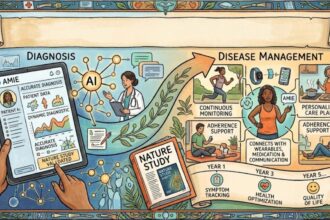


Recent developments in artificial intelligence for healthcare highlight a deepening integration of AI tools into clinical workflows, particularly in diagnostic imaging and clinical decision support. Two new partnerships and a published study demonstrate how AI is being positioned as a safety net and efficiency driver for clinicians.
Partnerships Expand AI Capabilities in Oncology and Clinical Decision Support
Azra AI and RevealDx have announced a partnership that combines Azra’s enterprise platform for incidental findings and oncology workflow automation with RevealDx’s AI tools for lung nodule characterization. This collaboration builds on Azra AI’s acquisition of Thynk Health, which provides cancer screening and incidental findings management. Health systems using the integrated solution can identify high-risk nodules, manage them through diagnosis, and connect to oncology workflow automation in a single workflow. For hospital radiology departments and cancer centers, this type of integration could reduce the time between incidental finding and specialist referral, potentially improving patient outcomes.
In a separate partnership, VisualDx and Perplexity have brought clinician-validated medical images directly into AI powered health answers. VisualDx, a clinical decision support system used by healthcare professionals, is now included among Perplexity’s Premium Health Sources alongside The New England Journal of Medicine, The BMJ, and the American Heart Association. For healthcare organizations evaluating generative AI tools, this partnership means that clinicians using Perplexity can access peer-reviewed medical imagery directly within their search results, potentially reducing reliance on unverified sources during clinical decision making.
Study Shows AI as a Safety Net for Missed Lung Cancer Detection
A study presented at the American Roentgen Ray Society’s 2026 annual meeting examined the potential for AI to identify lung cancers initially missed on routine chest X-rays at a large US quaternary medical center. The research highlights the growing clinical value of AI as a safety net for chest radiograph interpretation. For hospital systems and imaging centers, this study reinforces the case for deploying FDA-cleared AI tools as a secondary read mechanism. Implementing AI as a quality check on chest X-rays could help radiology departments reduce missed diagnoses, which carries direct implications for patient safety, liability risk, and compliance with quality reporting requirements under value based care models.
What This Means for Healthcare Organizations
For CISOs and health IT directors at hospitals and health systems, these developments underscore the importance of building secure integration pathways for AI tools into existing PACS and EHR systems. Each new AI partnership introduces data flow considerations around PHI, API security, and clinical validation. As AI tools move from pilot programs to embedded clinical workflows, healthcare organizations must ensure that vendor risk assessments include evaluation of model performance on local patient populations, data governance for training datasets, and compliance with HIPAA and FDA regulatory frameworks. The study on missed lung cancer detection also raises the stakes for health systems to evaluate whether their current radiology workflows would benefit from AI assisted secondary reads, and to consider how such tools fit into existing quality assurance programs.
Source: Healthitanswers