

By using this site, you agree to the Privacy Policy and Terms of Use.
Accept
MedsparkMedsparkMedspark
  • Home
  • News & Alerts
    News & AlertsShow More
    Insilico and SK Biopharm ink $2.5 billion AI drug discovery deal
    By
    msadmin
    July 17, 2026
    Insilico and Bora Pharma bring generative AI to drug manufacturing
    By
    msadmin
    July 17, 2026
    Senators Blumenthal and Hawley probe Medicare Advantage insurers over AI denials
    By
    msadmin
    July 17, 2026
    Singapore heart centre AI cuts cardiac damage reading to one minute
    By
    msadmin
    July 17, 2026
    First Canadian ALS patient receives Neuralink brain implant
    By
    msadmin
    July 17, 2026
  • Spotlight
    SpotlightShow More
    OpenAI launches GPT-Rosalind for life sciences research
    By
    msadmin
    July 17, 2026
    ARPA-H Awards $160 Million for AI-Enabled Personalized Gene Editing to Tackle Rare Diseases
    By
    msadmin
    July 12, 2026
    Strategic healthcare AI governance framework abstract illustration
    Building a Resilient Healthcare AI Strategy: Insights from Industry Leaders
    By
    msadmin
    May 15, 2026
    Pharma AI Alliance Expands: Owkin and AstraZeneca Deploy New Drug Discovery Models
    By
    msadmin
    May 14, 2026
    7 Must-Attend MedTech Events in South Africa for 2025
    By
    Jostel Owusu
    August 9, 2025
  • Articles
    ArticlesShow More
    Drug metabolism AI contest shows data matters more than model size
    By
    msadmin
    July 17, 2026
    Bigger AI models don’t always win in drug metabolism prediction
    By
    msadmin
    July 17, 2026
    AI model predicts immunotherapy response across cancer types
    By
    msadmin
    July 17, 2026
    Healthcare AI faces new risk from cognitive spoofing and fake expertise
    By
    msadmin
    July 17, 2026
    Mayo Clinic shares how it vets over 100 clinical AI tools for safety
    By
    msadmin
    July 17, 2026
  • Events
    EventsShow More
    Stanford Health AI Week Highlights AI’s Growing Role in Medical Education, Patient Empowerment, and Life Sciences
    By
    msadmin
    June 19, 2026
    HIMSS APAC 2026: Re-engineering APAC Health Systems in the AI Era
    By
    msadmin
    June 9, 2026
    AIMed 2026: Bridging the Gap Between AI Promise and Clinical Reality in Kraków
    By
    msadmin
    April 30, 2026
    7 Must-Attend MedTech Events in South Africa for 2025
    By
    Jostel Owusu
    August 9, 2025
    Cleveland Clinic’s First AI Summit Signals Bold Future for Healthcare
    By
    msadmin
    July 19, 2025
  • About
    • Mission
    • Services
    • Contact
Font ResizerAa
MedsparkMedspark
Font ResizerAa
  • Home
  • News & Alerts
  • Spotlight
  • Articles
  • Events
  • About
  • Quick Links
    • Home
    • News & Alerts
    • Spotlight
    • Articles
    • Events
  • About MedSpark
    • Our Purpose & Vision
    • Services
    • Contact
Follow US
ArticlesNews & Alerts

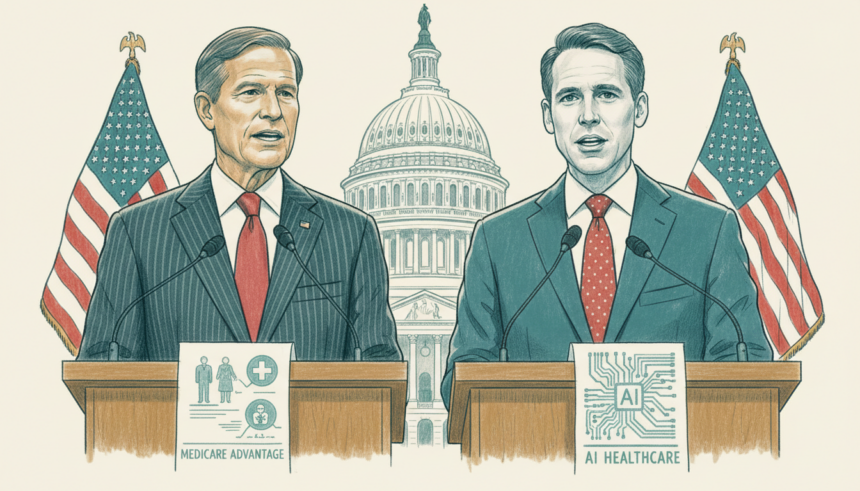
Bipartisan senators probe Medicare Advantage AI care denials

Blumenthal and Hawley demand records from UnitedHealth, Humana and CVS on AI use to block rehabilitative care.

MSAdmin
By
msadmin
MSAdmin
Bymsadmin
MedTech AI & Cybersecurity News
Follow:
Published: July 17, 2026
Share
2 Min Read
SHARE

Sens. Richard Blumenthal (D-Conn.) and Josh Hawley (R-Mo.) are calling on the nation’s largest Medicare Advantage insurers to provide internal records on their use of artificial intelligence to block rehabilitative care.

The bipartisan probe targets UnitedHealth Group, Humana and CVS Health, demanding documents related to how AI algorithms are used to deny or delay coverage for post-acute care services. The senators said insurers’ prior authorization practices “may have grown worse” despite years of scrutiny.

The investigation follows STAT News reporting that revealed how insurers rely on AI-powered tools from NaviHealth and similar vendors to scrutinize rehabilitation requests — reporting that was a finalist for the Pulitzer Prize. The senators want to know whether these algorithms are systematically under-recommending care, and whether patients are being harmed as a result.

Health insurers have repeatedly touted their use of AI to process claims faster and reduce prior authorization delays. But the bipartisan letter signals growing concern in Congress that these tools may prioritize cost savings over patient outcomes, particularly for elderly and disabled beneficiaries who rely on Medicare Advantage plans.

The request for documents covers internal studies, algorithm training data, audit results and communications with vendors. Blumenthal and Hawley have given the insurers until August to respond. The outcome could shape how AI is regulated in Medicare Advantage — a program covering more than 33 million Americans.


TAGGED:AI denialsbipartisanBlumenthalHawleyhealth insurancehealth policyMedicare Advantageprior authorization
SOURCES:STAT News
Share This Article
Facebook Copy Link Print
MSAdmin
Bymsadmin
Follow:
MedTech AI & Cybersecurity News
banner-medspark-horiz

You Might Also Like

Articles

Designing Healthcare AI for Real World Clinical Flow

By
msadmin
June 30, 2026
Articles

AI Scribes Ease Clinician Burden but Raise Privacy and Safety Concerns in Australia’s Hospitals

By
Yu Chi Huang
July 7, 2025
News & AlertsSpotlight

LogicFlo AI Raises $2.7M to Accelerate AI Agent Adoption in Life Sciences

By
Yu Chi Huang
June 30, 2025
ArticlesNews & Alerts

Google’s TabFM Makes Accurate Predictions Without Fine-Tuning Per Dataset

By
msadmin
July 12, 2026
Facebook Twitter Youtube Linkedin
Quick Links
  • News & Alerts
  • Articles
  • Spotlight
  • Events
About Medspark
  • Mission
  • Services
  • Contact

© Copyright 2026 MedSpark. All rights reserved.

Privacy Policy | Legal