
By using this site, you agree to the Privacy Policy and Terms of Use.
Accept
MedsparkMedsparkMedspark
  • Home
  • News & Alerts
    News & AlertsShow More
    Insilico and SK Biopharm ink $2.5 billion AI drug discovery deal
    By
    msadmin
    July 17, 2026
    Insilico and Bora Pharma bring generative AI to drug manufacturing
    By
    msadmin
    July 17, 2026
    Senators Blumenthal and Hawley probe Medicare Advantage insurers over AI denials
    By
    msadmin
    July 17, 2026
    Singapore heart centre AI cuts cardiac damage reading to one minute
    By
    msadmin
    July 17, 2026
    First Canadian ALS patient receives Neuralink brain implant
    By
    msadmin
    July 17, 2026
  • Spotlight
    SpotlightShow More
    OpenAI launches GPT-Rosalind for life sciences research
    By
    msadmin
    July 17, 2026
    ARPA-H Awards $160 Million for AI-Enabled Personalized Gene Editing to Tackle Rare Diseases
    By
    msadmin
    July 12, 2026
    Strategic healthcare AI governance framework abstract illustration
    Building a Resilient Healthcare AI Strategy: Insights from Industry Leaders
    By
    msadmin
    May 15, 2026
    Pharma AI Alliance Expands: Owkin and AstraZeneca Deploy New Drug Discovery Models
    By
    msadmin
    May 14, 2026
    7 Must-Attend MedTech Events in South Africa for 2025
    By
    Jostel Owusu
    August 9, 2025
  • Articles
    ArticlesShow More
    Drug metabolism AI contest shows data matters more than model size
    By
    msadmin
    July 17, 2026
    Bigger AI models don’t always win in drug metabolism prediction
    By
    msadmin
    July 17, 2026
    AI model predicts immunotherapy response across cancer types
    By
    msadmin
    July 17, 2026
    Healthcare AI faces new risk from cognitive spoofing and fake expertise
    By
    msadmin
    July 17, 2026
    Mayo Clinic shares how it vets over 100 clinical AI tools for safety
    By
    msadmin
    July 17, 2026
  • Events
    EventsShow More
    Stanford Health AI Week Highlights AI’s Growing Role in Medical Education, Patient Empowerment, and Life Sciences
    By
    msadmin
    June 19, 2026
    HIMSS APAC 2026: Re-engineering APAC Health Systems in the AI Era
    By
    msadmin
    June 9, 2026
    AIMed 2026: Bridging the Gap Between AI Promise and Clinical Reality in Kraków
    By
    msadmin
    April 30, 2026
    7 Must-Attend MedTech Events in South Africa for 2025
    By
    Jostel Owusu
    August 9, 2025
    Cleveland Clinic’s First AI Summit Signals Bold Future for Healthcare
    By
    msadmin
    July 19, 2025
  • About
    • Mission
    • Services
    • Contact
Font ResizerAa
MedsparkMedspark
Font ResizerAa
  • Home
  • News & Alerts
  • Spotlight
  • Articles
  • Events
  • About
  • Quick Links
    • Home
    • News & Alerts
    • Spotlight
    • Articles
    • Events
  • About MedSpark
    • Our Purpose & Vision
    • Services
    • Contact
Follow US
News & Alerts

Brain-computer interface training sharpens error detection in neuro patients

A UT Austin study shows EEG-based neurofeedback can improve perception of subtle visuomotor errors in five days.

MSAdmin
By
msadmin
MSAdmin
Bymsadmin
MedTech AI & Cybersecurity News
Follow:
Published: July 17, 2026
Share
1 Min Read
SHARE

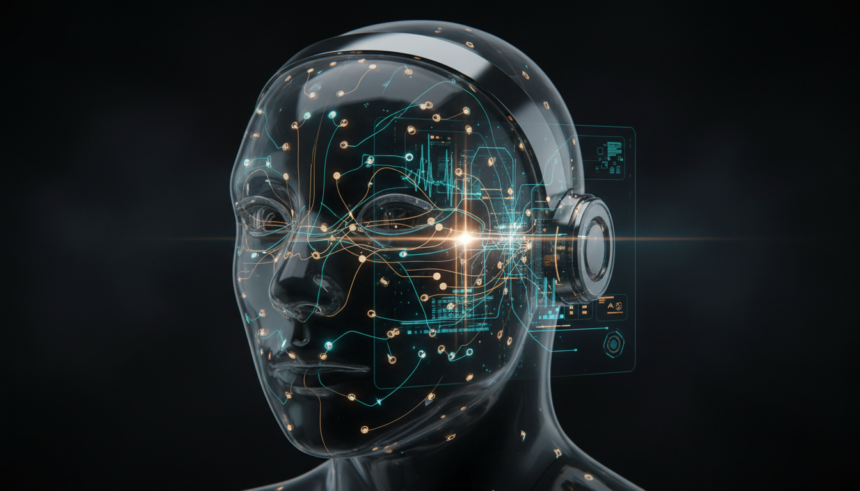
Brain-computer interface training that uses real-time feedback from electrical brain activity can improve cognitive function in patients with Parkinson’s disease, multiple sclerosis, dementia, and traumatic brain injury, according to a study published in Wiley Advanced Science.

Researchers at the University of Texas at Austin used EEG to track error-related potential (ErrP) — an electrical signature the brain emits when recognizing an error. By decoding the error positivity component in real time and feeding it back to participants, the system helped the brain amplify its own marker of conscious error detection.

“That lets us drive learning gains for exactly the small errors that behavioral training alone couldn’t touch,” said senior author Jose del R. Millan.

Over five days of training, participants using a joystick to correct cursor trajectories showed improved perception of small visuomotor errors. The approach proved more effective than conventional behavioral training and safer than pharmacological options. Researchers see potential applications in neuropsychiatric rehabilitation and even high-performance fields like motorsports.


TAGGED:brain-computer interfacecognitive trainingEEGmultiple sclerosisneurofeedbackParkinson's diseaserehabilitation
SOURCES:Fierce Biotech
Share This Article
Facebook Copy Link Print
MSAdmin
Bymsadmin
Follow:
MedTech AI & Cybersecurity News
Leave a Comment Leave a Comment

Leave a Reply Cancel reply

Your email address will not be published. Required fields are marked *

banner-medspark-horiz

You Might Also Like

News & Alerts

Why Agentic AI in Healthcare Demands Stronger Oversight from Every Department

By
msadmin
May 28, 2026
News & Alerts

Linux Foundation opens health stack with AI commons backed by Google and Microsoft

By
msadmin
July 12, 2026
News & Alerts

Healthy.io’s Smartphone-Powered Kidney Test Shows Promise in Early CKD Detection Through Home-Based Screening Pilot

By
Yu Chi Huang
June 23, 2025
ArticlesNews & Alerts

CMS signals payment reform for clinical software and AI

By
msadmin
July 17, 2026
Facebook Twitter Youtube Linkedin
Quick Links
  • News & Alerts
  • Articles
  • Spotlight
  • Events
About Medspark
  • Mission
  • Services
  • Contact

© Copyright 2026 MedSpark. All rights reserved.

Privacy Policy | Legal