

By using this site, you agree to the Privacy Policy and Terms of Use.
Accept
MedsparkMedsparkMedspark
  • Home
  • News & Alerts
    News & AlertsShow More
    UN-backed panel says AI succeeds or fails on implementation, not technology
    By
    msadmin
    July 30, 2026
    Mindful Care adds AI-powered blood test to match patients with antidepressants
    By
    msadmin
    July 30, 2026
    Stanford and Harvard launch MAST framework for tracking clinical AI progress
    By
    msadmin
    July 30, 2026
    Schrodinger launches Bunsen AI co-scientist for physics-powered drug discovery
    By
    msadmin
    July 30, 2026
    AstraZeneca taps AI to de-risk late-stage trials and speed up filings
    By
    msadmin
    July 30, 2026
  • Spotlight
    SpotlightShow More
    OpenAI launches GPT-Rosalind for life sciences research
    By
    msadmin
    July 17, 2026
    ARPA-H Awards $160 Million for AI-Enabled Personalized Gene Editing to Tackle Rare Diseases
    By
    msadmin
    July 12, 2026
    Strategic healthcare AI governance framework abstract illustration
    Building a Resilient Healthcare AI Strategy: Insights from Industry Leaders
    By
    msadmin
    May 15, 2026
    Pharma AI Alliance Expands: Owkin and AstraZeneca Deploy New Drug Discovery Models
    By
    msadmin
    May 14, 2026
    7 Must-Attend MedTech Events in South Africa for 2025
    By
    Jostel Owusu
    August 9, 2025
  • Articles
    ArticlesShow More
    Teladoc puts 100 percent of fees at risk with new AI-powered platform
    By
    msadmin
    July 27, 2026
    Johns Hopkins finds frontier AI agents fail most complex health tasks
    By
    msadmin
    July 27, 2026
    Teladoc puts fees at risk in AI-powered virtual care platform relaunch
    By
    msadmin
    July 27, 2026
    AI tops global healthcare IT investment priorities, KLAS finds
    By
    msadmin
    July 22, 2026
    Hospital CEOs must own AI safety, not delegate it to IT
    By
    msadmin
    July 22, 2026
  • Events
    EventsShow More
    Stanford Health AI Week Highlights AI’s Growing Role in Medical Education, Patient Empowerment, and Life Sciences
    By
    msadmin
    June 19, 2026
    HIMSS APAC 2026: Re-engineering APAC Health Systems in the AI Era
    By
    msadmin
    June 9, 2026
    AIMed 2026: Bridging the Gap Between AI Promise and Clinical Reality in Kraków
    By
    msadmin
    April 30, 2026
    7 Must-Attend MedTech Events in South Africa for 2025
    By
    Jostel Owusu
    August 9, 2025
    Cleveland Clinic’s First AI Summit Signals Bold Future for Healthcare
    By
    msadmin
    July 19, 2025
  • About
    • Mission
    • Services
    • Contact
Font ResizerAa
MedsparkMedspark
Font ResizerAa
  • Home
  • News & Alerts
  • Spotlight
  • Articles
  • Events
  • About
  • Quick Links
    • Home
    • News & Alerts
    • Spotlight
    • Articles
    • Events
  • About MedSpark
    • Our Purpose & Vision
    • Services
    • Contact
Follow US
News & Alerts

AI catches errors radiologists miss, then juries penalize the humans

A Brown University study finds radiologists face significantly higher jury liability when AI correctly identifies abnormalities they overlooked.

MedSpark Staff
By
msadmin
MedSpark Staff
Bymsadmin
Medical, Healthcare, & Biotech/Pharma AI News
Follow:
Published: July 30, 2026
Share
2 Min Read
SHARE

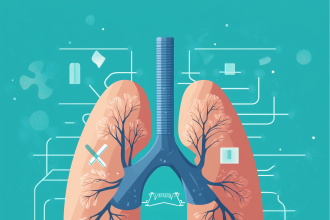
Artificial intelligence in radiology creates a paradoxical legal risk: when AI correctly identifies an abnormality a radiologist misses, juries are significantly more likely to hold the doctor liable, a Brown University study published in NEJM AI warns.

Lead author Michael Bernstein found what the authors call an “AI penalty.” In a simulated brain bleed scenario, mock jurors sided with the plaintiff 56 percent of the time without AI, but nearly 75 percent when AI had correctly detected the bleed and the radiologist disagreed.

“There is a real potential for legal repercussions if radiologists fail to find an abnormality that AI correctly finds,” Bernstein said. “It could be worse for them than if they fail to find something with no AI in the first place.”

The documentation dilemma cuts both ways. Medical malpractice attorney Rick Groffsky of Sommers Schwartz told Healthcare IT News that “when a clinician overrides a correct AI warning, the documentation now works against them.”

The study found one mitigating factor: when jurors were told the AI’s false omission rate, liability dropped from half to one-third. “People often think AI is magic,” Bernstein said. “When you make people aware it isn’t perfect, they have greater sympathy for radiologists who contradict it.”

For health systems, the finding underscores that AI governance must cover not just machine errors, but the documented trail AI leaves when it is right and clinicians are wrong.

TAGGED:AI GovernanceAI liabilityAI regulationClinical AIhealth systemsHealthcare AImedical malpractice
SOURCES:Brown University / NEJM AIHealthcare IT News
Share This Article
Facebook Copy Link Print
MedSpark Staff
Bymsadmin
Follow:
Medical, Healthcare, & Biotech/Pharma AI News
banner-medspark-horiz

You Might Also Like

ArticlesNews & Alerts

Google’s TabFM Makes Accurate Predictions Without Fine-Tuning Per Dataset

By
msadmin
July 12, 2026
News & Alerts

CHAI and The Joint Commission Partner to Launch AI Governance Playbooks for U.S. Healthcare Providers

By
Yu Chi Huang
June 16, 2025
News & Alerts

AI predicts aggressive liver cancer subtype in 20 hospital study

By
msadmin
July 13, 2026
News & Alerts

First Canadian ALS patient receives Neuralink brain implant

By
msadmin
July 17, 2026

AI news, analysis, and insights for healthcare, biotech, and pharma.

Facebook Twitter Youtube Linkedin
Quick Links
  • News & Alerts
  • Articles
  • Spotlight
  • Events
About Medspark
  • Mission
  • Services
  • Contact

© Copyright 2026 MedSpark. All rights reserved.

Privacy Policy | Legal