

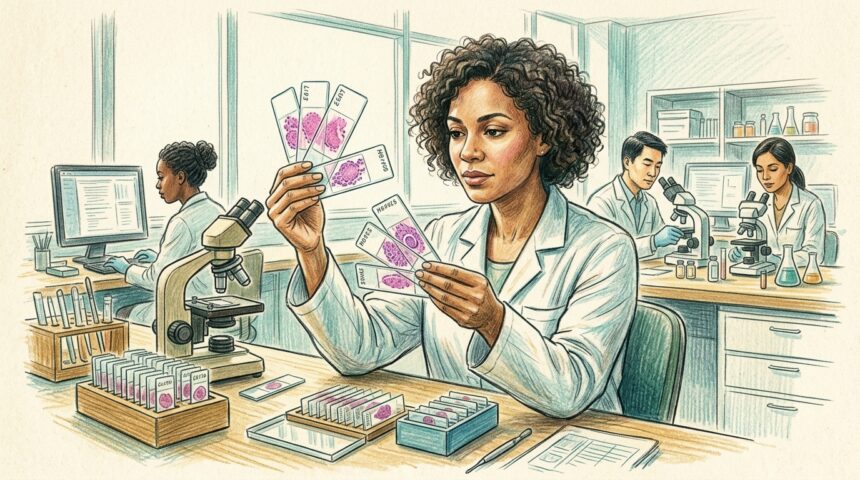
Researchers in Vienna trained deep learning models on 25,712 whole-slide biopsy images from 983 Genotype-Tissue Expression donors to build “tissue clocks” that estimate biological age across 40 tissue types.
The clocks, described in Nature Medicine on August 14, reflect structural integrity and physiological fitness rather than chronological time. Their estimates track established aging markers including telomere attrition, subclinical pathology and comorbidity burden.
The team found tissue-specific age acceleration tied to demographic, lifestyle and medical factors, pointing to modifiable risks. They also paired histology with transcriptomic data to predict organ-specific age gaps directly from blood samples, a step that could make routine screening practical.
Validation across independent cohorts linked organ aging to eight prevalent diseases, among them Alzheimer’s disease, stroke and Crohn’s disease.
The work, led by scientists at CeMM and the Ludwig Boltzmann Institute for Network Medicine at the University of Vienna, positions tissue architecture as an integrator of molecular and cellular aging. For pathology departments, it suggests standard slides could soon double as aging biomarkers, turning an already routine test into a window on organ health.