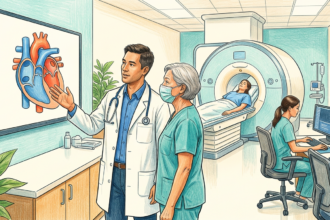


OpenEvidence has won a system-wide deal at Penn Medicine. Its clinical decision tool will sit on the desktop of every clinician across the seven hospitals.
About 10,000 clinicians are covered, spanning the University of Pennsylvania Health System and the Perelman School of Medicine.
It answers clinical questions from the published literature while reading the patient record for context, so the answer lands inside the existing workflow rather than a separate tab.
Botswana as the test case
Unusually for a US deployment, the agreement reaches beyond Pennsylvania. Staff inside the Botswana-UPenn Partnership receive the same access. Penn teams will also help shape a version aimed at regional practice.
That partnership is 25 years old and among the longest-running academic health collaborations in sub-Saharan Africa. Farouk Dako, its director, called the arrangement a model for extending frontier clinical tools to the global south while testing them properly.
Srinath Adusumalli, Penn’s chief health information officer, said the tools could widen access to specialty care through existing decision-support, e-consult and virtual care programs.
Why it matters
Most clinical AI deals stop at the health system’s own walls. OpenEvidence has been expanding fast, and pairing a 10,000-clinician US rollout with a low-resource setting gives the company real-world evidence from both ends of the resource spectrum.