Proving which drug candidates are safe in humans remains the slow, costly chokepoint of pharmaceutical research, and a New York company is betting that living human tissue grown in a lab can relieve it. Polyphron has closed $20 million in seed funding.
Quiet Capital led the round. Haystack, Gradient and Compound took part, and the company also credits a set of angel investors. Cardiac tissue is already in production across several donor lines. Liver, the next tissue to come online, extends the platform into drug metabolism and liver toxicity. The company wants to raise tissue from more than 20 donors.
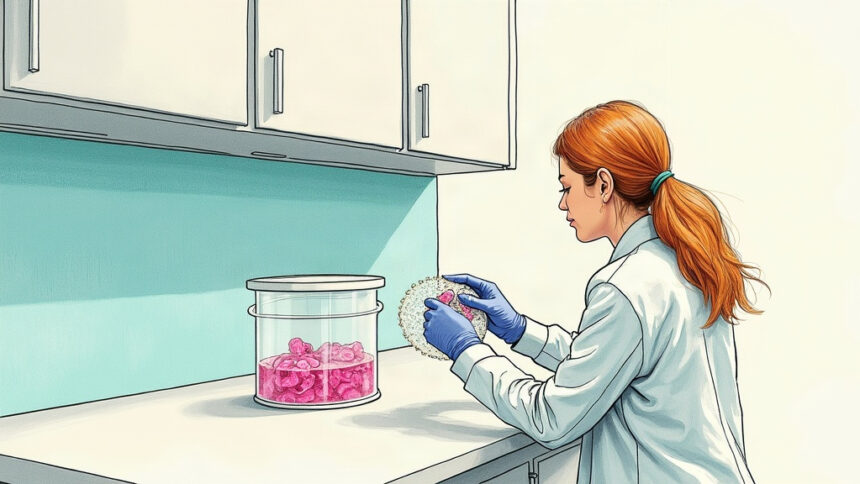
Inside Polyphron’s automated foundry, donor-defined human tissues are manufactured, perturbed in controlled ways, and measured over time. Those longitudinal trajectories train models of tissue behavior, among them a simulator that predicts how tissue responds across time, dose, tissue type and genetic background. Because Polyphron builds its physical and computational systems in tandem rather than developing one side in isolation, every experiment feeds reusable training data back into the model.
Chief executive and cofounder Matthew Osman traces the idea to late 2023, when an MRI revealed a mass on his pancreas. It proved benign, but the months of uncertainty left him thinking about how much of human biology medicine still cannot forecast. His cofounder and chief scientific officer, Fabio Boniolo, had logged years of tissue engineering at Dana-Farber and the Broad Institute.
Today, customers reach the platform through studies that test candidates against Polyphron’s tissues and generate proprietary data. The goal is to become a standard simulation and verification layer across drug development.