By using this site, you agree to the Privacy Policy and Terms of Use.
Accept
MedsparkMedsparkMedspark
  • Home
  • News & Alerts
    News & AlertsShow More
    South Korea plans AI and smart sensors to staff around-the-clock elder care
    South Korea plans AI and smart sensors to staff around-the-clock elder care
    By
    msadmin
    October 12, 2026
    Aiforia and PathAI open a shared storefront for pathology algorithms
    Aiforia and PathAI open a shared storefront for pathology algorithms
    By
    msadmin
    October 12, 2026
    Smart toilet sensor matches gastroenterologists at sorting stool samples
    Smart toilet sensor matches gastroenterologists at sorting stool samples
    By
    msadmin
    October 12, 2026
    Fujifilm ships a pathology software overhaul with its own AI foundation model
    Fujifilm ships a pathology software overhaul with its own AI foundation model
    By
    msadmin
    October 12, 2026
    Lunit pushes its pathology AI into drug trials through a US lab deal
    Lunit takes pathology AI into drug research with US lab pact
    By
    msadmin
    October 12, 2026
  • Spotlight
    SpotlightShow More
    Robinhood Ventures Fund II brings retail capital to healthcare AI
    By
    msadmin
    August 13, 2026
    Adialante brings accessible MRI-based cancer screening
    By
    msadmin
    August 11, 2026
    CellType models biology so AI can discover drugs
    By
    msadmin
    August 11, 2026
    Healthcare AI startups in Robinhood Ventures Fund II
    By
    msadmin
    August 11, 2026
    OpenAI launches GPT-Rosalind for life sciences research
    By
    msadmin
    July 17, 2026
  • Articles
    ArticlesShow More
    Proteomics model picks breast cancer drugs from biopsies
    By
    msadmin
    September 10, 2026
    CRISP model reads frozen sections to steer cancer surgery
    By
    msadmin
    September 10, 2026
    Consumer chatbots are building a medical system outside hospitals
    By
    msadmin
    August 21, 2026
    Reasoning gaps hold back AI agents in scientific discovery
    By
    msadmin
    August 11, 2026
    Benchmark scores can’t track real clinical LLM use, Stanford says
    By
    msadmin
    August 11, 2026
  • About
    • Mission
    • Services
    • Contact
  • Shop
    • All Items
    • By Category
    • Cart
  • Newsletter
Font ResizerAa
MedsparkMedspark
Font ResizerAa
  • Home
  • News & Alerts
  • Spotlight
  • Articles
  • About
  • Shop
  • Newsletter
  • Home
  • News & Alerts
  • Spotlight
  • Articles
  • About
    • Mission
    • Services
    • Contact
  • Shop
    • All Items
    • By Category
    • Cart
  • Newsletter
Follow US
News & Alerts

Deep learning reads EHRs to predict antidepressant treatment response

Transformer models outperform traditional methods in predicting antidepressant response from electronic health records, advancing precision psychiatry.

MedSpark Staff
By
msadmin
MedSpark Staff
Bymsadmin
Medical, Healthcare, & Biotech/Pharma AI News
Follow:
Published: July 13, 2026
Share
2 Min Read
SHARE

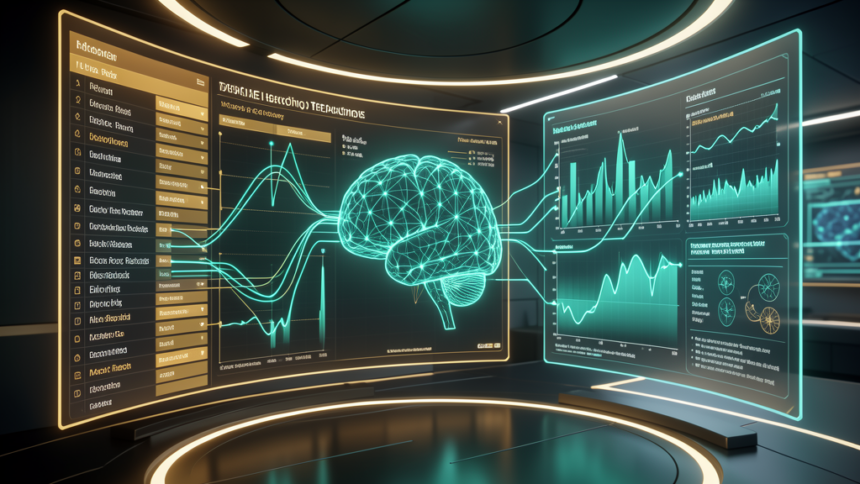
Researchers systematically compared eight deep learning architectures for phenotyping antidepressant treatment response from electronic health records, reporting that transformer-based models significantly outperformed traditional machine learning approaches in a study published in Nature Translational Psychiatry.

Accurately determining whether a patient is responding to antidepressant therapy from EHR data is notoriously difficult. Clinical notes contain rich but unstructured information that standard billing codes miss factors like side effect tolerability, partial response, and functional improvement that determine real-world treatment success.

The study evaluated models across multiple academic medical center EHR systems, comparing performance on tasks ranging from binary response classification to granular symptom trajectory prediction. Transformer models incorporating both structured data and unstructured clinical text achieved the highest accuracy, particularly when pretrained on large medical corpora before fine-tuning on the antidepressant response task.

The findings have immediate implications for precision psychiatry. Reliable automated phenotyping could enable large-scale observational studies of treatment effectiveness, power clinical trial recruitment by identifying appropriate patient populations, and eventually support clinical decision support systems that help match patients to the right antidepressant earlier in their treatment journey.

The authors emphasize that model performance varied significantly across patient demographics and clinical settings, underscoring the need for diverse training data and rigorous validation before deployment in real-world mental health care.

TAGGED:AIchronic diseaseClinical Decision SupportData SecurityElectronic Health RecordsLLMMachine Learningmedical AI
SOURCES:Nature - Translational Psychiatry
Share This Article
Facebook Copy Link Print
MedSpark Staff
Bymsadmin
Follow:
Medical, Healthcare, & Biotech/Pharma AI News

You Might Also Like

News & Alerts

AI drug design tools double as pathogen blueprints

By
msadmin
September 21, 2026
News & Alerts

New MALP Prediction Method Shows Promise for Medical Data Accuracy

By
msadmin
June 30, 2026
News & Alerts

AI Drives Innovation in Women’s Health, From Early Diagnoses to Personalized Care

By
Yu Chi Huang
June 17, 2025
News & Alerts

AIIMS Delhi hands its breast screening AI to a device maker

By
msadmin
September 21, 2026

AI news, analysis, and insights for healthcare, biotech, and pharma.

Facebook Twitter Youtube Linkedin
Quick Links
  • News & Alerts
  • Articles
  • Spotlight
  • Events
About Medspark
  • Mission
  • Services
  • Contact

© Copyright 2026 MedSpark. All rights reserved.

Privacy Policy | Legal