
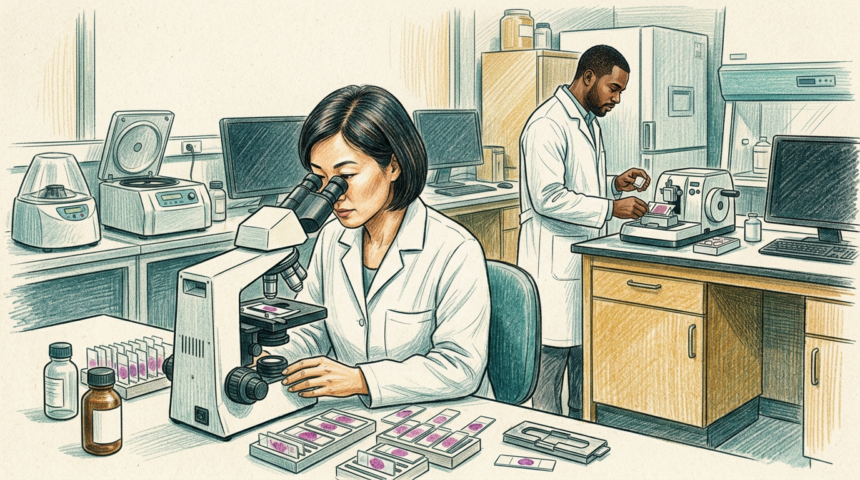
A new analysis of the phase III UNIRAD trial asks whether AI applied to ordinary pathology slides can sharpen adjuvant decisions in hormone receptor-positive, HER2-negative early breast cancer. The work tested Ataraxis Breast CTX, a causal multi-modal model that pairs clinical variables with features pulled from hematoxylin and eosin stained tumor sections.
Among 556 patients already classified as clinically high risk with node-positive disease, the model carved out a lower-risk group with five-year disease-free survival of 93% and a higher-risk group at 80%.
An exploratory signal also appeared on treatment. The model’s chemotherapy-benefit score interacted significantly with everolimus, hinting that AI-derived phenotypes might one day separate patients who need escalation from those who would gain little.
What the finding does and does not support
The authors are explicit about limits. CTX has not been prospectively validated for decisions made under today’s ribociclib or abemaciclib regimens, and the everolimus result sits inside a trial that missed its overall endpoint.
That context matters for anyone reading the 93% versus 80% split as a ready-made triage tool. The more useful contribution is methodological, showing that features hiding in a standard slide carry prognostic weight beyond conventional staging.