
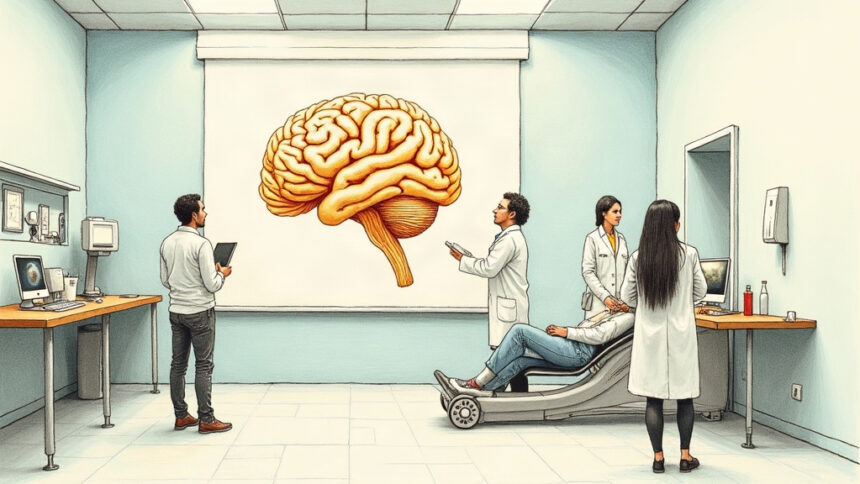
A team at the Weizmann Institute of Science has built a brain decoder. Feed it an fMRI scan and it guesses what the person was viewing, then redraws the scene with striking accuracy. The same model can run backward, forecasting neural activity from a picture alone.
The team, led by Michal Irani, trained the model on high-resolution fMRI data from eight volunteers who were each shown roughly 9,000 images. Earlier datasets captured voxels about a cubic millimeter in size, giving the system far more detail to learn from.
The decoder splits into two branches. One predicts an image’s structure, such as where colors fall. The other predicts its content, such as a plate of bananas. Combining them lets the model rebuild a scene rather than produce a generic match.
Judy Illes, a neuroethicist at the University of British Columbia who was not involved in the work, called it magnificent and pointed to its potential to help people who cannot speak or move. Other scientists warned the same approach could reveal a person’s inner thoughts without consent.
Irani hopes the tool will expose more about how the brain works. The findings add urgency to an evolving debate over neural data privacy as brain-decoding models grow more capable.