By using this site, you agree to the Privacy Policy and Terms of Use.
Accept
MedsparkMedsparkMedspark
  • Home
  • News & Alerts
    News & AlertsShow More
    Samsung wins Korean clearance to grade sleep apnea by the hour
    By
    msadmin
    October 28, 2026
    HOPPR trains one vision model to draft reports for every bone
    By
    msadmin
    October 28, 2026
    Breast ultrasound AI could spare six in ten benign biopsies
    By
    msadmin
    October 28, 2026
    Mayo Clinic model spots pancreatic cancer 475 days early on routine CT
    By
    msadmin
    October 28, 2026
    Anthropic turns a one-man biotech into its first drug pipeline
    By
    msadmin
    October 28, 2026
  • Spotlight
    SpotlightShow More
    Robinhood Ventures Fund II brings retail capital to healthcare AI
    By
    msadmin
    August 13, 2026
    Adialante brings accessible MRI-based cancer screening
    By
    msadmin
    August 11, 2026
    CellType models biology so AI can discover drugs
    By
    msadmin
    August 11, 2026
    Healthcare AI startups in Robinhood Ventures Fund II
    By
    msadmin
    August 11, 2026
    OpenAI launches GPT-Rosalind for life sciences research
    By
    msadmin
    July 17, 2026
  • Articles
    ArticlesShow More
    Brain implant decoders fail when patients or hardware change, review warns
    By
    msadmin
    October 25, 2026
    Proteomics model picks breast cancer drugs from biopsies
    By
    msadmin
    September 10, 2026
    CRISP model reads frozen sections to steer cancer surgery
    By
    msadmin
    September 10, 2026
    Consumer chatbots are building a medical system outside hospitals
    By
    msadmin
    August 21, 2026
    Reasoning gaps hold back AI agents in scientific discovery
    By
    msadmin
    August 11, 2026
  • About
    • Mission
    • Services
    • Contact
  • Shop
    • All Items
    • By Category
    • Cart
  • Newsletter
Font ResizerAa
MedsparkMedspark
Font ResizerAa
  • Home
  • News & Alerts
  • Spotlight
  • Articles
  • About
  • Shop
  • Newsletter
  • Home
  • News & Alerts
  • Spotlight
  • Articles
  • About
    • Mission
    • Services
    • Contact
  • Shop
    • All Items
    • By Category
    • Cart
  • Newsletter
Follow US
News & Alerts

Breast ultrasound AI could spare six in ten benign biopsies

A retrospective study at two academic centers found an FDA-cleared ultrasound AI reclassified 60% of benign BI-RADS 4 lesions as low risk, while still flagging 90% of cancers.

MedSpark Staff
By
msadmin
MedSpark Staff
Bymsadmin
Medical, Healthcare, & Biotech/Pharma AI News
Follow:
Published: October 28, 2026
Share
2 Min Read
SHARE

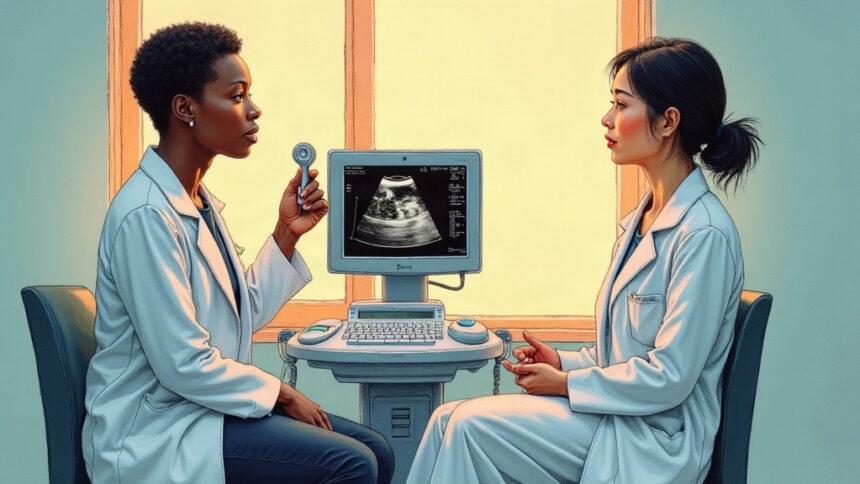
Three out of four breast biopsies in the suspicious BI-RADS 4 category come back benign. A retrospective study in Breast Cancer Research and Treatment suggests an FDA-cleared AI tool could shift a meaningful share of those patients from tissue sampling to surveillance.

Fourteen radiologists at two academic medical centers documented 271 lesions in 253 women between March and May 2025, all rated BI-RADS 4 and all biopsied, aspirated or excised. Pathology later found 63 malignant and 208 benign.

Holding the safety line on cancers
The Koios DS decision-support tool flagged 90.5% of malignant lesions as BI-RADS 4, agreeing that sampling was warranted. It missed six cancers, sorting them into BI-RADS 2 or 3, which is precisely why the authors insist any clinical use must preserve timely diagnosis.

On the benign side the split was wider. The algorithm labeled 41.8% of benign lesions BI-RADS 2 and a further 18.8% BI-RADS 3, which put 60.6% into tiers that usually mean follow-up rather than immediate biopsy.

Why this is a signal, not a mandate
Design matters here. This was no prospective trial in which AI output changed care. The radiologists had already made their BI-RADS 4 calls before the tool’s readings were logged, and the analysis asked what might have followed if those readings had driven triage. Enrollment was narrow too, since only lesions that experienced breast imagers at academic centers had flagged as suspicious were included, so the evidence addresses one high-stakes choice rather than screening at large. Women in the study ranged from 24 to 92 years old.

The finding lands as radiology confronts an uncomfortable arithmetic. Catching every possible cancer has meant accepting a high rate of biopsies that find nothing, and that trade-off sits in the path of every AI triage tool entering breast imaging workflows.


TAGGED:BI-RADSbreast biopsybreast imagingcancer diagnosisClinical Decision Supportradiology research
SOURCES:Bioengineer.org
Share This Article
Facebook Copy Link Print
MedSpark Staff
Bymsadmin
Follow:
Medical, Healthcare, & Biotech/Pharma AI News

You Might Also Like

News & Alerts

Insilico and Bora Pharma bring generative AI to drug manufacturing

By
msadmin
July 17, 2026
News & Alerts

Pediatricians get their own playbook for clinical AI

By
msadmin
October 3, 2026
News & Alerts

Tremont AI wants to automate how drug toxicity gets reviewed

By
msadmin
September 29, 2026
News & Alerts

Anthropic’s Claude takes on trial enrollment delays in ICON pact

By
msadmin
August 7, 2026

AI news, analysis, and insights for healthcare, biotech, and pharma.

Facebook Twitter Youtube Linkedin
Quick Links
  • News & Alerts
  • Articles
  • Spotlight
  • Events
About Medspark
  • Mission
  • Services
  • Contact

© Copyright 2026 MedSpark. All rights reserved.

Privacy Policy | Legal