Neurotronics, a Nihon Kohden company, has received 510(k) clearance for software-only software that estimates total sleep time from a pulse oximetry signal. The FDA granted clearance under K261521 on October 9, and the company announced it November 3.
The problem is arithmetic, but a consequential kind. Sleep apnea severity is scored with the apnea-hypopnea index, which divides respiratory events by time asleep. Most home sleep studies do not know time asleep. They use total recording time, so minutes a patient spends lying awake get counted as sleep and quietly deflate the index.
Measuring true sleep has meant electroencephalography, electrooculography and electromyography, three more sensors and a night in a lab. The Sleep Analysis Module instead reads the photoplethysmography waveform already streaming from a finger oximeter and infers how long the patient was actually asleep.
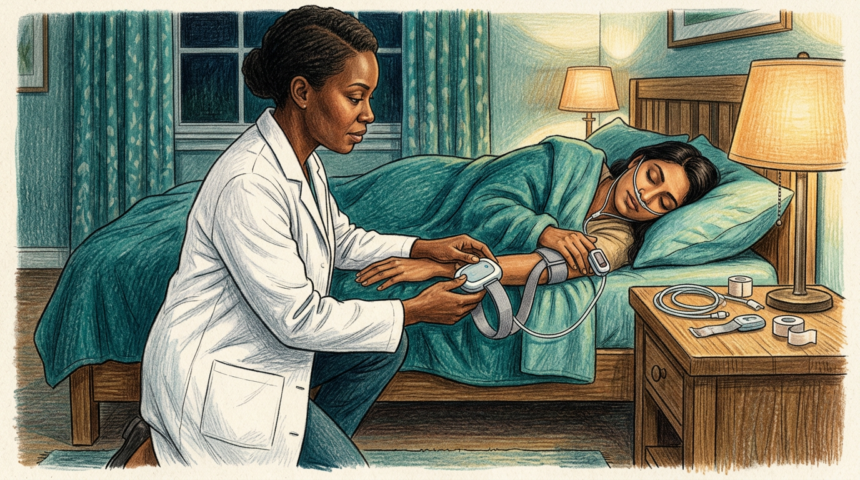
The module lands first inside Polysmith, Neurotronics’ sleep diagnostic software, for studies recorded on its NomadAir home sleep apnea testing kit. The patient setup does not change.
Chief executive Jake Johnson called the clearance a defining milestone, pointing to the notion that validated software can pull new clinical information from signals already collected. It is the first FDA-cleared AI/ML-based sleep analysis algorithm in the Neurotronics portfolio, and the company treats it as a template for future software submissions.
The device is prescription only, for adults 18 and older, with deliberate limits. It is not meant for use where full sleep staging is possible, and it cannot be the sole basis for a diagnosis. Commercial release still depends on integration and verification work now underway.
For home testing, the appeal is that a lighter, cheaper sensor set now yields a number clinicians previously had to approximate. Whether payers accept an estimated index for staging severity will decide how far this spreads.