

By using this site, you agree to the Privacy Policy and Terms of Use.
Accept
MedsparkMedsparkMedspark
  • Home
  • News & Alerts
    News & AlertsShow More
    Google’s TabFM Makes Accurate Predictions Without Fine-Tuning Per Dataset
    By
    msadmin
    July 12, 2026
    ARPA-H Awards $160 Million for AI-Enabled Personalized Gene Editing to Tackle Rare Diseases
    By
    msadmin
    July 12, 2026
    Linux Foundation opens health stack with AI commons backed by Google and Microsoft
    By
    msadmin
    July 12, 2026
    Michigan Medicine neuroimaging model outperforms GPT in brain scan analysis
    By
    msadmin
    July 12, 2026
    Machine Learning Links Children’s Screen Time to Distinct Metabolic Fingerprint and Heart Risk
    By
    msadmin
    July 7, 2026
  • Spotlight
    SpotlightShow More
    ARPA-H Awards $160 Million for AI-Enabled Personalized Gene Editing to Tackle Rare Diseases
    By
    msadmin
    July 12, 2026
    Strategic healthcare AI governance framework abstract illustration
    Building a Resilient Healthcare AI Strategy: Insights from Industry Leaders
    By
    msadmin
    May 15, 2026
    Pharma AI Alliance Expands: Owkin and AstraZeneca Deploy New Drug Discovery Models
    By
    msadmin
    May 14, 2026
    7 Must-Attend MedTech Events in South Africa for 2025
    By
    Jostel Owusu
    August 9, 2025
    EY Expert Urges Healthcare Leaders to Double Down on AI Amid Economic Uncertainty
    By
    Yu Chi Huang
    July 11, 2025
  • Articles
    ArticlesShow More
    Google’s TabFM Makes Accurate Predictions Without Fine-Tuning Per Dataset
    By
    msadmin
    July 12, 2026
    A doctor using an AI scribe system with a holographic transcription interface on a tablet in a modern clinic, showing ambient speech recognition and automated clinical documentation
    AI Scribe Adoption in Healthcare, From Ambient Listening to Autonomous Documentation
    By
    msadmin
    July 12, 2026
    A physician using a tablet with a glowing AI assistant hologram nearby, representing cognitive offloading in modern medicine with teal and gold futuristic lighting
    Understanding Cognitive Offloading in Modern Medicine
    By
    msadmin
    July 12, 2026
    AI-powered drug discovery concept showing a holographic molecular structure analyzed by neural networks in a sleek pharmaceutical laboratory with teal and gold lighting
    How Machine Learning Is Reshaping Pharmaceutical R&D
    By
    msadmin
    July 12, 2026
    Michigan Medicine neuroimaging model outperforms GPT in brain scan analysis
    By
    msadmin
    July 12, 2026
  • Events
    EventsShow More
    Stanford Health AI Week Highlights AI’s Growing Role in Medical Education, Patient Empowerment, and Life Sciences
    By
    msadmin
    June 19, 2026
    HIMSS APAC 2026: Re-engineering APAC Health Systems in the AI Era
    By
    msadmin
    June 9, 2026
    AIMed 2026: Bridging the Gap Between AI Promise and Clinical Reality in Kraków
    By
    msadmin
    April 30, 2026
    7 Must-Attend MedTech Events in South Africa for 2025
    By
    Jostel Owusu
    August 9, 2025
    Cleveland Clinic’s First AI Summit Signals Bold Future for Healthcare
    By
    msadmin
    July 19, 2025
  • About
    • Mission
    • Services
    • Contact
Font ResizerAa
MedsparkMedspark
Font ResizerAa
  • Home
  • News & Alerts
  • Spotlight
  • Articles
  • Events
  • About
  • Quick Links
    • Home
    • News & Alerts
    • Spotlight
    • Articles
    • Events
  • About MedSpark
    • Our Purpose & Vision
    • Services
    • Contact
Follow US
Articles

Global Health Systems Must Unite to Harness AI for Preventive, Personalized Care

AI is poised to transform healthcare by addressing global challenges ranging from antimicrobial resistance to aging populations—if health systems collaborate effectively.

Yu Chi Huang
By
Yu Chi Huang
Yu Chi Huang
ByYu Chi Huang
Yu Chi is a senior regulatory affairs specialist and medical researcher focusing on medical devices.
Published: June 11, 2025
Share
2 Min Read
SHARE

As first reported by China Daily, artificial intelligence is increasingly being recognized as essential to tackling today’s urgent public health crises, including the next pandemic, antimicrobial resistance, and the mental health burden. However, medical data used to train AI presents significant limitations, offering only fragmented glimpses into patients’ health.

Unlike structured data from cameras or sensors, healthcare data is filled with gaps and inaccuracies, making it difficult to build AI systems that understand the full context of a patient’s health journey. To realize AI’s true potential, the focus must shift from reactive to preventive care, by integrating new types of data that reflect the daily lives, habits, and environments of patients.
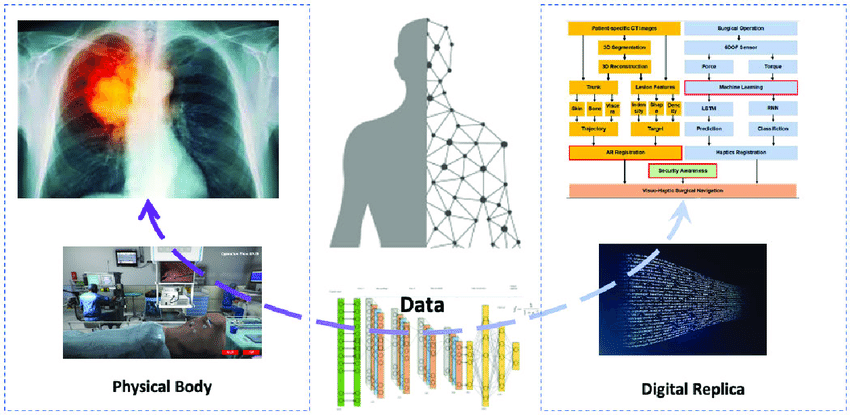
Source: researchgate.net

Currently, many patient-facing health apps and devices target specific diseases, leaving those with multiple chronic conditions overwhelmed. The next evolution in healthcare AI must embrace the concept of a “digital twin”—an interactive, holistic avatar that mirrors the patient’s full health profile, including social and behavioral factors. These AI allies would support day-to-day decisions, from medication adherence to lifestyle choices, helping reduce the adverse effects of treatment and improve quality of life. The University of Liverpool’s Civic Health Innovation Labs is pioneering this approach with a triple digital twin model—for individual patients, healthcare providers, and entire populations—to enable more precise, data-driven, and preventive interventions.

Scaling these AI-enabled strategies requires a global network of learning health systems—where insights from real-world data are constantly fed back to improve care delivery at all levels. Such collaboration would allow AI systems to adapt to diverse populations and care settings, enabling smarter use of medications, faster identification of at-risk individuals, and better resource planning.

In an era of rising healthcare costs and complex patient needs, cross-border cooperation in AI-driven innovation is not just beneficial—it’s essential.

- Advertisement -
TAGGED:editor-pick
SOURCES:ResearchGate
VIA:China Daily
Share This Article
Facebook Copy Link Print
Yu Chi Huang
ByYu Chi Huang
Yu Chi is a senior regulatory affairs specialist and medical researcher focusing on medical devices.
banner-medspark-horiz

You Might Also Like

A physician using a tablet with a glowing AI assistant hologram nearby, representing cognitive offloading in modern medicine with teal and gold futuristic lighting
Articles

Understanding Cognitive Offloading in Modern Medicine

By
msadmin
July 12, 2026
ArticlesSpotlight

Microsoft AI Outperforms Physicians in Complex Diagnostic Challenge With New MAI-DxO Tool

By
Yu Chi Huang
June 30, 2025
ArticlesNews & Alerts

Michigan Medicine neuroimaging model outperforms GPT in brain scan analysis

By
msadmin
July 12, 2026
Articles

AI Adoption Skyrockets in UK Healthcare, but Legacy Systems Fuel Security Concerns

By
Yu Chi Huang
June 10, 2025
Facebook Twitter Youtube Linkedin
Quick Links
  • News & Alerts
  • Articles
  • Spotlight
  • Events
About Medspark
  • Mission
  • Services
  • Contact

© Copyright 2026 MedSpark. All rights reserved.

Privacy Policy | Legal