
By using this site, you agree to the Privacy Policy and Terms of Use.
Accept
MedsparkMedsparkMedspark
  • Home
  • News & Alerts
    News & AlertsShow More
    Google’s TabFM Makes Accurate Predictions Without Fine-Tuning Per Dataset
    By
    msadmin
    July 12, 2026
    ARPA-H Awards $160 Million for AI-Enabled Personalized Gene Editing to Tackle Rare Diseases
    By
    msadmin
    July 12, 2026
    Linux Foundation opens health stack with AI commons backed by Google and Microsoft
    By
    msadmin
    July 12, 2026
    Michigan Medicine neuroimaging model outperforms GPT in brain scan analysis
    By
    msadmin
    July 12, 2026
    Machine Learning Links Children’s Screen Time to Distinct Metabolic Fingerprint and Heart Risk
    By
    msadmin
    July 7, 2026
  • Spotlight
    SpotlightShow More
    ARPA-H Awards $160 Million for AI-Enabled Personalized Gene Editing to Tackle Rare Diseases
    By
    msadmin
    July 12, 2026
    Strategic healthcare AI governance framework abstract illustration
    Building a Resilient Healthcare AI Strategy: Insights from Industry Leaders
    By
    msadmin
    May 15, 2026
    Pharma AI Alliance Expands: Owkin and AstraZeneca Deploy New Drug Discovery Models
    By
    msadmin
    May 14, 2026
    7 Must-Attend MedTech Events in South Africa for 2025
    By
    Jostel Owusu
    August 9, 2025
    EY Expert Urges Healthcare Leaders to Double Down on AI Amid Economic Uncertainty
    By
    Yu Chi Huang
    July 11, 2025
  • Articles
    ArticlesShow More
    Google’s TabFM Makes Accurate Predictions Without Fine-Tuning Per Dataset
    By
    msadmin
    July 12, 2026
    A doctor using an AI scribe system with a holographic transcription interface on a tablet in a modern clinic, showing ambient speech recognition and automated clinical documentation
    AI Scribe Adoption in Healthcare, From Ambient Listening to Autonomous Documentation
    By
    msadmin
    July 12, 2026
    A physician using a tablet with a glowing AI assistant hologram nearby, representing cognitive offloading in modern medicine with teal and gold futuristic lighting
    Understanding Cognitive Offloading in Modern Medicine
    By
    msadmin
    July 12, 2026
    AI-powered drug discovery concept showing a holographic molecular structure analyzed by neural networks in a sleek pharmaceutical laboratory with teal and gold lighting
    How Machine Learning Is Reshaping Pharmaceutical R&D
    By
    msadmin
    July 12, 2026
    Michigan Medicine neuroimaging model outperforms GPT in brain scan analysis
    By
    msadmin
    July 12, 2026
  • Events
    EventsShow More
    Stanford Health AI Week Highlights AI’s Growing Role in Medical Education, Patient Empowerment, and Life Sciences
    By
    msadmin
    June 19, 2026
    HIMSS APAC 2026: Re-engineering APAC Health Systems in the AI Era
    By
    msadmin
    June 9, 2026
    AIMed 2026: Bridging the Gap Between AI Promise and Clinical Reality in Kraków
    By
    msadmin
    April 30, 2026
    7 Must-Attend MedTech Events in South Africa for 2025
    By
    Jostel Owusu
    August 9, 2025
    Cleveland Clinic’s First AI Summit Signals Bold Future for Healthcare
    By
    msadmin
    July 19, 2025
  • About
    • Mission
    • Services
    • Contact
Font ResizerAa
MedsparkMedspark
Font ResizerAa
  • Home
  • News & Alerts
  • Spotlight
  • Articles
  • Events
  • About
  • Quick Links
    • Home
    • News & Alerts
    • Spotlight
    • Articles
    • Events
  • About MedSpark
    • Our Purpose & Vision
    • Services
    • Contact
Follow US
Articles

AI and Digital Pathology Poised to Drive the Future of Precision Medicine, Survey Finds

Laboratory leaders are embracing artificial intelligence and digital pathology as critical tools to overcome staffing shortages, improve diagnostic accuracy, and advance precision medicine.

Yu Chi Huang
By
Yu Chi Huang
Yu Chi Huang
ByYu Chi Huang
Yu Chi is a senior regulatory affairs specialist and medical researcher focusing on medical devices.
Published: June 12, 2025
Share
3 Min Read
SHARE

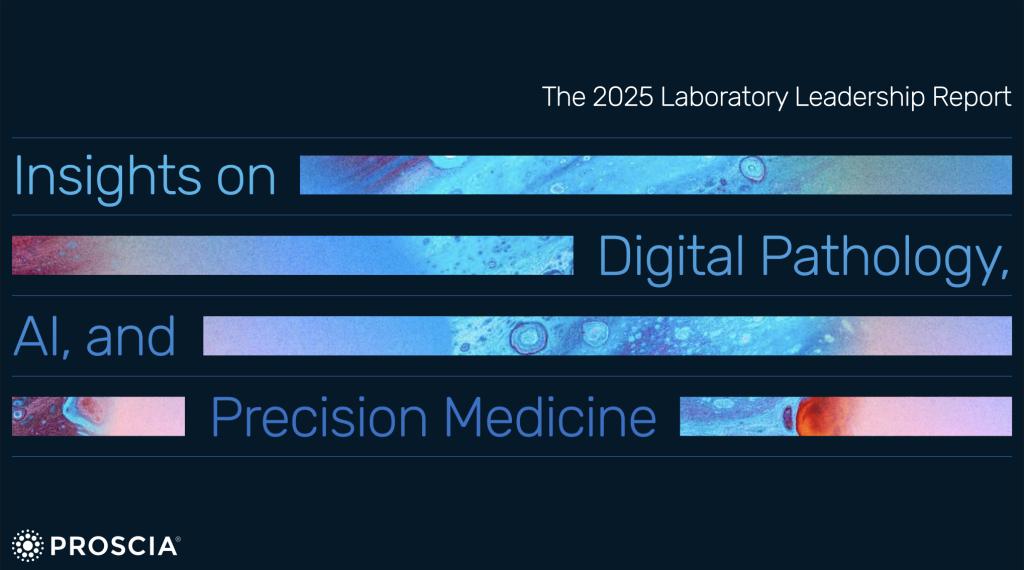
As first reported by Imaging Technology News, the 2025 Laboratory Leadership Report reveals a growing consensus among senior diagnostic laboratory professionals: artificial intelligence (AI) and digital pathology are now essential to modernizing laboratory operations and enabling precision medicine. The report, based on a survey of 360 industry leaders conducted by The Dark Intelligence Group for Proscia, highlights how laboratories are responding to sector-wide challenges by adopting transformative technologies.
Contents
Staffing shortages and reimbursements drive urgencyDigital pathology and AI lead the precision medicine pushVendor trust and usability are critical

Source: proscia.com.

Staffing shortages and reimbursements drive urgency

Staffing shortages (38%) and declining reimbursements (31%) are the top concerns for laboratory leaders, outpacing other common industry pressures like regulatory compliance or the pace of technological change. In response, many laboratories are shifting from temporary fixes to long-term modernization strategies. Key focus areas include automation (30%), molecular and genetic testing (29%), and AI (25%)—technologies viewed as essential to increasing efficiency and improving diagnostic precision.

Digital pathology and AI lead the precision medicine push

Laboratory leaders are also aligning their technology adoption strategies with the promise of precision medicine. The survey found that 86% believe precision medicine is now delivering measurable clinical value. The top expected benefits include more effective therapies (80%), more accurate diagnoses (75%), and improved patient outcomes (61%). Importantly, 59% of respondents view digital pathology and AI as highly or extremely impactful in realizing this vision—demonstrating their central role in laboratories’ evolving missions.

Vendor trust and usability are critical

When selecting digital pathology and AI solutions, laboratory decision-makers are emphasizing vendor trust and usability. Sixty-four percent prioritize a vendor’s reputation, while 54% look to customer references, and 46% value future vision. Product functionality (47%) and user experience (45%) are also key selection criteria, indicating a desire for comprehensive, intuitive tools that can support clinicians under pressure and integrate seamlessly into workflows.

The findings underscore a pivotal shift in diagnostic laboratories, where digital pathology and AI are not just future innovations but present-day necessities. By aligning modernization efforts with precision medicine goals, lab leaders are laying the groundwork for more efficient operations, accurate diagnoses, and ultimately, better patient care. As the field continues to evolve, long-term vendor partnerships and inclusive technology design will be critical to unlocking the full potential of AI in pathology.

SOURCES:Proscia.com
VIA:Imaging Technology News
Share This Article
Facebook Copy Link Print
Yu Chi Huang
ByYu Chi Huang
Yu Chi is a senior regulatory affairs specialist and medical researcher focusing on medical devices.
banner-medspark-horiz

You Might Also Like

Articles

Balancing AI Innovation with Governance in Healthcare

By
msadmin
June 30, 2026
Articles

AI Offers Promise for Hospital Finances—But Only With Strategy and Structure, Experts Say

By
Yu Chi Huang
June 29, 2025
Articles

Healthcare AI Adoption Faces Legal Pitfalls as Patient Privacy Takes Center Stage

By
msadmin
May 28, 2026
AI-powered drug discovery concept showing a holographic molecular structure analyzed by neural networks in a sleek pharmaceutical laboratory with teal and gold lighting
Articles

How Machine Learning Is Reshaping Pharmaceutical R&D

By
msadmin
July 12, 2026
Facebook Twitter Youtube Linkedin
Quick Links
  • News & Alerts
  • Articles
  • Spotlight
  • Events
About Medspark
  • Mission
  • Services
  • Contact

© Copyright 2026 MedSpark. All rights reserved.

Privacy Policy | Legal