


By using this site, you agree to the Privacy Policy and Terms of Use.
Accept
MedsparkMedsparkMedspark
  • Home
  • News & Alerts
    News & AlertsShow More
    Google’s TabFM Makes Accurate Predictions Without Fine-Tuning Per Dataset
    By
    msadmin
    July 12, 2026
    ARPA-H Awards $160 Million for AI-Enabled Personalized Gene Editing to Tackle Rare Diseases
    By
    msadmin
    July 12, 2026
    Linux Foundation opens health stack with AI commons backed by Google and Microsoft
    By
    msadmin
    July 12, 2026
    Michigan Medicine neuroimaging model outperforms GPT in brain scan analysis
    By
    msadmin
    July 12, 2026
    Machine Learning Links Children’s Screen Time to Distinct Metabolic Fingerprint and Heart Risk
    By
    msadmin
    July 7, 2026
  • Spotlight
    SpotlightShow More
    ARPA-H Awards $160 Million for AI-Enabled Personalized Gene Editing to Tackle Rare Diseases
    By
    msadmin
    July 12, 2026
    Strategic healthcare AI governance framework abstract illustration
    Building a Resilient Healthcare AI Strategy: Insights from Industry Leaders
    By
    msadmin
    May 15, 2026
    Pharma AI Alliance Expands: Owkin and AstraZeneca Deploy New Drug Discovery Models
    By
    msadmin
    May 14, 2026
    7 Must-Attend MedTech Events in South Africa for 2025
    By
    Jostel Owusu
    August 9, 2025
    EY Expert Urges Healthcare Leaders to Double Down on AI Amid Economic Uncertainty
    By
    Yu Chi Huang
    July 11, 2025
  • Articles
    ArticlesShow More
    Google’s TabFM Makes Accurate Predictions Without Fine-Tuning Per Dataset
    By
    msadmin
    July 12, 2026
    A doctor using an AI scribe system with a holographic transcription interface on a tablet in a modern clinic, showing ambient speech recognition and automated clinical documentation
    AI Scribe Adoption in Healthcare, From Ambient Listening to Autonomous Documentation
    By
    msadmin
    July 12, 2026
    A physician using a tablet with a glowing AI assistant hologram nearby, representing cognitive offloading in modern medicine with teal and gold futuristic lighting
    Understanding Cognitive Offloading in Modern Medicine
    By
    msadmin
    July 12, 2026
    AI-powered drug discovery concept showing a holographic molecular structure analyzed by neural networks in a sleek pharmaceutical laboratory with teal and gold lighting
    How Machine Learning Is Reshaping Pharmaceutical R&D
    By
    msadmin
    July 12, 2026
    Michigan Medicine neuroimaging model outperforms GPT in brain scan analysis
    By
    msadmin
    July 12, 2026
  • Events
    EventsShow More
    Stanford Health AI Week Highlights AI’s Growing Role in Medical Education, Patient Empowerment, and Life Sciences
    By
    msadmin
    June 19, 2026
    HIMSS APAC 2026: Re-engineering APAC Health Systems in the AI Era
    By
    msadmin
    June 9, 2026
    AIMed 2026: Bridging the Gap Between AI Promise and Clinical Reality in Kraków
    By
    msadmin
    April 30, 2026
    7 Must-Attend MedTech Events in South Africa for 2025
    By
    Jostel Owusu
    August 9, 2025
    Cleveland Clinic’s First AI Summit Signals Bold Future for Healthcare
    By
    msadmin
    July 19, 2025
  • About
    • Mission
    • Services
    • Contact
Font ResizerAa
MedsparkMedspark
Font ResizerAa
  • Home
  • News & Alerts
  • Spotlight
  • Articles
  • Events
  • About
  • Quick Links
    • Home
    • News & Alerts
    • Spotlight
    • Articles
    • Events
  • About MedSpark
    • Our Purpose & Vision
    • Services
    • Contact
Follow US
Articles

AI Emerges as a Game-Changer in Humanitarian Healthcare Crisis Response

AI is being harnessed to transform humanitarian healthcare, improving disaster response, disease surveillance, mental health care, and logistics while raising critical ethical considerations.

Yu Chi Huang
By
Yu Chi Huang
Yu Chi Huang
ByYu Chi Huang
Yu Chi is a senior regulatory affairs specialist and medical researcher focusing on medical devices.
Published: July 4, 2025
Share
4 Min Read
SHARE

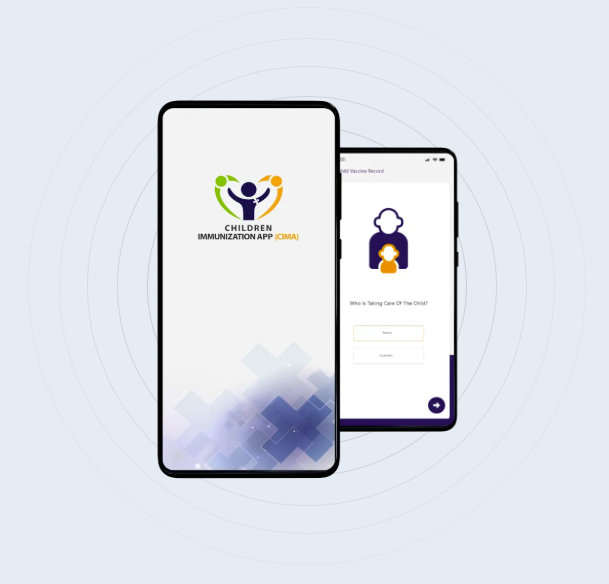
As first reported by News-Medical, a new review Frontiers in Artificial Intelligence underscores the growing role of AI in enhancing humanitarian healthcare response. From predicting natural disasters to streamlining disease surveillance and patient triage, AI technologies are enabling faster, more accurate, and more efficient crisis interventions. These capabilities are being demonstrated in real-world applications, such as AI-powered drones mapping wildfires in Los Angeles and platforms like CIMA improving child immunization follow-ups in Jordan’s refugee camps.
Contents
Addressing mental health and care delivery gapsEthical and infrastructural challenges remainA promising but high-stakes path forward

Source: cima.care.

AI is proving especially effective in infectious disease tracking and resource allocation. For example, IBM’s Watson Health and ZzappMalaria are using AI to target malaria breeding grounds with pinpoint accuracy, helping optimize eradication campaigns. Meanwhile, AI tools are being piloted in refugee camps to anticipate disease outbreaks and support overstretched medical teams through telemedicine and automated diagnostics. These innovations are not just enhancing response speed—they’re transforming the precision and reach of humanitarian care.

Addressing mental health and care delivery gaps

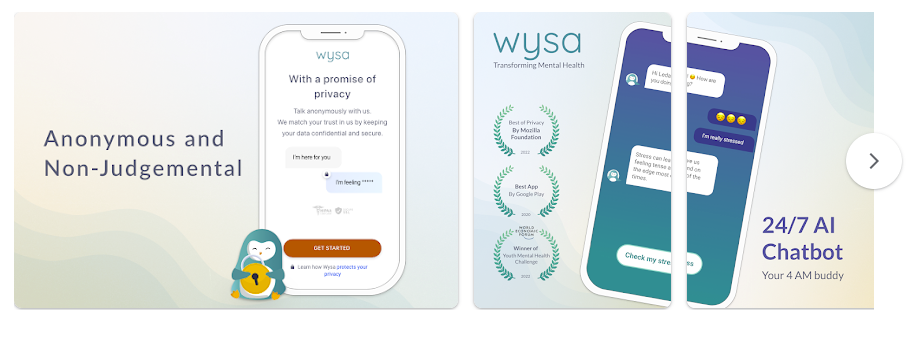
AI is also being deployed to address one of the most overlooked aspects of crisis healthcare: mental health. Chatbots like Wysa and Woebot offer cognitive behavioral therapy and mindfulness guidance to trauma-affected individuals, while AI monitors social sentiment to flag mental health crises in real time. AI-powered simulations are also training clinicians in crisis response, bridging capacity gaps in low-resource areas.
Source: play.google.com/store/apps/details?id=bot.touchkin.

On the care delivery front, robotic systems assist in both rescue and rehabilitation. From locating trapped disaster victims to supporting mobility recovery and screening malnutrition in children via image analysis (e.g., MERON app), these technologies expand the scope of what humanitarian teams can accomplish under pressure. At the same time, AI tools like real-time language translation and supply chain forecasting ensure critical information and resources are delivered swiftly and equitably.

Ethical and infrastructural challenges remain

Despite its promise, the review cautions that AI’s deployment in humanitarian settings must be ethically grounded and carefully regulated. Bias in training data can result in unequal care delivery, while accountability remains a concern when AI is involved in medical decision-making. The digital divide further complicates equitable access to AI-powered tools, especially in regions lacking infrastructure.

To mitigate these risks, inclusive governance, transparency, and human oversight are essential. The review advocates for collaborative frameworks involving governments, NGOs, academia, and tech firms to ensure AI is deployed with fairness, safety, and humanity in mind. 

A promising but high-stakes path forward

AI is reshaping humanitarian healthcare by enabling smarter, faster, and more adaptive responses to crises. From predictive modeling and diagnostics to logistics and mental health, its applications are already saving lives. However, ethical deployment and equitable access remain key to realizing AI’s full potential. With multi-sector collaboration and responsible innovation, AI could become a cornerstone of more resilient and compassionate global healthcare systems.


TAGGED:editor-pick
SOURCES:Frontiers in Artificial Intelligence
VIA:News-Medical
Share This Article
Facebook Copy Link Print
Yu Chi Huang
ByYu Chi Huang
Yu Chi is a senior regulatory affairs specialist and medical researcher focusing on medical devices.
banner-medspark-horiz

You Might Also Like

Articles

BD Bets on AI and Connected Care in High-Stakes MedTech Transformation Under New Leadership

By
Yu Chi Huang
July 8, 2025
AI-powered drug discovery concept showing a holographic molecular structure analyzed by neural networks in a sleek pharmaceutical laboratory with teal and gold lighting
Articles

How Machine Learning Is Reshaping Pharmaceutical R&D

By
msadmin
July 12, 2026
Articles

Gene Editing Breakthroughs and AI Risks: A Health Sector View of 2026’s Defining Tech

By
msadmin
May 12, 2026
Articles

HKUST Pioneers Micro-Robotics and AI Tools to Reshape Global Healthcare

By
Yu Chi Huang
July 2, 2025
Facebook Twitter Youtube Linkedin
Quick Links
  • News & Alerts
  • Articles
  • Spotlight
  • Events
About Medspark
  • Mission
  • Services
  • Contact

© Copyright 2026 MedSpark. All rights reserved.

Privacy Policy | Legal