

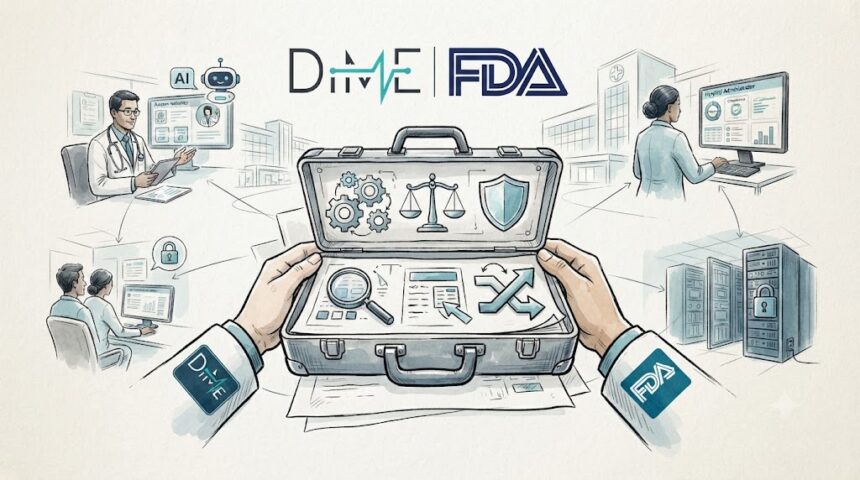
The Digital Medicine Society has launched Operationalizing AI Governance in Healthcare, a project that aims to build practical tools health systems can use to evaluate, deploy, and monitor artificial intelligence. The initiative brings together the FDA, Qualified Health, and 30 healthcare organizations and technology companies.
AI governance has become synonymous with complexity, and that complexity is holding the field back, said DiMe CEO Jennifer Goldsack. Health systems need practical tools that help them evaluate AI, make confident decisions, monitor performance over time, and adapt as technologies evolve. The project will release resources sequentially as they are completed, with the first expected within two months and the full suite by year-end.
Participants include the American Psychological Association, Children’s Nebraska, Intel, Mass General Brigham, Stanford Health, UPMC, and others. The organizations will contribute real-world implementation experience, identify where current governance approaches create friction, and co-develop shared resources. The FDA’s involvement signals the importance of establishing operational standards for AI oversight in clinical settings.
A Healthcare Financial Management Association survey found that 82% of health systems had little or no AI governance process in place for technologies already in use. DiMe’s earlier AI implementation playbook showed that 70% of health AI pilots fail due to people and process challenges, not technology gaps. The new initiative targets that implementation gap directly by creating open-access governance tools that work across organizations.