
Scottish Enterprise and the UK Government awarded Chemify £22M ($29.7M), funding that more than doubles the Glasgow company’s automated chemistry capacity.
Scottish Enterprise supplied £16M ($21.6M) of that sum and the UK Government £6M ($8.1M). An extended Series B pushed lifetime funding past £110M ($150M).
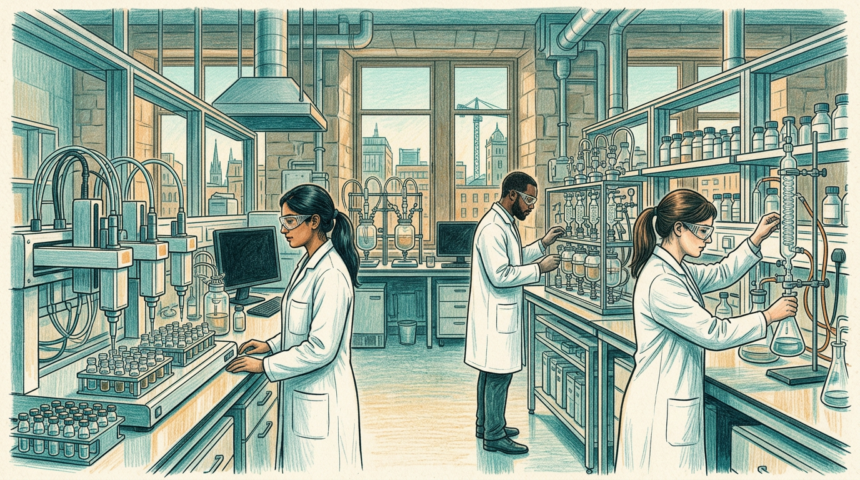
A second-generation Chemifarm follows, which Chemify describes as making it the first Chemistry Hyperscaler. The company pairs AI with robotic synthesis in a closed loop it brands Chemputation. Models design molecules that machines then build.
The commercial argument centers on grounding AI drug discovery in real synthesis. A proposed molecule is far more likely to be makeable at scale, the company says. Chemify Genesis, a new system, adds world-model-guided chemical design.
Lee Cronin, the CEO and founder, said the first Glasgow Chemifarm proved Chemputation works. In his account it improved both the design and the makeability of new molecules and materials.
Headcount shows the size of the bet. Chemify plans to grow its Scottish workforce from 152 people to roughly 450 within three years, creating up to 300 jobs and safeguarding about 100 more.
Customers span pharmaceuticals, specialty chemicals and advanced materials. Automated chemistry, in other words, is becoming infrastructure rather than a demonstration project.