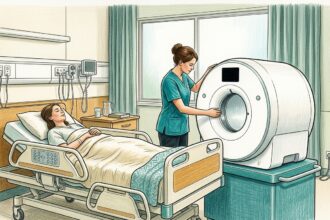


A study led by NYU Langone Health researchers shows AI can track which pathologies radiology residents actually encounter and then fill the gaps in their training.
Radiology residents traditionally learn from the cases that happen to arrive during their clinical rotations. Common findings such as fractures and normal exams dominate those volumes, so rare conditions can go unseen for months.
The team used AI to monitor daily case exposure and flag missing disease categories, then supplied targeted teaching cases to close the distance. The model identified exposure gaps and suggested the specific pathologies a resident needed to see with more than 90% accuracy, according to the study, published in Academic Radiology.
Adding those cases widened the breadth of pathology residents saw without cutting into their time with real patients, the authors reported.
Vinay Prabhu, an associate professor in the Department of Radiology at NYU Grossman School of Medicine, said a typical day of about 30 cases might include 29 routine exams and a single uncommon condition. He described the approach as a shift from one-size-fits-all training toward a model that addresses each resident’s specific learning needs.
The work fits a broader precision education trend, in which data tools tailor clinical training the way they increasingly tailor care.