Tempus AI can now pull biomarker signals out of the tissue stains hospitals already produce. The Chicago company told the ESMO Congress in Madrid that its H&E pre-screening panel cleared 80% sensitivity across all 12 biomarkers it was tested on, with several clearing 90%.
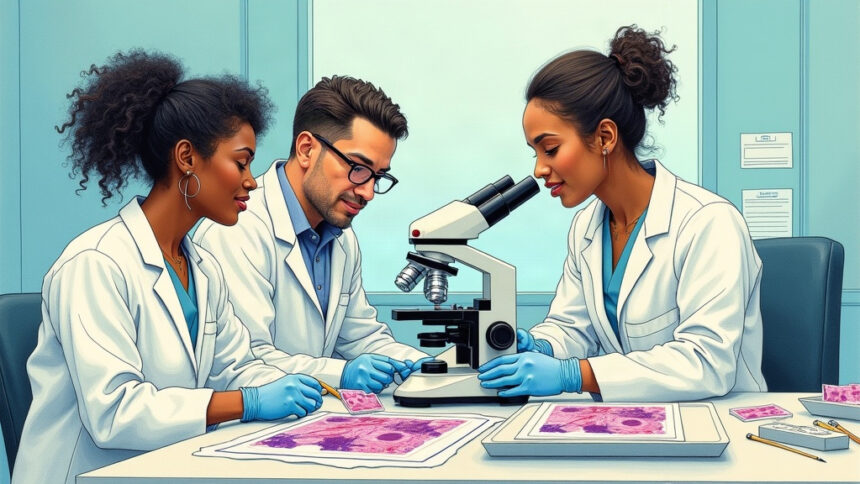
The analysis pooled 60,459 advanced non-small cell lung cancer cases from 56,969 patients. Rather than sequencing DNA, the model reads whole-slide images of hematoxylin and eosin stained tissue – the cheapest specimen in the pathology workflow – and predicts which genomic and immunohistochemistry markers are likely present.
The practical target is triage. Biomarker-driven therapy in late-stage lung cancer can demand several sequential tests and more tissue than a single biopsy yields. A pre-screen lets a lab order the most promising assay first and preserve scarce blocks for confirmation.
A Pfizer collaboration behind the numbers
The work ran through an ongoing collaboration with Pfizer aimed at diagnostic bottlenecks across the treatment landscape, regardless of which drug a patient eventually receives.
Ezra Cohen, Tempus chief medical officer of oncology, framed the appeal around timing. Precision medicine only works, he said, when clinicians have the right information at the right point in care.
Tempus is not starting from zero. Paige Predict, used inside its clinical lab, estimates 123 biomarkers across multiple cancer types when tissue is too thin to sequence. Tempus Preview returns early predictions roughly 24 hours after a sample arrives. Paige itself came into the fold via acquisition.
What the panel is not
Tempus was explicit that the panel remains investigational as a screening aid. It is not cleared to replace molecular or immunohistochemistry testing, and results rank the next test rather than retire it.