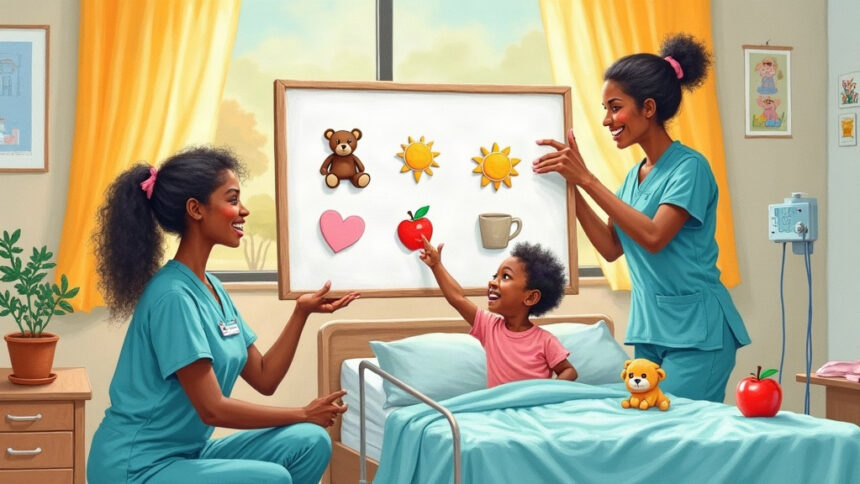
A child in a hospital bed who cannot speak still needs to say where it hurts. Clalit-Schneider Children’s Medical Center in Israel and the volunteer group Code for Israel launched a system on October 18 that builds a personalised communication board for each young patient in about five minutes.
The boards are printable and tailored to a child’s age, language, gender and background, giving them a way to report pain, express emotion, ask questions, or simply request a parent.
From hours to minutes
Speech-language pathologists previously assembled these boards by hand. The work could run past 30 minutes and sometimes stretched to hours, which limited how many children could receive one.
The new system was developed with the medical centre’s own speech-language pathologists, which matters for a tool that has to reflect how children actually communicate under stress.
Dr Oshrat Sella Weiss, who heads the hospital’s speech-language pathology service, said the point is not the software. Restoring a child’s ability to express themselves and take part in their own care is, she said – and doing so at scale is what the automation buys.
Wider than speech disorders
The target population extends beyond children with diagnosed language difficulties. It includes patients too young to speak and children so frightened by the hospital that words fail them.
Reducing that frustration is a clinical goal in its own right, since anxiety complicates assessment and recovery. Freeing specialist hours for direct patient care is the operational one.
Code for Israel describes itself as the country’s largest technology volunteer network and lists the AI communication boards among its products.
Schneider previously piloted a separate AI clinical decision-support assistant for its physicians, a reminder that paediatric hospitals are now testing AI on several fronts at once.