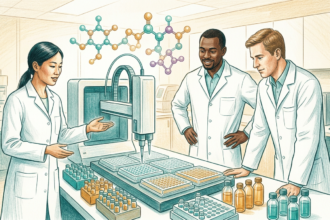

The Virtual Biotech has no offices, no payroll and as many as 37,000 workers. The drug discovery outfit exists as software, and it has now pointed researchers toward a lung cancer target.
James Zou, a computer scientist at Stanford University, led the work published in Science. His system mirrors a drug developer’s org chart. A chief scientific officer agent directs divisions for target identification, trial design and other specialties, each staffed by agents that run on large language models. Zou’s team used Anthropic’s Claude.
The system’s first job was reading. Its chief scientist handed out more than 55,000 published clinical trials, one apiece to 37,075 agents. A pattern fell out of that pile. Medicines aimed at proteins switched on in particular cell types carried nearly 50% better odds of reaching the market.
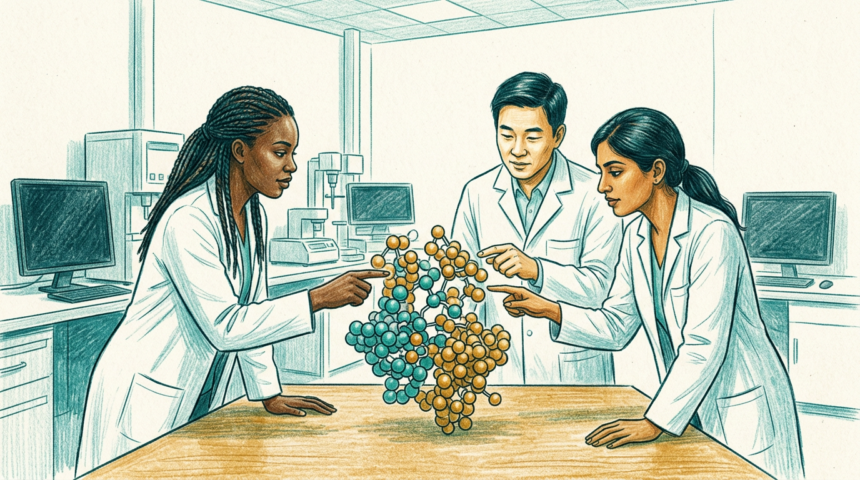
Then came a harder question. Would CD276 work in lung cancer? The protein had already been tied to weaker immune responses, and it shows up in quantity inside tumors. Working from data on hand, the agents backed the target and sketched a way to hit it. Their proposal was an antibody ferrying a chemotherapy payload.
External reviewers called the direction promising. The predictions were never tested at the bench, and no trial followed, leaving the system unproven against the realities of development.
Zou describes the exercise as a gauge of how far agent teams can push discovery. The underlying model is swappable, he says, and open-source versions can run on a lab’s own machines.