
Boston has a new entrant in drug safety. Tremont AI came out of stealth today, and its focus is deliberately narrow: the toxicology review that sits between a promising molecule and a first human dose.
The stack has three parts. TRACE reads pathology images. ToxScribe renders what the models find into language. Tremont Studio stitches both together, so a reviewer can weigh evidence from several assays and modalities inside a single study rather than flipping between separate reports.
The models rest on technology licensed exclusively from Mass General Brigham. Faisal Mahmood, the scientific co-founder and director of that hospital system’s AI Institute, said these approaches may help integrate evidence across modalities and make candidate safety assessment more systematic.
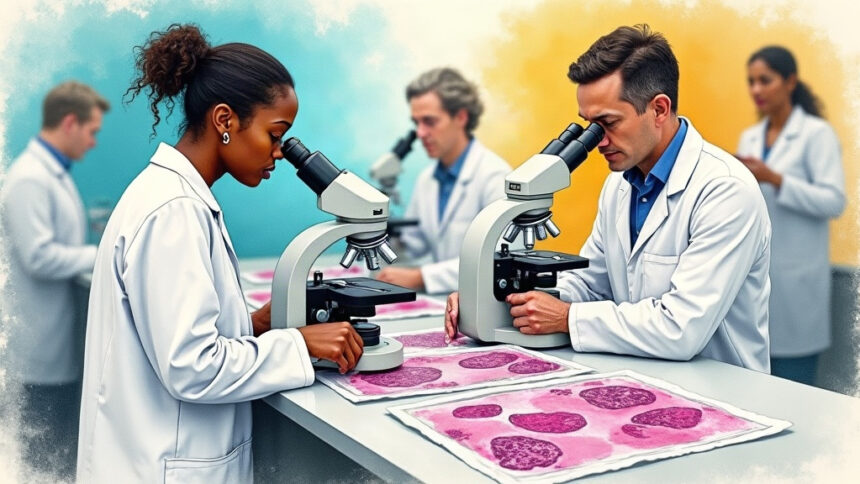
Two forces are colliding. Chemistry has sped up, so the pipeline now produces candidate compounds far faster than it once did. Safety assessment has not kept pace. Someone still has to look at each tissue sample by hand and decide what a compound does to it.
Weishaupt, the chief executive and co-founder, said his team exists to help scientists work through a field built on a very large pile of biological data. Regulators are moving too, weighing computational methods next to conventional toxicology. Tremont would not say how much money it has raised.