

By using this site, you agree to the Privacy Policy and Terms of Use.
Accept
MedsparkMedsparkMedspark
  • Home
  • News & Alerts
    News & AlertsShow More
    Frontier AI models beat specialized clinical tools in new benchmark
    By
    msadmin
    July 18, 2026
    CHAI recruits 2,000 health workers for public health genAI push
    By
    msadmin
    July 18, 2026
    Insilico and SK Biopharm ink $2.5 billion AI drug discovery deal
    By
    msadmin
    July 17, 2026
    Insilico and Bora Pharma bring generative AI to drug manufacturing
    By
    msadmin
    July 17, 2026
    Senators Blumenthal and Hawley probe Medicare Advantage insurers over AI denials
    By
    msadmin
    July 17, 2026
  • Spotlight
    SpotlightShow More
    OpenAI launches GPT-Rosalind for life sciences research
    By
    msadmin
    July 17, 2026
    ARPA-H Awards $160 Million for AI-Enabled Personalized Gene Editing to Tackle Rare Diseases
    By
    msadmin
    July 12, 2026
    Strategic healthcare AI governance framework abstract illustration
    Building a Resilient Healthcare AI Strategy: Insights from Industry Leaders
    By
    msadmin
    May 15, 2026
    Pharma AI Alliance Expands: Owkin and AstraZeneca Deploy New Drug Discovery Models
    By
    msadmin
    May 14, 2026
    7 Must-Attend MedTech Events in South Africa for 2025
    By
    Jostel Owusu
    August 9, 2025
  • Articles
    ArticlesShow More
    Doudna lab uses AI to design novel gene-editing enzymes from scratch
    By
    msadmin
    July 18, 2026
    AI-powered biosimulation shakes up animal testing in drug development
    By
    msadmin
    July 18, 2026
    Big tech launches consumer health AI assistants as accuracy questions grow
    By
    msadmin
    July 18, 2026
    Chai Discovery raises $400 million Series C for AI drug design
    By
    msadmin
    July 18, 2026
    Drug metabolism AI contest shows data matters more than model size
    By
    msadmin
    July 17, 2026
  • Events
    EventsShow More
    Stanford Health AI Week Highlights AI’s Growing Role in Medical Education, Patient Empowerment, and Life Sciences
    By
    msadmin
    June 19, 2026
    HIMSS APAC 2026: Re-engineering APAC Health Systems in the AI Era
    By
    msadmin
    June 9, 2026
    AIMed 2026: Bridging the Gap Between AI Promise and Clinical Reality in Kraków
    By
    msadmin
    April 30, 2026
    7 Must-Attend MedTech Events in South Africa for 2025
    By
    Jostel Owusu
    August 9, 2025
    Cleveland Clinic’s First AI Summit Signals Bold Future for Healthcare
    By
    msadmin
    July 19, 2025
  • About
    • Mission
    • Services
    • Contact
Font ResizerAa
MedsparkMedspark
Font ResizerAa
  • Home
  • News & Alerts
  • Spotlight
  • Articles
  • Events
  • About
  • Quick Links
    • Home
    • News & Alerts
    • Spotlight
    • Articles
    • Events
  • About MedSpark
    • Our Purpose & Vision
    • Services
    • Contact
Follow US
Articles

AI-powered biosimulation shakes up animal testing in drug development

Nature Biotechnology reports that FDA's push to reduce animal testing has fueled a boom in AI biosimulation and digital twin technologies.

MSAdmin
By
msadmin
MSAdmin
Bymsadmin
MedTech AI & Cybersecurity News
Follow:
Published: July 18, 2026
Share
2 Min Read
SHARE

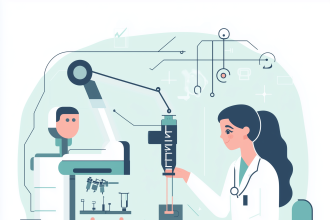
The FDA’s drive to phase out animal testing in drug development has collided with a surge in AI-powered biosimulation, according to a new analysis published in Nature Biotechnology.

Techniques such as multi-agent virtual scientists, digital twins of human organs, and AI-enhanced organoids are gaining traction as regulators seek alternatives to traditional animal models. The FDA has signaled its intent to reduce reliance on animal testing for biologics, and the European Union is preparing a roadmap to eliminate animal tests entirely.

The Nature Biotechnology report, published July 14, notes that AI-powered methods are now mature enough to accelerate preclinical drug development while reducing animal use by an estimated 30% to 50% in some areas. Researchers have developed generative AI systems that predict drug toxicity and efficacy from human cell data alone, bypassing the need for animal models.

Multi-agent virtual scientist platforms can simulate drug metabolism and organ-level responses across thousands of candidate molecules simultaneously. These systems model how a potential drug behaves in a human body using computational biology, machine learning, and patient-derived data rather than animal subjects.

Organoids — miniature 3D organ models grown from human stem cells — are also being paired with AI to improve their predictive power. Computer vision and deep learning algorithms analyze organoid responses to drug candidates at cellular resolution, providing data that correlates more closely with human clinical outcomes than animal studies.

The shift comes at a critical time. Drug development costs continue to rise, and high-profile failures of animal-tested drugs in human trials have highlighted the limitations of traditional preclinical models. “AI-powered biosimulation methods offer the potential to make drug development faster, cheaper and more human-relevant,” the Nature Biotechnology piece concludes.

While a full transition away from animal testing will take years, the convergence of regulatory pressure and AI capability is accelerating progress. The FDA has already begun accepting non-animal data in some regulatory submissions, and AI-powered approaches are expected to play a growing role in preclinical testing frameworks.

TAGGED:AI biosimulationanimal testing alternativesdigital twinsdrug developmentFDA regulationMachine LearningNature Biotechnologyorganoids
SOURCES:Nature Biotechnology
Share This Article
Facebook Copy Link Print
MSAdmin
Bymsadmin
Follow:
MedTech AI & Cybersecurity News
Leave a Comment Leave a Comment

Leave a Reply Cancel reply

Your email address will not be published. Required fields are marked *

banner-medspark-horiz

You Might Also Like

ArticlesNews & Alerts

Google’s TabFM Makes Accurate Predictions Without Fine-Tuning Per Dataset

By
msadmin
July 12, 2026
Articles

Why Medical Schools Must Teach Critical Thinking Before AI Tools

By
msadmin
May 28, 2026
Articles

Google Unveils Open-Source Medical AI Models That See, Read, and Assist Like Real Clinicians

By
Yu Chi Huang
July 10, 2025
ArticlesNews & Alerts

AdvanCell raises $315 million for AI-driven radiotherapy

By
msadmin
July 17, 2026
Facebook Twitter Youtube Linkedin
Quick Links
  • News & Alerts
  • Articles
  • Spotlight
  • Events
About Medspark
  • Mission
  • Services
  • Contact

© Copyright 2026 MedSpark. All rights reserved.

Privacy Policy | Legal