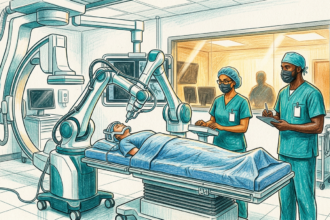

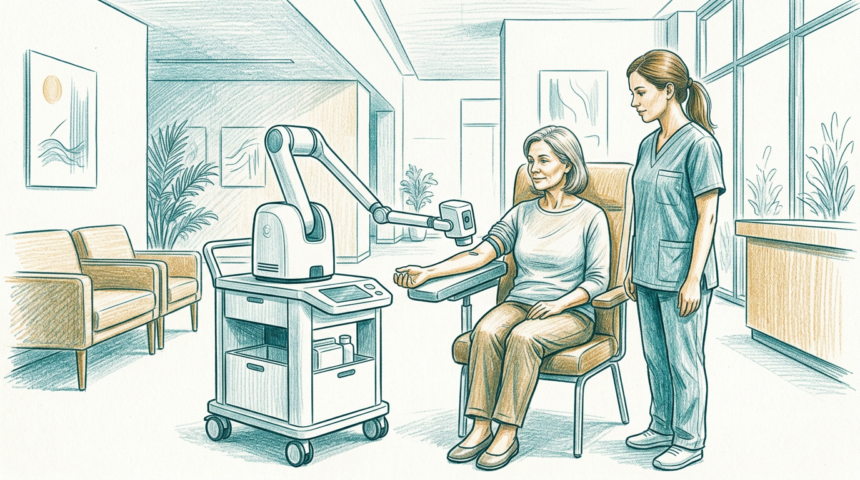
Until this month, no blood draw robot had cleared US regulators. Vitestro’s Aletta changed that on August 20, when the FDA’s De Novo decision handed the Dutch company a regulatory lane of its own.
The machine reads the arm with three imaging modes, near-infrared plus standard and Doppler ultrasound, so it can tell a vein from an artery. Its AI then picks a safe puncture site, lines up the needle and collects the sample without a clinician’s hands on the patient.
Vitestro, based in Utrecht, Netherlands, built the device for routine collections, freeing lab teams for complex cases. The company says the system is designed for the high volumes of blood testing hospitals run every day.
The De Novo pathway matters beyond this one device. By establishing a new regulatory category, the FDA gives other autonomous phlebotomy developers a defined route to market, which could accelerate a wave of similar systems.
For hospitals, the pitch is operational: fewer staffed draw stations, faster collections and a steadier pipeline for lab testing, all while keeping the patient experience intact.