
A peptide molecule that might one day treat a rare cancer or a neurodegeneration case has something a small-molecule tablet does not: the researchers hunting for it usually begin with no shared map of what has already been tried. Peptides make up about eight percent of newly approved medicines, and the University of Toronto wants to change how the next ones get found. With $2.3M from Google.org, its team is building OpenPep, an open platform for peptide drug discovery.
Data is the bottleneck. Structural biology got AlphaFold because researchers spent decades dropping experiments into public repositories. Peptides have no comparable commons, so every new campaign starts at zero.
The lead is Brown, an assistant professor at the Leslie Dan Faculty of Pharmacy. Joining him are Pardee and Kim from the same university plus ProteinQure’s Chris Ing. The money arrives through Google.org’s Impact Challenge: AI for Science.
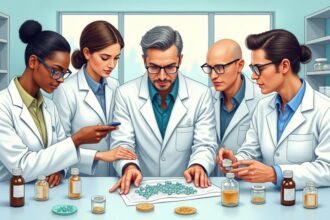
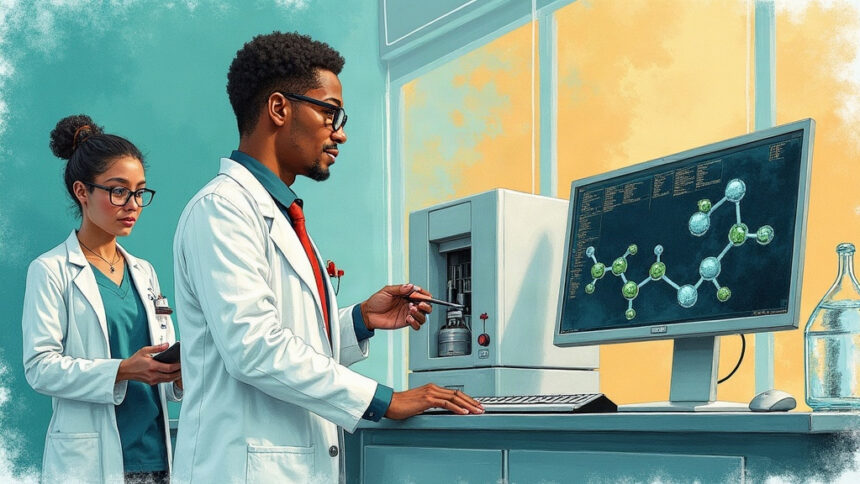
Rather than wait for data, the group intends to manufacture it. Up to 500 proteins tied to disease will come out of Pardee’s cell-free synthetic biology work. Brown’s team then subjects large peptide libraries to mass spectrometry, recording which compounds bind and how tightly.
Each measured interaction turns into a training example. Models trained on the resulting corpus should eventually rank binding for targets no lab has touched, converting thousands of one-off experiments into rules that generalize.
Clinicians and drug developers get a vote on priorities. The team is crowdsourcing which proteins to pursue, favoring pediatric and rare disease, cancer, neurodegeneration and cardiovascular conditions, and anyone can submit a target through the project’s website.
Brown keeps expectations grounded. AI will not replace experiments, he said. Its job is to pick better ones by ranking which peptides deserve a bench.