
By using this site, you agree to the Privacy Policy and Terms of Use.
Accept
MedsparkMedsparkMedspark
  • Home
  • News & Alerts
    News & AlertsShow More
    Cureety absorbs Reimagine Care to watch cancer patients between visits
    By
    msadmin
    September 5, 2026
    Heartvue’s cardiac MRI AI clears FDA with self-update built in
    By
    msadmin
    September 5, 2026
    Ono taps Aitia’s causal AI twins to unmask neurology drug targets
    By
    msadmin
    September 5, 2026
    Superluminal scores $60M to carry AI-designed obesity pill to clinic
    By
    msadmin
    September 5, 2026
    Seattle’s big three institutes launch $95M AI BioDesign accelerator
    By
    msadmin
    September 5, 2026
  • Spotlight
    SpotlightShow More
    Robinhood Ventures Fund II brings retail capital to healthcare AI
    By
    msadmin
    August 13, 2026
    Adialante brings accessible MRI-based cancer screening
    By
    msadmin
    August 11, 2026
    CellType models biology so AI can discover drugs
    By
    msadmin
    August 11, 2026
    Healthcare AI startups in Robinhood Ventures Fund II
    By
    msadmin
    August 11, 2026
    OpenAI launches GPT-Rosalind for life sciences research
    By
    msadmin
    July 17, 2026
  • Articles
    ArticlesShow More
    Consumer chatbots are building a medical system outside hospitals
    By
    msadmin
    August 21, 2026
    Reasoning gaps hold back AI agents in scientific discovery
    By
    msadmin
    August 11, 2026
    Benchmark scores can’t track real clinical LLM use, Stanford says
    By
    msadmin
    August 11, 2026
    Teladoc puts 100 percent of fees at risk with new AI-powered platform
    By
    msadmin
    July 27, 2026
    Johns Hopkins finds frontier AI agents fail most complex health tasks
    By
    msadmin
    July 27, 2026
  • About
    • Mission
    • Services
    • Contact
  • Shop
    • All Items
    • By Category
    • Cart
  • Newsletter
Font ResizerAa
MedsparkMedspark
Font ResizerAa
  • Home
  • News & Alerts
  • Spotlight
  • Articles
  • About
  • Shop
  • Newsletter
  • Home
  • News & Alerts
  • Spotlight
  • Articles
  • About
    • Mission
    • Services
    • Contact
  • Shop
    • All Items
    • By Category
    • Cart
  • Newsletter
Follow US
Articles

AI-powered biosimulation shakes up animal testing in drug development

Nature Biotechnology reports that FDA's push to reduce animal testing has fueled a boom in AI biosimulation and digital twin technologies.

MedSpark Staff
By
msadmin
MedSpark Staff
Bymsadmin
Medical, Healthcare, & Biotech/Pharma AI News
Follow:
Published: July 18, 2026
Share
2 Min Read
SHARE

The FDA’s drive to phase out animal testing in drug development has collided with a surge in AI-powered biosimulation, according to a new analysis published in Nature Biotechnology.

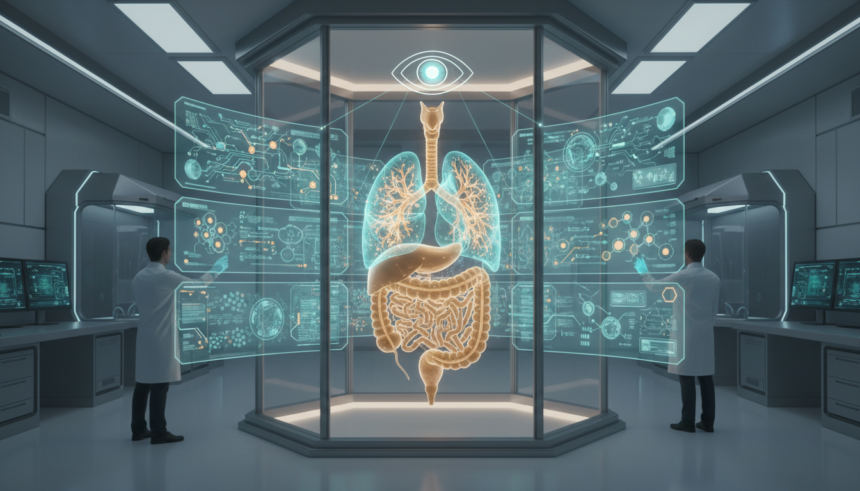
Techniques such as multi-agent virtual scientists, digital twins of human organs, and AI-enhanced organoids are gaining traction as regulators seek alternatives to traditional animal models. The FDA has signaled its intent to reduce reliance on animal testing for biologics, and the European Union is preparing a roadmap to eliminate animal tests entirely.

The Nature Biotechnology report, published July 14, notes that AI-powered methods are now mature enough to accelerate preclinical drug development while reducing animal use by an estimated 30% to 50% in some areas. Researchers have developed generative AI systems that predict drug toxicity and efficacy from human cell data alone, bypassing the need for animal models.

Multi-agent virtual scientist platforms can simulate drug metabolism and organ-level responses across thousands of candidate molecules simultaneously. These systems model how a potential drug behaves in a human body using computational biology, machine learning, and patient-derived data rather than animal subjects.

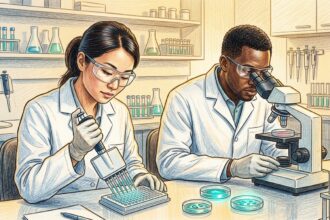
Organoids — miniature 3D organ models grown from human stem cells — are also being paired with AI to improve their predictive power. Computer vision and deep learning algorithms analyze organoid responses to drug candidates at cellular resolution, providing data that correlates more closely with human clinical outcomes than animal studies.

The shift comes at a critical time. Drug development costs continue to rise, and high-profile failures of animal-tested drugs in human trials have highlighted the limitations of traditional preclinical models. “AI-powered biosimulation methods offer the potential to make drug development faster, cheaper and more human-relevant,” the Nature Biotechnology piece concludes.

While a full transition away from animal testing will take years, the convergence of regulatory pressure and AI capability is accelerating progress. The FDA has already begun accepting non-animal data in some regulatory submissions, and AI-powered approaches are expected to play a growing role in preclinical testing frameworks.
TAGGED:AI biosimulationanimal testing alternativesdigital twinsdrug developmentFDA regulationMachine LearningNature Biotechnologyorganoids
SOURCES:Nature Biotechnology
Share This Article
Facebook Copy Link Print
MedSpark Staff
Bymsadmin
Follow:
Medical, Healthcare, & Biotech/Pharma AI News

You Might Also Like

Articles

AI Adoption Skyrockets in UK Healthcare, but Legacy Systems Fuel Security Concerns

By
Yu Chi Huang
June 10, 2025
Articles

Bigger AI models don’t always win in drug metabolism prediction

By
msadmin
July 17, 2026
ArticlesNews & Alerts

AdvanCell raises $315 million for AI-driven radiotherapy

By
msadmin
July 17, 2026
Articles

How Optum Health Is Making AI Practical for Clinicians with Chart Summarization

By
msadmin
May 28, 2026

AI news, analysis, and insights for healthcare, biotech, and pharma.

Facebook Twitter Youtube Linkedin
Quick Links
  • News & Alerts
  • Articles
  • Spotlight
  • Events
About Medspark
  • Mission
  • Services
  • Contact

© Copyright 2026 MedSpark. All rights reserved.

Privacy Policy | Legal