
The US health research agency ARPA-H has handed Philips an award of up to $33.7M for a stroke-care automation push. The company will work under the Autonomous Interventions and Robotics program, which Dr. Ileana Hancu oversees.
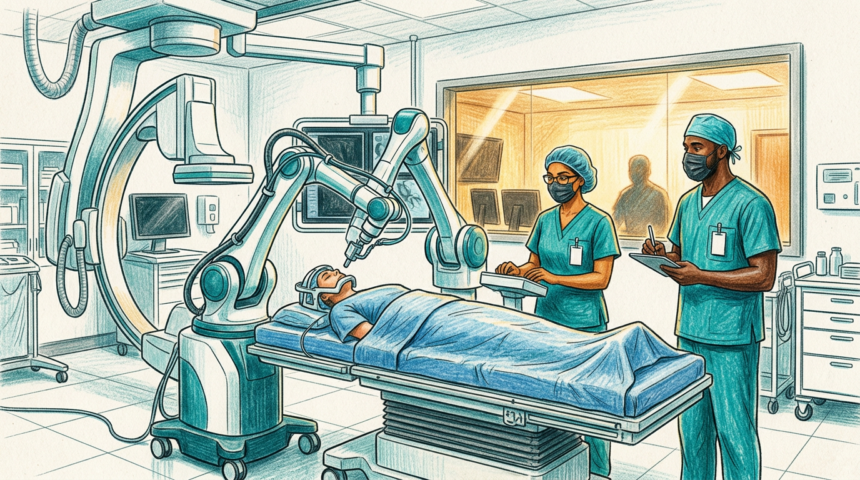
Three academic partners join the effort: Johns Hopkins University, Boston University and neurosurgeon J. Mocco of Weill Cornell Medicine. Together with Philips they will develop remote-controlled and increasingly automated endovascular tools. The project builds on the Azurion image-guided therapy platform, with a longer-term goal of an interventional suite that fuses robotics, AI automation and smart devices into one clinical workflow.
Access is the driving problem. Fast thrombectomy can reverse stroke damage, but most patients never get one. Roughly 335,000 Americans qualify for the procedure each year; only about one in eight does. Half the country sits more than an hour’s drive from a hospital that can perform it.
ARPA-H’s AIR program targets exactly this kind of specialist gap, funding projects that push intervention skills into remote and community settings. Philips’ robotic approach aims to let a specialist guide or supervise procedures from a distance, expanding who can offer time-critical stroke care.
No product launch or approval timeline was disclosed with the award.