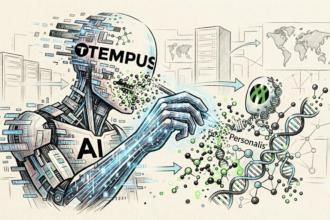
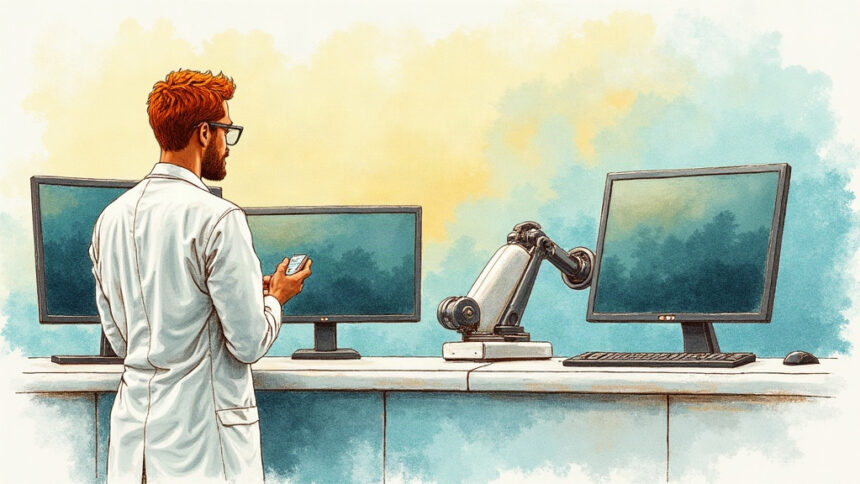
AI is being pushed off the cloud and into the instruments themselves. Danaher and NVIDIA are collaborating on a bid to speed scientific discovery by embedding artificial intelligence directly into laboratory hardware and the workflows around it, a move with obvious implications for how quickly clinical and biotech labs turn data into evidence they can act on.
The two companies intend to marry Danaher’s instrumentation and automation with NVIDIA’s accelerated computing stack, which spans edge devices such as DGX Spark, the RAPIDS analytics libraries and BioNeMo foundation models. First attention goes to a handful of priority instruments. A wider sweep across the broader portfolio could follow later.
What Danaher wants to shorten is the distance between a model’s prediction and the experimental proof a researcher needs before acting on it. “The next era of scientific discovery will be driven by a continuous loop between AI and experimentation,” said Kimberly Powell, NVIDIA’s vice president of healthcare. She described connecting models with instruments and real data so that experiments sharpen models and models design sharper experiments.
Danaher chief executive Julie Sawyer Montgomery cast the work as pursuing more connected and adaptive innovation that converts discovery into human impact. Separately, the company said it plans to launch its first AI-powered autonomous lab, meant to help researchers build custom workflows with less manual intervention.