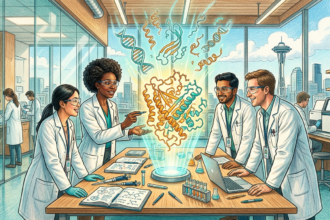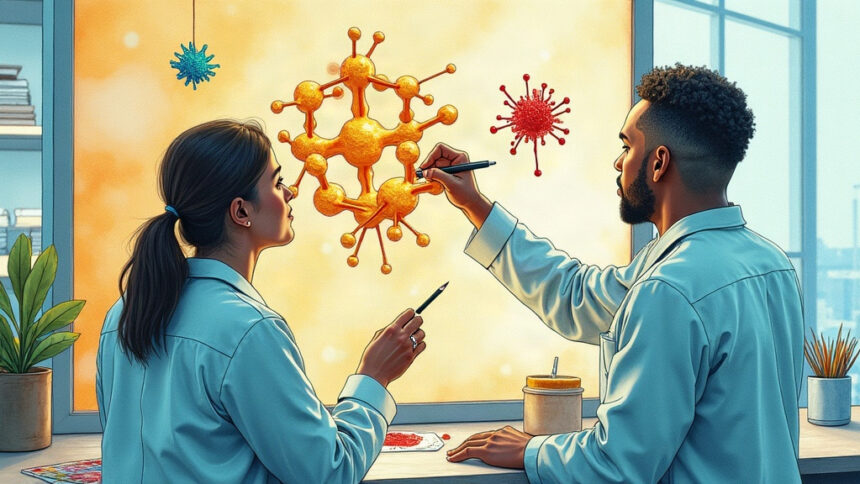
Astellas has signed a research and licence deal with Boston-based AI Proteins to design miniprotein therapeutics, paying more than $400M in upfront cash. Milestones and royalties on future sales sit on top of that figure.
Miniproteins are short engineered proteins, small enough to reach targets that antibodies cannot and sturdy enough to survive in the body. AI Proteins builds them de novo, meaning it specifies a job and designs a molecule to perform it rather than adapting something biology already produced.
Chris Bahl, the company’s founder and chief executive, framed the shift plainly: every biologic on the market today borrows a molecule that evolved to do something else.
The work runs through Astellas Innovation Management, the Japanese drugmaker’s investment and partnering arm. AI Proteins will design and optimize candidates against targets Astellas selects, using its computational platform across multiple pathways.
Astellas takes an exclusive global licence to whatever emerges and will run development, regulatory filings and commercialization itself. Morten Sogaard, a senior vice president at Astellas Innovation Lab, described the deal as a way to feed early-stage research with novel biology and differentiated technology.
The structure is a familiar one for computational biology: the platform company carries the design risk, the pharma carries the clinical risk, and the upfront payment compensates for the first. What makes this one notable is the size of the check relative to the stage, and the fact that Astellas is buying a design capability rather than a specific asset.