Several AI start-ups now market pathology models on the strength of slide images, but a reference will not let go of a value that regulators already trust: the 70 genes underneath a report.
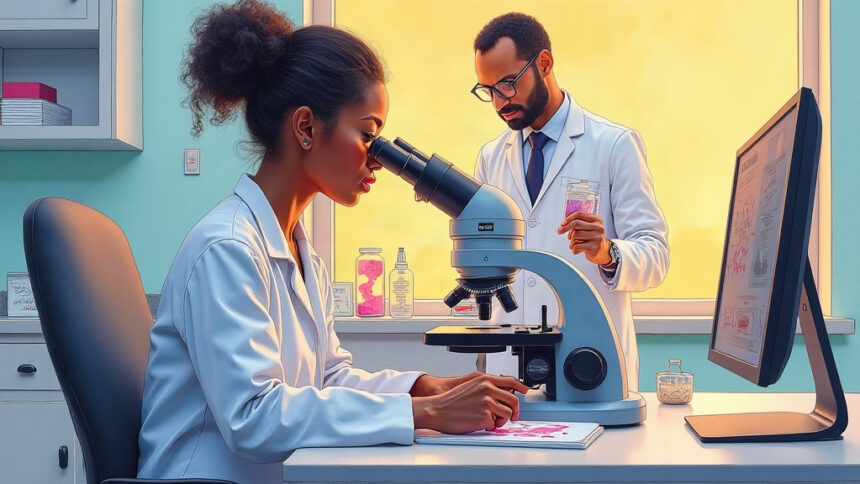
Agendia used a podium talk at the European Society for Medical Oncology congress in Madrid to show a deep learning pipeline that predicts MammaPrint risk categories straight from H&E-stained whole-slide images. Co-founder and Chief Research Officer Laura van ‘t Veer presented the work, which walked from development through clinical validation at the conference rather than in a journal.
The distinction matters. Agendia already sells MammaPrint, a 70-gene signature, so the model is not competing with a genomic test in the abstract. It is being built to reproduce that test’s answer from tissue a lab has already scanned.
Two posters also went up in Madrid, drawing on the prospective, real-world FLEX Study, a registry that has tracked thousands of breast cancer patients for years.
For labs, the appeal is practical. H&E slides are routine and cheap. A model that reads recurrence risk from them could shorten the path between a biopsy and a treatment conversation, and cut reliance on sending tissue for further testing.
The caution is equally practical. A genomic signature and a pixel classifier are different instruments, and substituting one for the other demands frozen thresholds, external validation and post-market surveillance. Agendia has so far published conference data, not a cleared device.