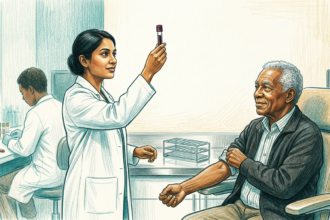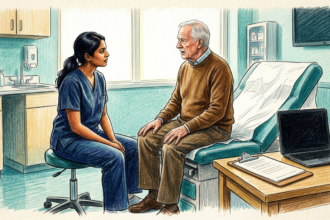


In Taiwan, a government-backed lab has found a new use for generative AI: helping people with dementia reconnect with their own past.
The work comes from the Institute for Information Industry and its Institute of AI Innovation. Their tool gathers old photographs, voice recordings, and family stories, then builds short personalized videos for care settings.
The design goal is to swap generic care materials for content anchored in each patient’s own life. Familiar faces, places, and moments are assembled into scenes meant to prompt talk and recall.
Several AI techniques do the work. Semantic analysis interprets the source material. Image and video generation builds the scenes. Lip synchronization adds spoken narration that matches the visuals.
The system ran a proof-of-concept at a dementia care home operated by Mennonite Christian Hospital in Hualien. Staff there used it for reminiscence therapy, cognitive stimulation, and rehabilitation.
Two officials described the approach. Carrie Huang, a deputy division head, said familiar cues can help unlock memories. Edward Hong, a senior strategy director, said the team also tracks patients’ brainwaves as they watch, then uses those readings to adjust future clips.
In daily use, patients wear wristbands that broadcast their location. Stepping into an audiovisual room prompts the system to recognize the person and project their video automatically.
Caregivers reported a shift. After watching, patients were more willing to talk and join in activities. Some engaged more actively in rehabilitation.