

By using this site, you agree to the Privacy Policy and Terms of Use.
Accept
MedsparkMedsparkMedspark
  • Home
  • News & Alerts
    News & AlertsShow More
    ECRI opens its device watchdog pipeline to AI mistakes
    By
    msadmin
    August 27, 2026
    Elsevier’s Ask AI grounds every clinical answer in cited evidence
    By
    msadmin
    August 27, 2026
    Bose veterans raise $12M to hide AI hearing aids in glasses
    By
    msadmin
    August 27, 2026
    Onos Health banks $17M Series A to decode messy mental health records
    By
    msadmin
    August 27, 2026
    Arintra nets $25M Series B to plug hospital revenue leaks
    By
    msadmin
    August 27, 2026
  • Spotlight
    SpotlightShow More
    Robinhood Ventures Fund II brings retail capital to healthcare AI
    By
    msadmin
    August 13, 2026
    Adialante brings accessible MRI-based cancer screening
    By
    msadmin
    August 11, 2026
    CellType models biology so AI can discover drugs
    By
    msadmin
    August 11, 2026
    Healthcare AI startups in Robinhood Ventures Fund II
    By
    msadmin
    August 11, 2026
    OpenAI launches GPT-Rosalind for life sciences research
    By
    msadmin
    July 17, 2026
  • Articles
    ArticlesShow More
    Consumer chatbots are building a medical system outside hospitals
    By
    msadmin
    August 21, 2026
    Reasoning gaps hold back AI agents in scientific discovery
    By
    msadmin
    August 11, 2026
    Benchmark scores can’t track real clinical LLM use, Stanford says
    By
    msadmin
    August 11, 2026
    Teladoc puts 100 percent of fees at risk with new AI-powered platform
    By
    msadmin
    July 27, 2026
    Johns Hopkins finds frontier AI agents fail most complex health tasks
    By
    msadmin
    July 27, 2026
  • About
    • Mission
    • Services
    • Contact
  • Shop
    • All Items
    • By Category
    • Cart
  • Newsletter
Font ResizerAa
MedsparkMedspark
Font ResizerAa
  • Home
  • News & Alerts
  • Spotlight
  • Articles
  • About
  • Shop
  • Newsletter
  • Home
  • News & Alerts
  • Spotlight
  • Articles
  • About
    • Mission
    • Services
    • Contact
  • Shop
    • All Items
    • By Category
    • Cart
  • Newsletter
Follow US
News & Alerts

Neuro-symbolic AI forges a new path to safer clinical algorithms

A new paradigm combines deep learning with symbolic reasoning to make medical AI safer, more transparent and clinically trustworthy.

MedSpark Staff
By
msadmin
MedSpark Staff
Bymsadmin
Medical, Healthcare, & Biotech/Pharma AI News
Follow:
Published: July 13, 2026
Share
2 Min Read
SHARE

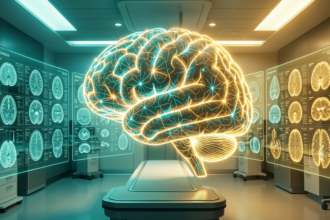
A landmark perspective published in Nature Biomedical Engineering lays out a roadmap for neuro-symbolic artificial intelligence in medicine, an approach that combines the pattern recognition power of deep learning with the explicit reasoning of symbolic knowledge representation.

Current medical AI systems rely almost exclusively on deep neural networks. While powerful at pattern recognition, these black box models lack the ability to explain their decisions in terms clinicians can verify. Neuro-symbolic AI addresses this by integrating data-driven inference with structured clinical knowledge such as diagnostic criteria, anatomical atlases, and treatment guidelines.

The authors argue that purely data-driven approaches face fundamental limitations in high-stakes medical settings. They cannot guarantee safety across distribution shifts, cannot incorporate causal reasoning, and cannot provide the kind of transparent accountability that regulatory standards demand.

Neuro-symbolic architectures offer a path forward. By encoding clinical rules as symbolic constraints that the neural network must respect, these hybrid systems can provide auditable reasoning chains alongside their predictions. A clinician can inspect not just what the model concluded but the logical steps that led there.

The paper surveys emerging applications from diagnostic imaging to clinical decision support and identifies key challenges including scalability, knowledge representation standards, and the need for new evaluation frameworks that test both neural and symbolic components.

For healthcare systems deploying AI, neuro-symbolic approaches may offer the safety and transparency needed to move algorithms from research settings into routine clinical practice with regulatory confidence.

TAGGED:AIAI GovernanceClinical AIClinical Decision SupportCompliancemedical AIPatient Safety
SOURCES:Nature Biomedical Engineering
Share This Article
Facebook Copy Link Print
MedSpark Staff
Bymsadmin
Follow:
Medical, Healthcare, & Biotech/Pharma AI News

You Might Also Like

News & Alerts

Skin AI explanations help doctors while biasing everyday users

By
msadmin
August 7, 2026
News & Alerts

TCS launches agentic AI hub for clinical trials and drug safety

By
msadmin
August 18, 2026
News & Alerts

KINESSENSOR Project Unveils AI-Powered Wearable Tech to Revolutionize Musculoskeletal Disorder Treatment

By
Yu Chi Huang
June 11, 2025
News & Alerts

Hyperfine wins second FDA clearance for Optive AI software

By
msadmin
August 22, 2026

AI news, analysis, and insights for healthcare, biotech, and pharma.

Facebook Twitter Youtube Linkedin
Quick Links
  • News & Alerts
  • Articles
  • Spotlight
  • Events
About Medspark
  • Mission
  • Services
  • Contact

© Copyright 2026 MedSpark. All rights reserved.

Privacy Policy | Legal