
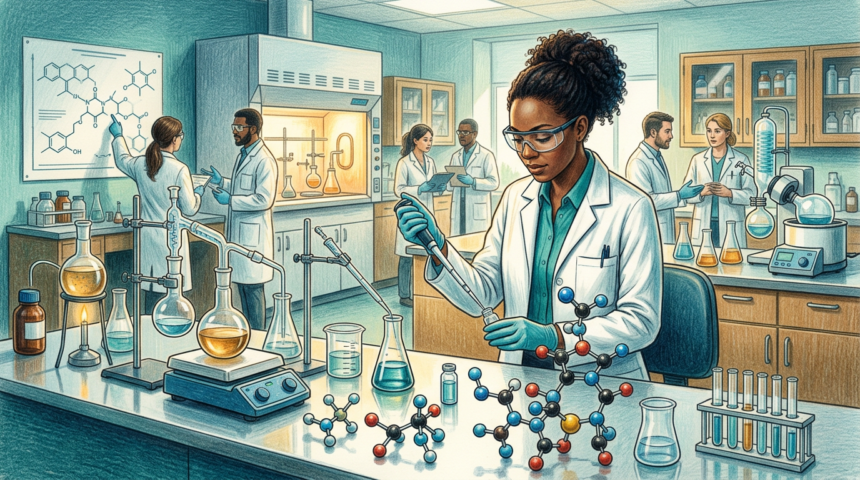
A small drug company says it designed a clinical candidate by first asking ChatGPT and Gemini why an entire drug class failed. Sheo Pharmaceuticals’ scientists queried the AI tools about renin inhibitors, a long-shot blood pressure target, then built their own models to push the class forward, Chemical & Engineering News reported.
The C&EN profile, published late August, describes a workflow that starts with general-purpose chatbots and ends with custom-designed molecules. Renin sits at the top of the blood pressure cascade, making it a theoretically attractive target, yet decades of drug hunting produced mostly failures.
Sheo’s bet is that modern AI can revisit the abandoned target with fresh eyes, using lessons from past failures to design better molecules. The approach shows how generative AI is moving from research novelty to routine lab practice, even for targets the industry wrote off.
Using general-purpose chatbots in drug discovery carries obvious risks, from hallucinated chemistry to data confidentiality. For now, the company’s candidate remains early stage, and clinical proof is still years away.
The bigger signal is the workflow itself: asking an LLM to explain a failure, then building a model to fix it, is becoming a recognizable pattern in drug discovery.